Enhanced Interior Gateway Routing Protocol (EIGRP) is classified as an advanced distance-vector routing protocol.
However, it incorporates characteristics commonly associated with link-state protocols.As you may already know, RIP is one of the simplest distance-vector protocols.
EIGRP was designed to improve the limitations of RIP.To understand why EIGRP is more powerful, let’s compare both.
EIGRP vs RIP
Imagine a topology where links between routers do not have the same bandwidth.
If you run RIP in this network, routing decisions are based only on hop count.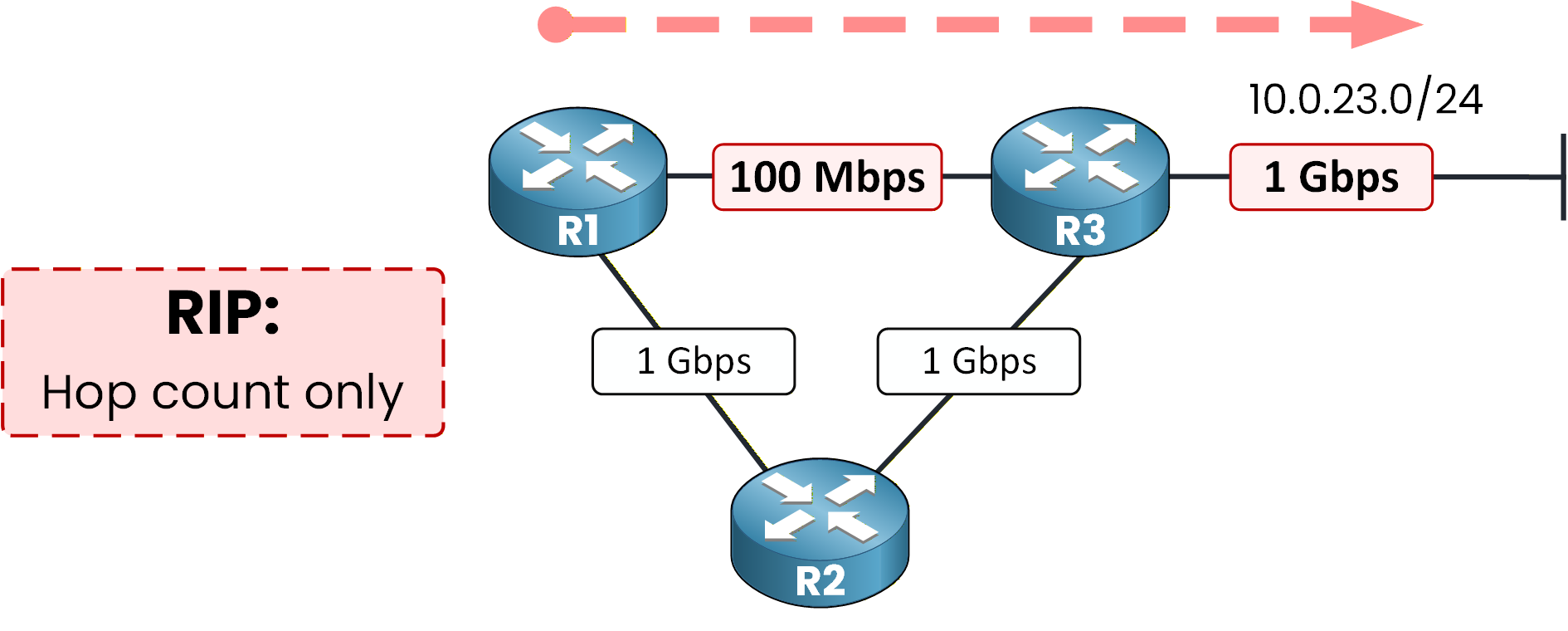
Figure 1 – RIP Path Selection Based on Hop Count
That means:
RIP does not evaluate bandwidth.
RIP does not evaluate delay.
RIP does not evaluate link performance.
It only counts how many routers are in the path.
So in this scenario, R1 will choose the direct path through R3 to reach 10.0.23.0/24, simply because it has fewer hops.This is the main limitation of RIP:
It assumes that fewer hops always means better performance.But in real networks, that is not necessarily true.
Answer the question below
Which metric does RIP use to select the best path?
How EIGRP Improves Path Selection
Now, this is where EIGRP changes the game.
Unlike RIP, EIGRP does not just count routers.
It evaluates the quality of the entire path before making a decision.By default, EIGRP considers:
The minimum bandwidth along the path
The total delay across the path
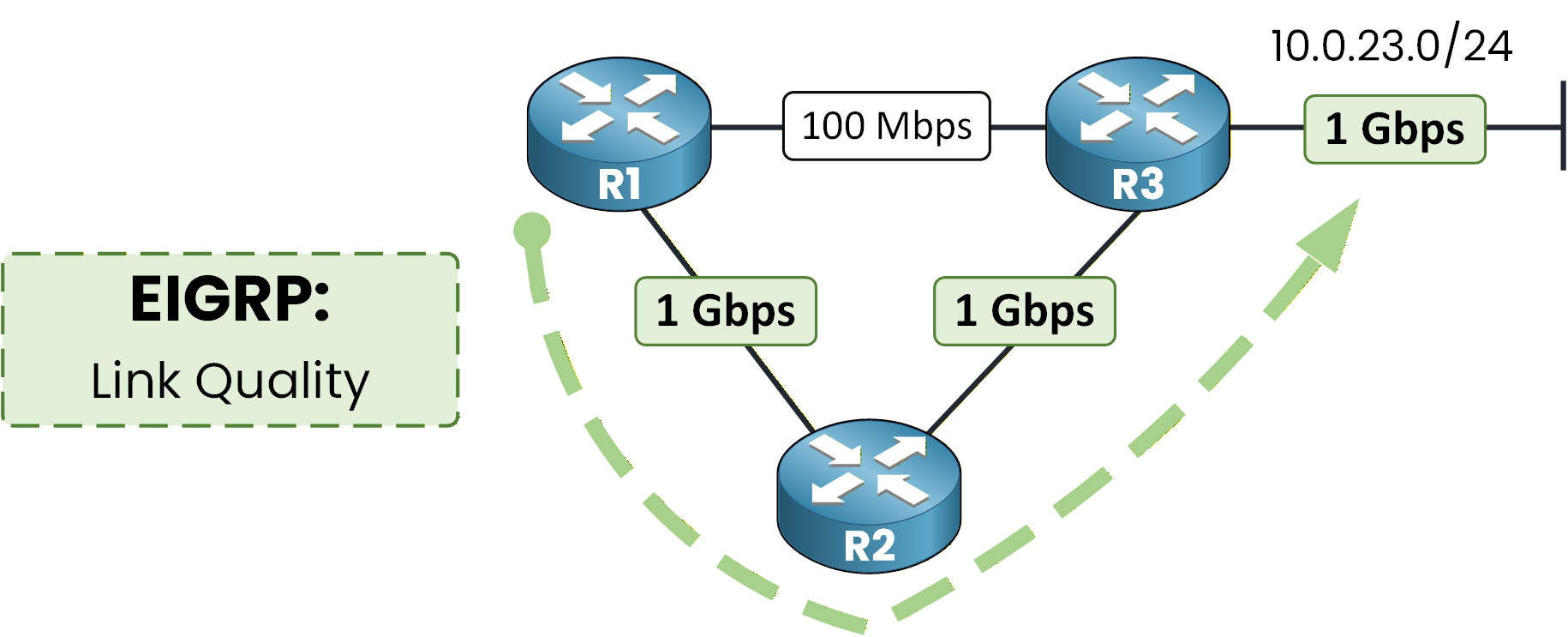
Figure 2 – EIGRP Path Selection Based on Link Quality
This means that when you run EIGRP in the same topology, R1 will not automatically choose the path with fewer hops.
Instead, it will calculate which path offers better overall performance.In this case, R1 selects the path:
R1 → R2 → R3 → 10.0.23.0/24because it provides better link quality, even if it has more hops.
Answer the question below
By default, EIGRP calculates its metric using bandwidth and what?
To understand how EIGRP operates, you need to look at how it exchanges information and processes routes internally.
EIGRP uses IP protocol number 88 to exchange routing information.
When possible, it sends control messages to the multicast address 224.0.0.10.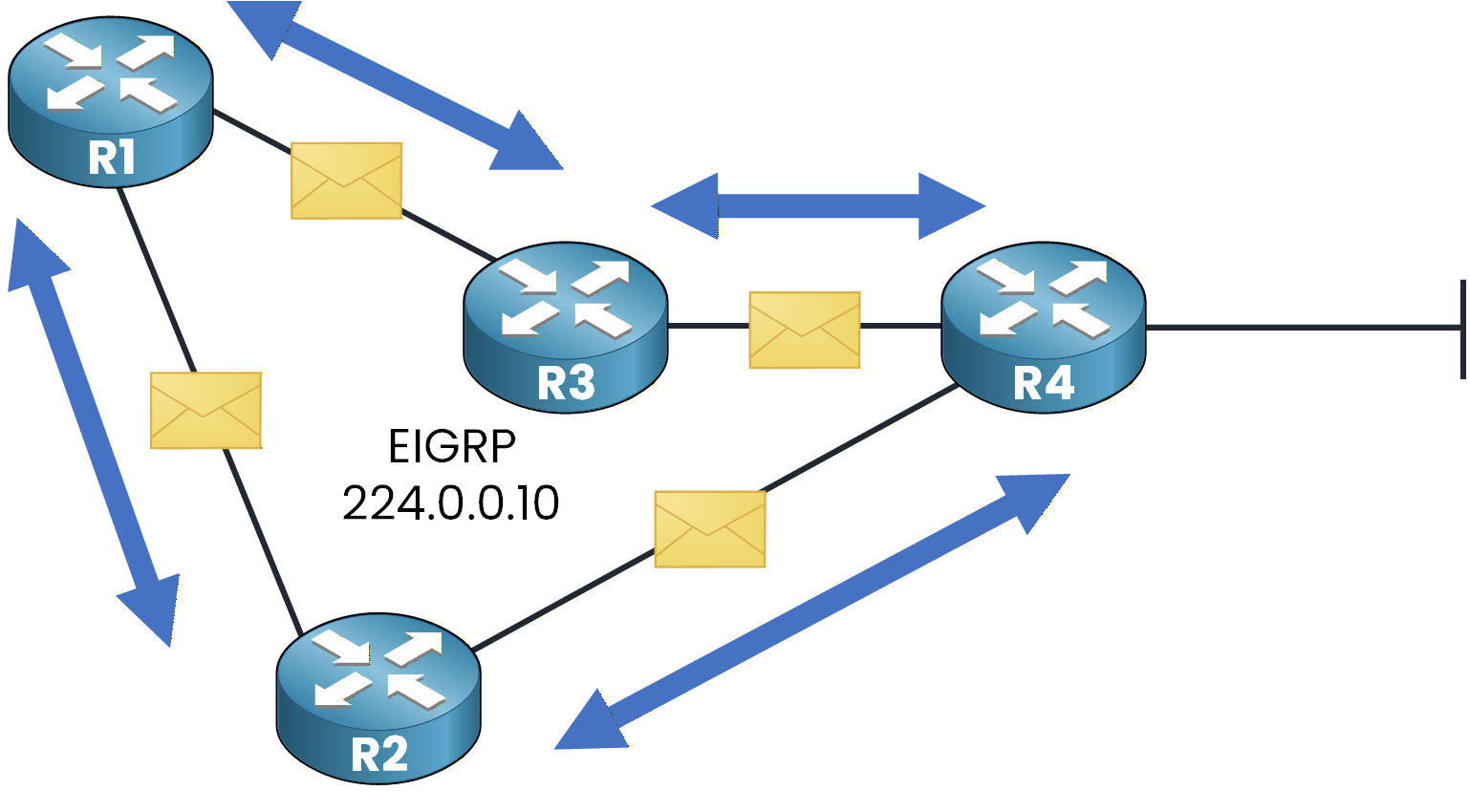
Figure 3 - EIGRP Routers Forming Neighbor Relationships
Routers running EIGRP form neighbor relationships and exchange routing information dynamically.
How EIGRP Evaluates Path Quality
You already know that EIGRP does not rely on hop count alone.
Instead, EIGRP evaluates link quality using its composite metric.By default, this metric is calculated using:
Minimum bandwidth along the path
Total delay across the path
In this topology, you can see the metric values associated with each link between routers.
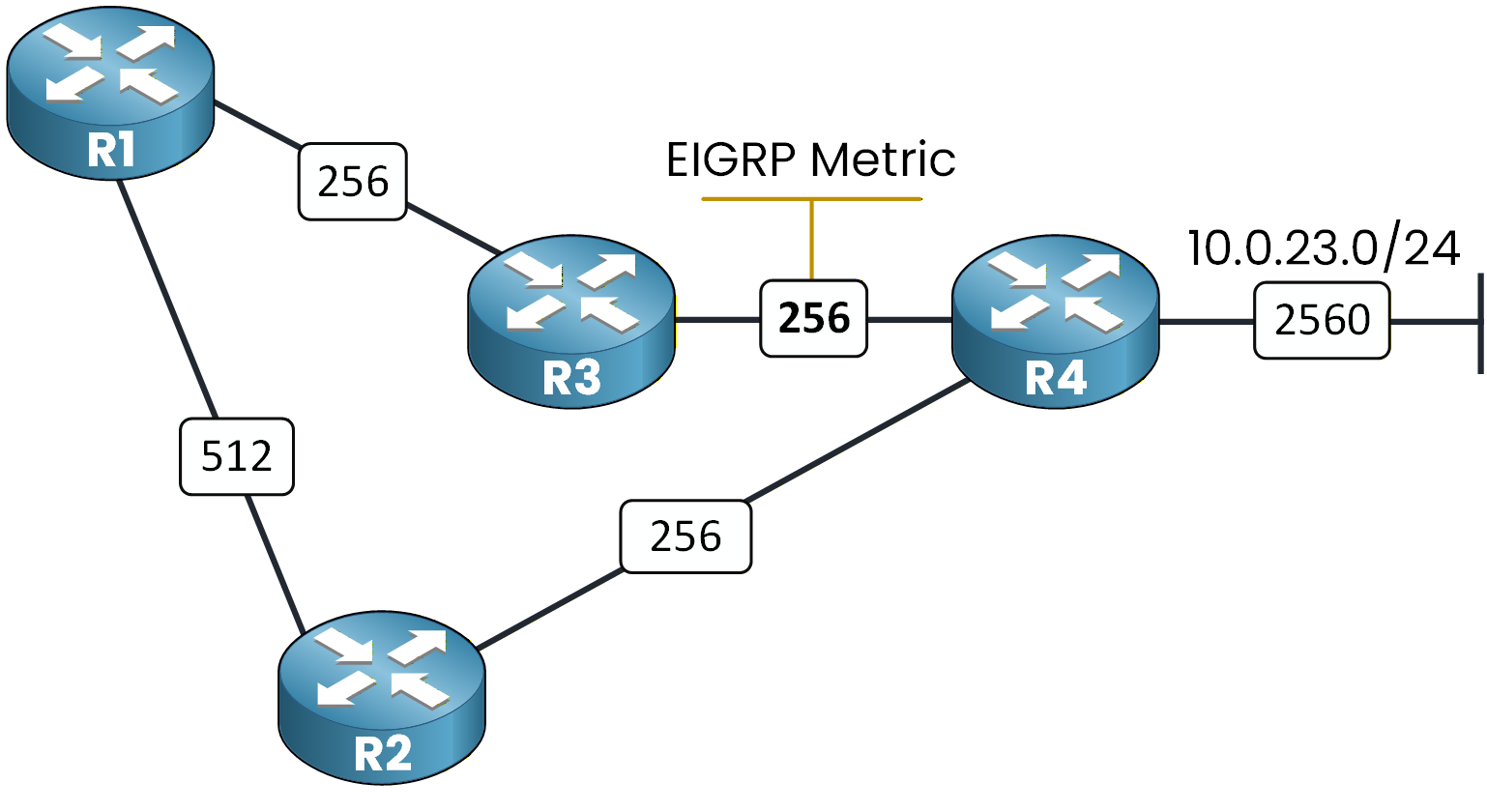
Figure 4 – EIGRP Metric Example
40 % Complete: you’re making great progress
Ready to pass your CCNP exam?