On a chassis router, the control plane and the data plane live in separate hardware modules.
The Route Processor (RP) handles routing protocols, configuration, and management.
The Line Cards (LC) handle packet forwarding.
Because these modules are physically separate, your chassis can hold two Route Processors (RPs) in dedicated slots.
One is Active, the other is Standby. Both live inside the same device.Two RPs, One Chassis
The Active RP runs your control plane.
The Standby RP sits in a second slot, ready to take over if the Active fails.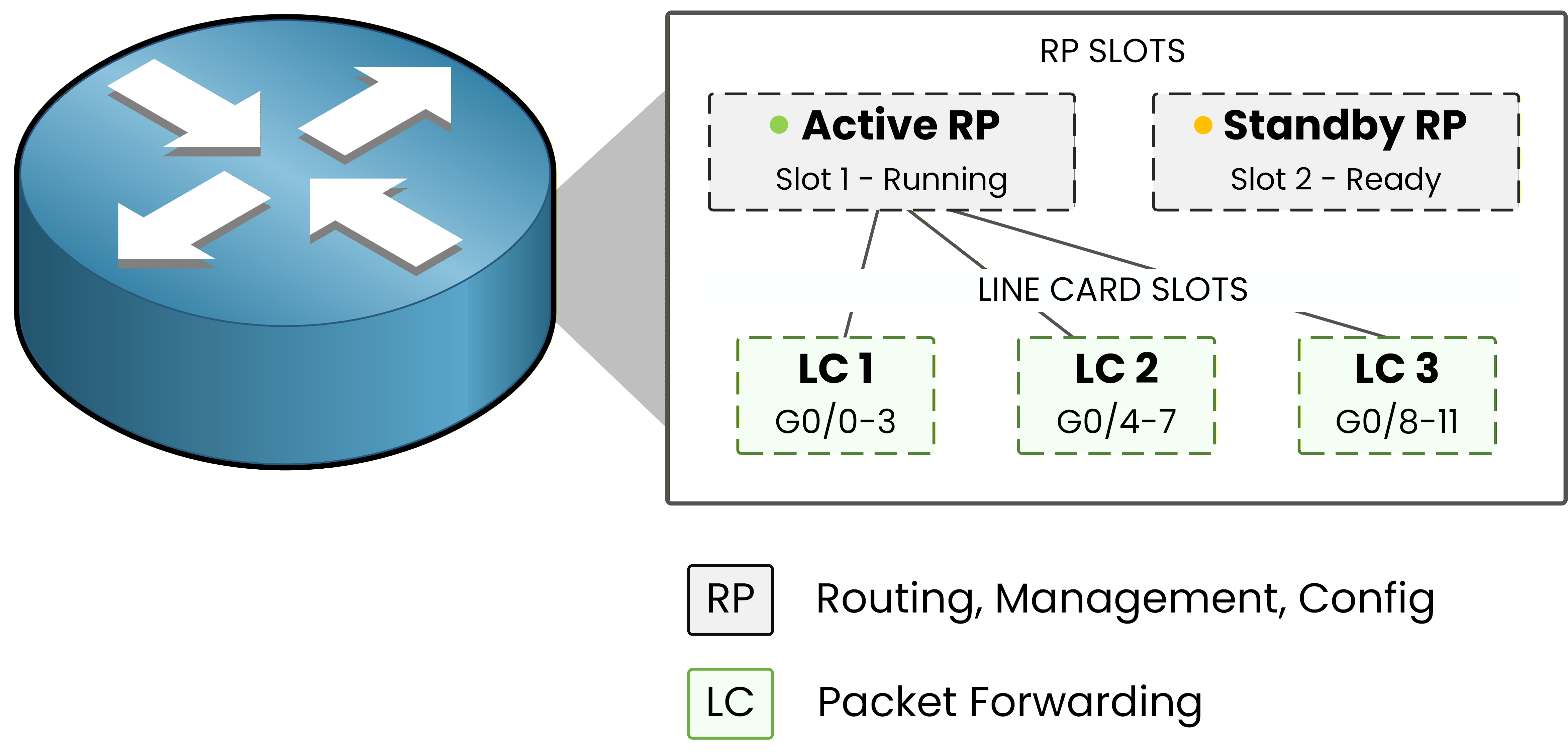
Figure 1 – Chassis router: Active RP, Standby RP, and Line Cards in separate slots
If the Active RP fails, the Standby takes over.
But how that takeover happens makes all the difference.Answer the question below
Which hardware module handles packet forwarding inside a chassis router?
What Happens Without Protection
Without any high availability mechanism, the Standby RP is either powered off or only partially initialized.
When the Active RP fails, your router essentially reboots.
The Standby RP must load IOS, read the startup configuration, reload the Line Cards, and rebuild all routing adjacencies from scratch.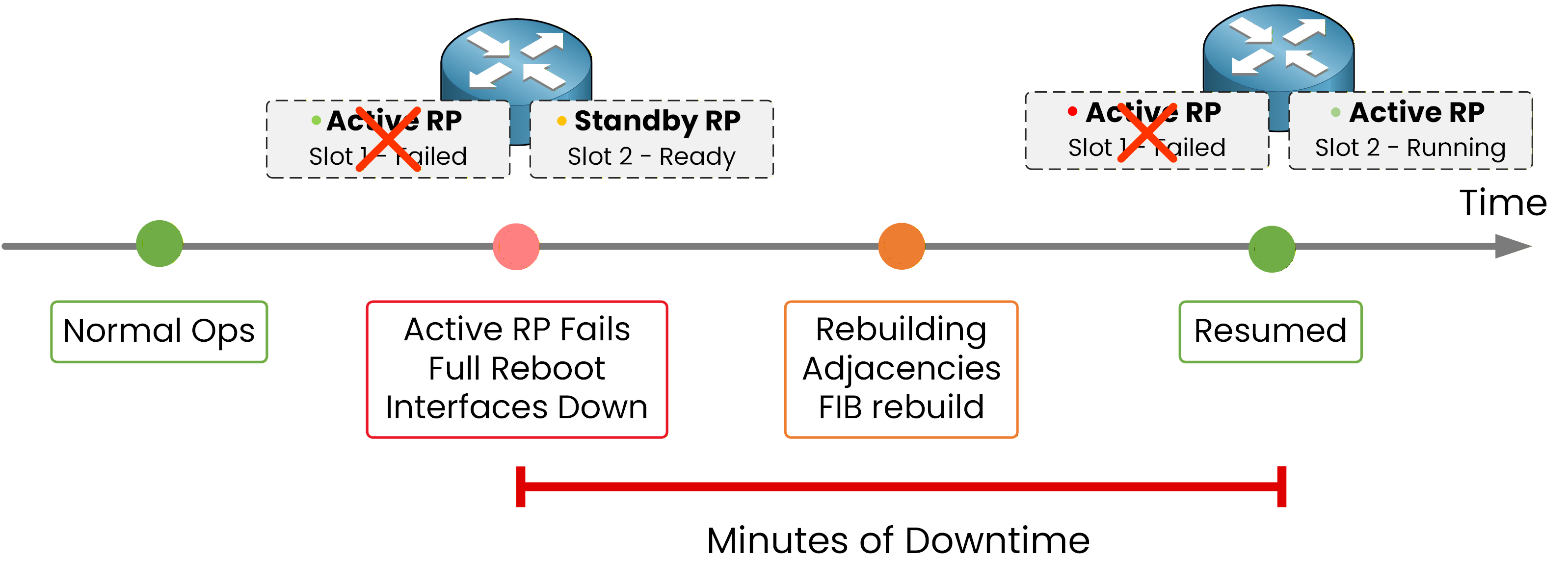
Figure 2 – RP failover without high availability: minutes of downtime
All your interfaces go down. All routing adjacencies (OSPF, BGP) are lost.
The routing table is empty. No packets are forwarded.
The entire failover can take several minutes. In a modern network, that is not acceptable.Earlier RP redundancy modes (HSA, RPR, RPR+) each tried to reduce this failover time. But none of them preserved Layer 2 or Layer 3 protocol states.
Every failover still meant re-convergence, and re-convergence meant downtime.Answer the question below
On a chassis router, which removable module runs the control plane?
So how do you make a failover truly seamless?
SSO is the modern RP redundancy mode used on Cisco chassis devices.
Unlike earlier modes, SSO fully boots and initializes the Standby RP, keeping it ready to take over at any moment.Copying Everything at Boot
The key mechanism behind SSO is called checkpointing.
Checkpointing is the process of syncing state information from the Active RP to the Standby RP.When the Standby RP first boots, a bulk synchronization is performed.
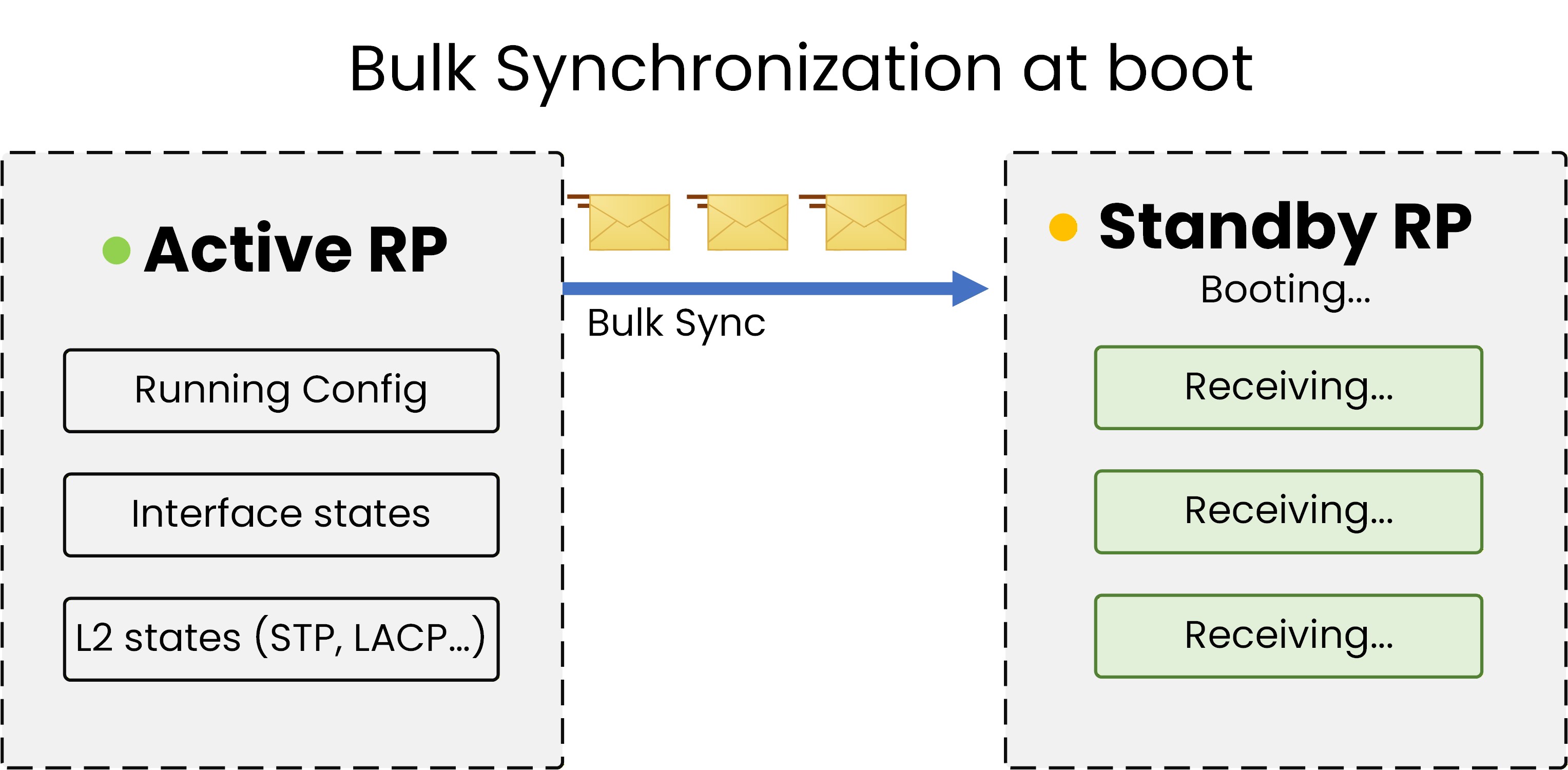
Figure 3 – SSO bulk synchronization: the Active RP sends all state to the Standby RP at boot
The Active RP sends everything at once: running configuration, interface states, and all Layer 2 protocol states (STP, LACP, PAgP, VTP, Port Security).
After this initial transfer, the Standby RP has a complete copy of the Active RP's state.
But your network is not static. Configurations change, interfaces go up and down, STP topologies evolve.Answer the question below
What is the process of syncing state from Active RP to Standby RP called?
Syncing Every Change in Real Time
After the initial bulk sync, SSO switches to incremental synchronization.
Any change on the Active RP is immediately sent to the Standby RP.40 % Complete: you’re making great progress
Ready to pass your CCNP exam?