In the previous lesson, you saw how PIM Sparse Mode builds a Shared Tree through the RP so that multicast traffic can flow from source to receivers.
This model works well, but it has two limitations that matter in specific scenarios.The RP as a Single Point of Convergence
In PIM Sparse Mode, every source must register with the RP.
The first-hop router encapsulates each multicast packet in a PIM Register message and sends it as unicast to the RP.
The RP decapsulates the traffic and pushes it down the Shared Tree.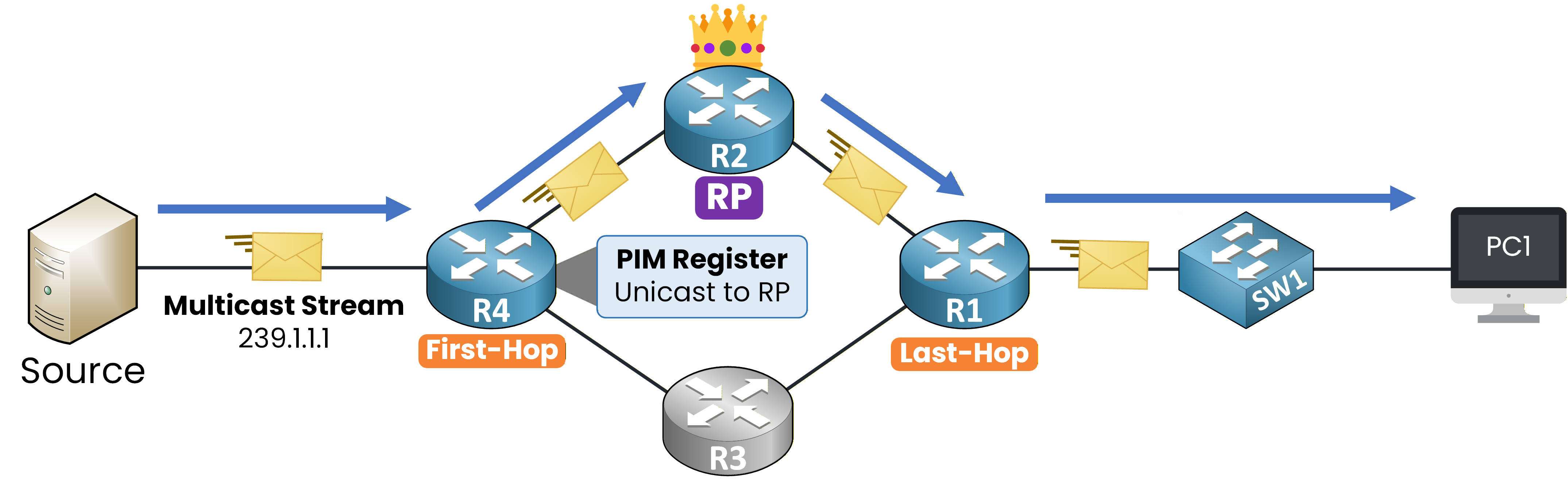
Figure 1 – PIM-SM: all traffic passes through the RP
All traffic converges at the RP, regardless of whether a more direct path exists between source and receivers.
This design is simple and scalable for most use cases. But two scenarios expose its weaknesses.Two Problems, Two Solutions
The first problem: your receiver already knows the source.
In applications like IPTV or live streaming, the receiver subscribes to a specific source.
Why force the traffic through the RP when your router could build a direct path to the source?The second problem: you have many sources sending to the same group. In a video conference, every participant sends a stream. With PIM-SM, each source requires its own Register message to the RP.
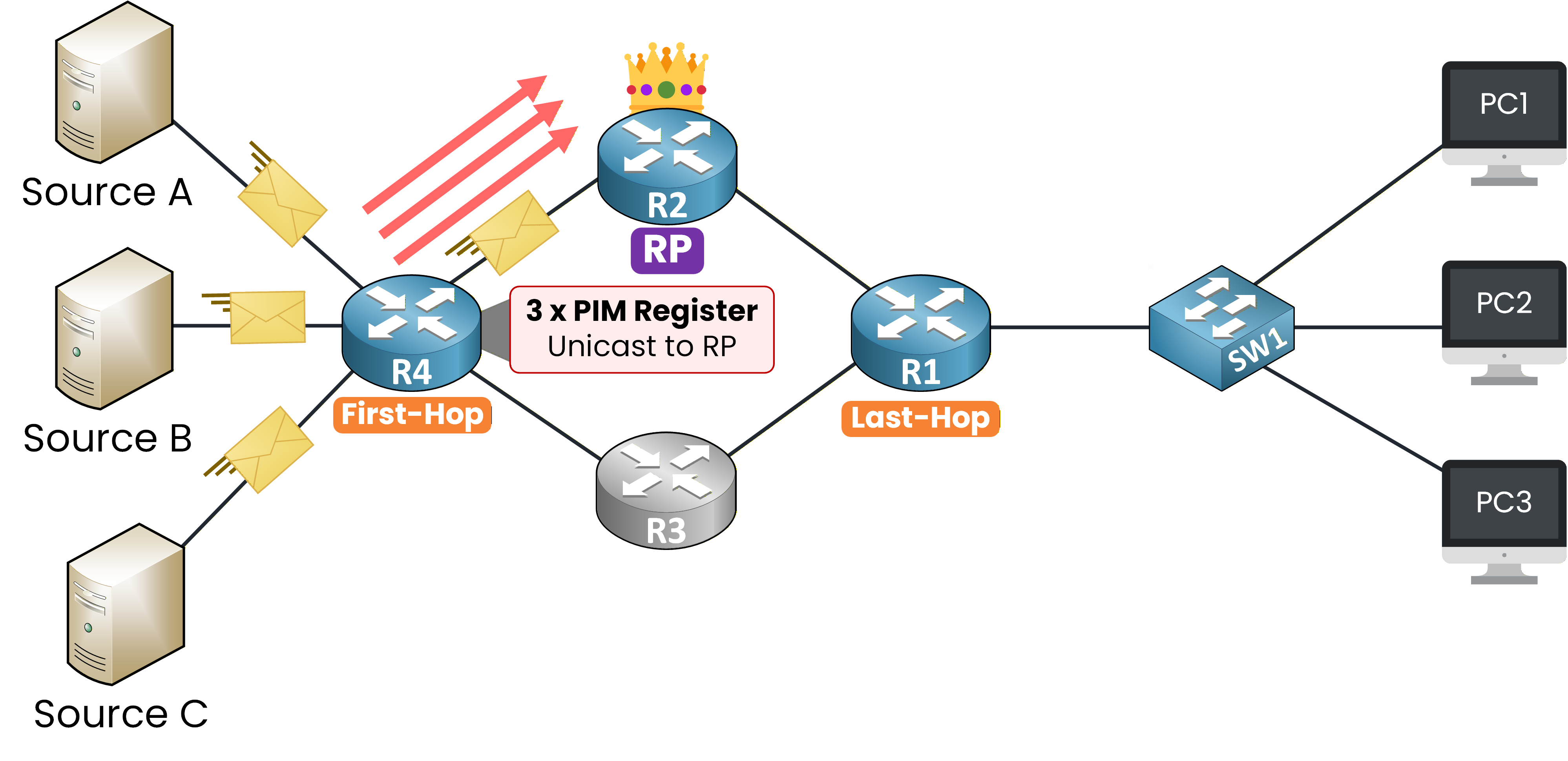
Figure 2 – PIM-SM: each source creates a separate Register tunnel to the RP
10 participants means 10 Register tunnels.
The RP must decapsulate every single one.
PIM defines two variants that address these problems: SSM eliminates the RP entirely, and Bidirectional PIM removes the Register process while keeping the RP.
Answer the question below
In PIM Sparse Mode, what must the first-hop router create for each source?
SSM (RFC 4607) is designed for scenarios where the receiver knows exactly which source it wants.
Instead of relying on the RP to match sources and receivers, SSM lets your router build a tree directly from the source to the receiver.IGMPv3: The Receiver Names the Source
In the previous lessons, you saw IGMPv2 reports where the host tells its router "I want group 239.1.1.1."
The router knows the group, but not the source.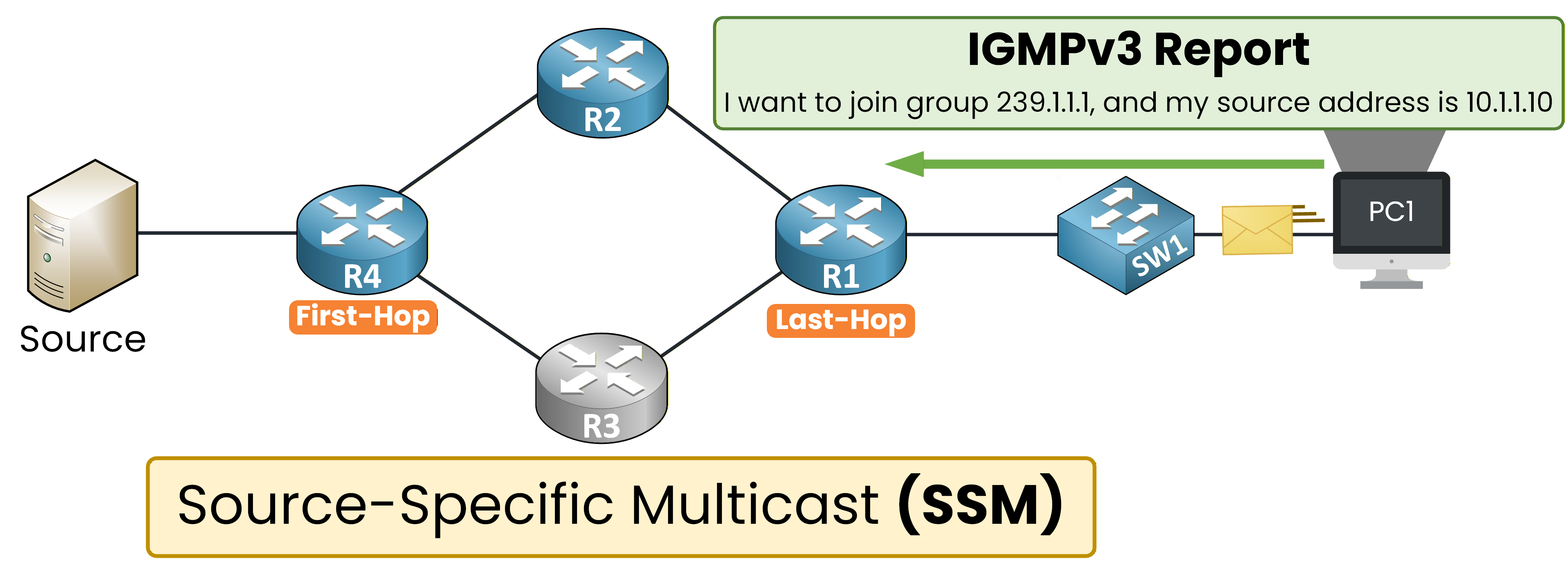
Figure 3 – IGMPv3: PC1 tells R1 both the group and the source
With IGMPv3, the host sends a report that includes both the group address and the source address.
Your last-hop router (R1) now knows exactly who the receiver wants to hear from.Because R1 knows the source, it does not need to ask the RP.
It can build a path directly toward the source using its unicast routing table.
Answer the question below
In SSM, what does the host include in its IGMPv3 report that IGMPv2 does not?
The (S, G) Join
R1 sends a PIM Join (S, G) toward the source.
The S is the source address (10.1.1.10), and G is the group address (239.1.1.1).
This is different from PIM-SM, where the Join was (*, G) and went toward the RP.
In SSM, the Join goes toward the source, not toward the RP.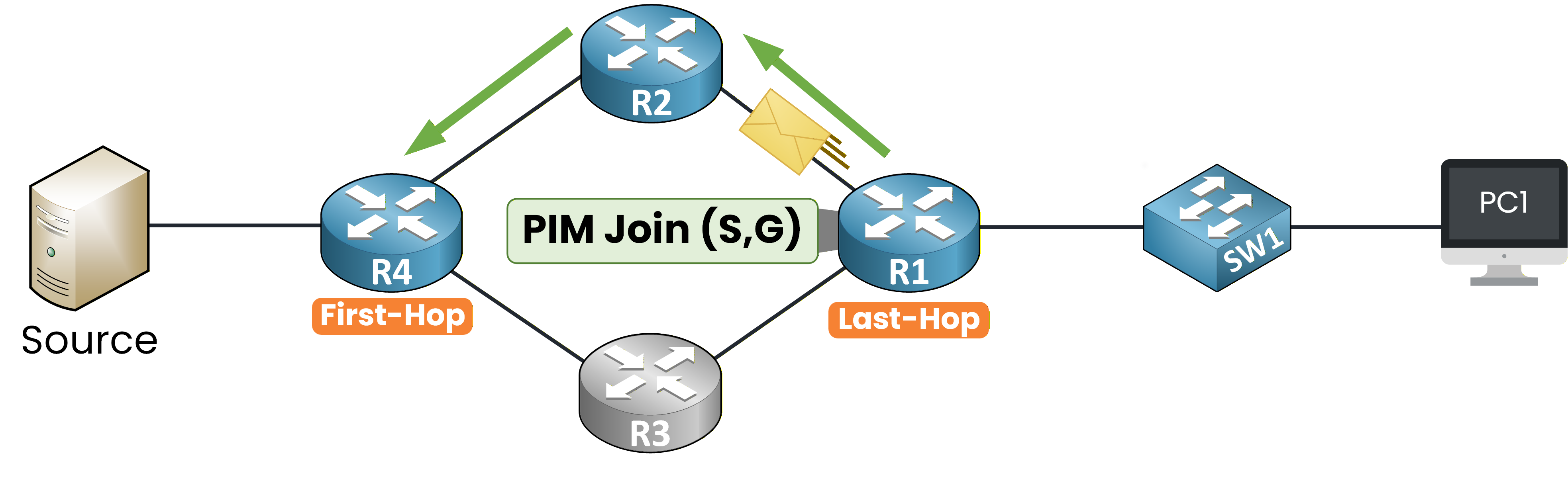
Figure 4 – PIM Join (S, G): R1 joins toward the source, not the RP
The Join follows the unicast routing table hop by hop.
R1 sends it to R2 (best next hop toward 10.1.1.10), and R2 relays it to R4 (directly connected to the source).
R2 has no RP role in SSM. It simply forwards the Join as a transit router.40 % Complete: you’re making great progress
Ready to pass your CCNP exam?