In the previous lesson, you saw how IGMP gives hosts a way to tell their router which multicast groups they want.
One key question remains: how does that router actually get the stream from the source?What IGMP Already Solved
Thanks to IGMP, your router maintains a list of active group memberships per interface.
It knows exactly which hosts want to receive which groups.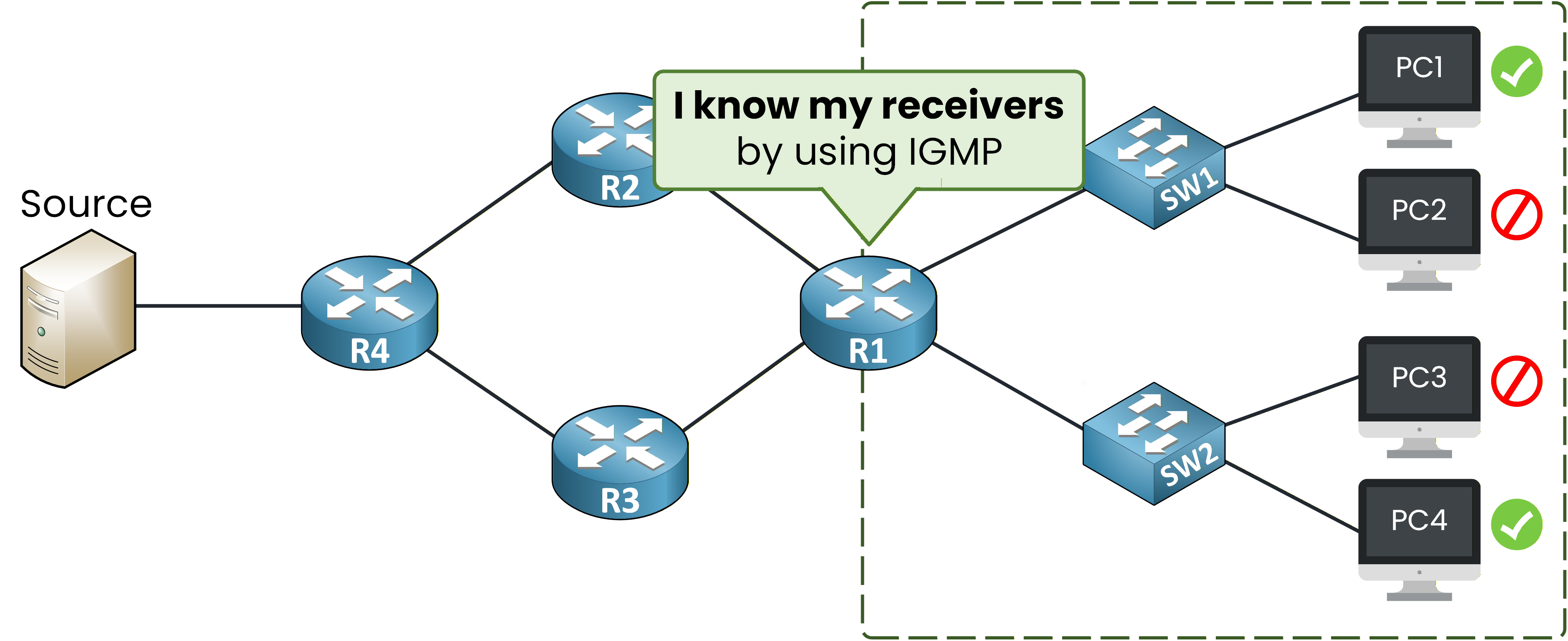
Figure 1 – IGMP: R1 knows its receivers for group 239.1.1.1
In this example, PC1 and PC4 sent IGMP Membership Reports for group 239.1.1.1.
R1 knows exactly which interfaces have interested receivers.
But knowing you have receivers is only half the problem.The Missing Piece
Your last-hop router still has no way to pull the multicast stream from the source through the network.
IGMP does not extend beyond that single hop.
Between your last-hop router and the source, there may be several routers.
None of them know that receivers exist, and none of them are forwarding the stream.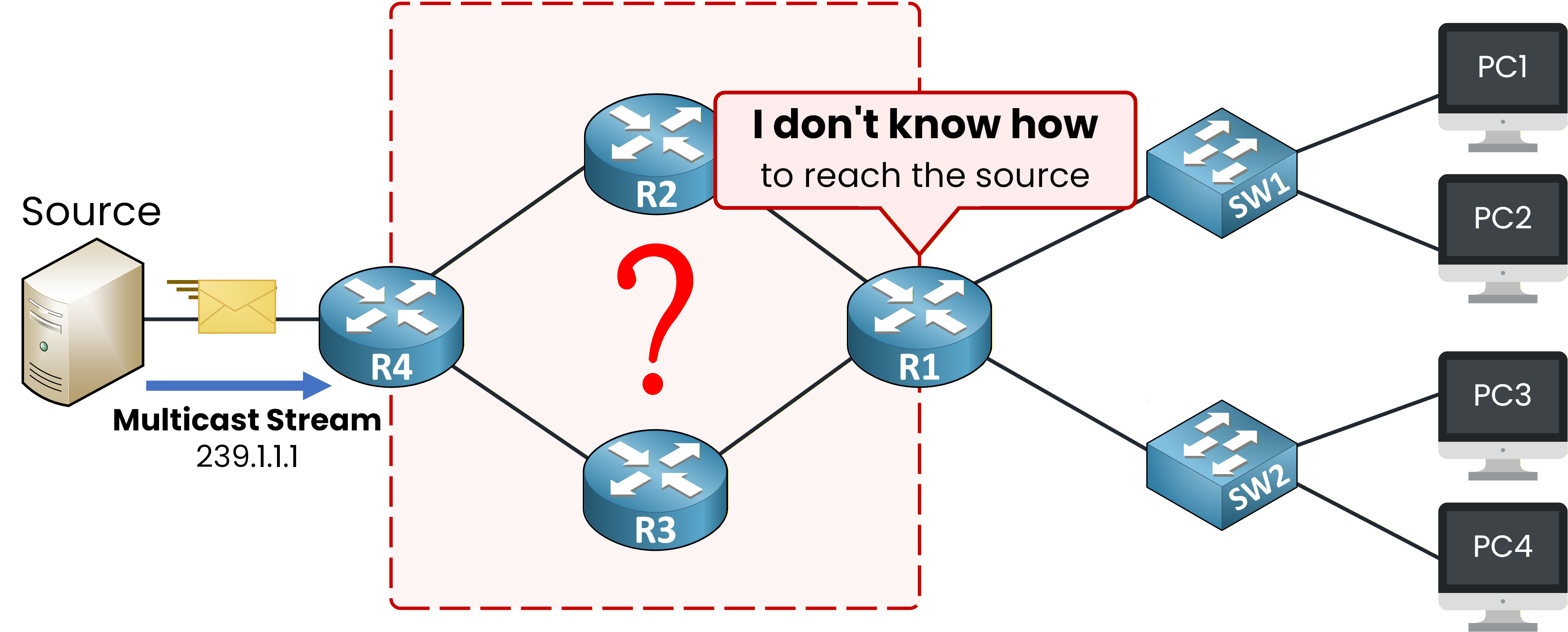
Figure 2 – R1 does not know how to reach the source
This is the gap that PIM (Protocol Independent Multicast) fills.
PIM is the multicast routing protocol that operates between routers to build distribution trees from source to receivers.A distribution tree is the path that multicast traffic follows through the network. PIM does not maintain its own routing table.
Instead, it relies on your existing unicast routing protocol (OSPF, EIGRP, or BGP) to determine the best path toward the source.
This is why it is called "Protocol Independent": PIM works with any unicast routing protocol.
If you switch from OSPF to EIGRP tomorrow, PIM keeps working without any change.Answer the question below
What protocol builds the multicast distribution tree between routers?
Now that you understand the gap PIM fills, let's focus on how it works.
From this point on, we will simplify the topology to a single receiver (PC1) so you can focus on the PIM mechanism without distraction.
The principle is the same for all receivers.PIM Neighbor Discovery
Before any multicast tree can be built, PIM routers must discover each other.
Every PIM-enabled interface sends PIM Hello messages to the multicast address 224.0.0.13 (all PIM routers).
Hellos are sent every 30 seconds by default.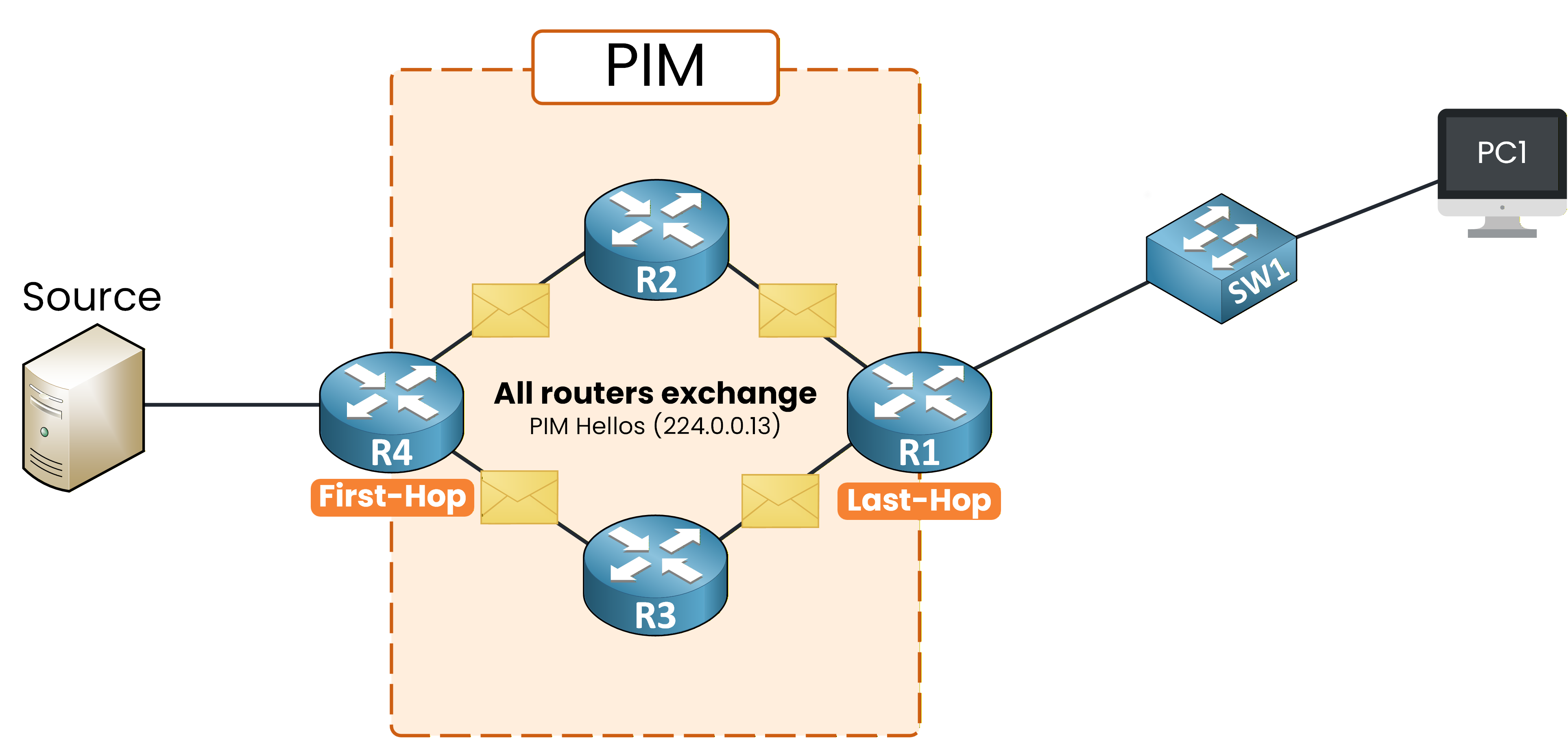
Figure 3 – PIM routers discover each other using PIM Hellos
Through these Hellos, each router learns its PIM neighbors and maintains a neighbor table.
R4 is the first-hop router (closest to the source) and R1 is the last-hop router (closest to the receivers).
This neighbor relationship is the foundation for all PIM signaling.The Sparse Mode Approach
PIM has several modes of operation. The most widely deployed is PIM Sparse Mode (PIM-SM), defined in RFC 7761.
In Sparse Mode, no router receives multicast traffic unless it explicitly requests it.
This is an opt-in model. By default, multicast traffic flows nowhere.This raises a new question. When a receiver joins a group, its last-hop router needs to request the stream.
But where does it send that request? The last-hop router does not know who the source is or where it is located.Answer the question below
In PIM Sparse Mode, what must a router do before receiving multicast traffic?
The Rendezvous Point
PIM Sparse Mode solves this with the Rendezvous Point (RP).
The RP is a router known to all PIM routers in the network.
It serves as a meeting point: receivers join toward the RP, and sources register with the RP.40 % Complete: you’re making great progress
Ready to pass your CCNP exam?