In the previous lessons, you saw how PIM Sparse Mode, SSM, and Bidirectional PIM build multicast trees inside a single network.
But every one of them assumes the source and the receiver share the same PIM domain.
What happens when they do not?A Receiver in Another Domain
Imagine your network spans two autonomous systems.
AS 100 contains the multicast Server. AS 200 contains PC1, the receiver.
Each AS runs its own PIM domain, with its own Rendezvous Point.R1 is the RP for AS 100.
R2 is the RP for AS 200.
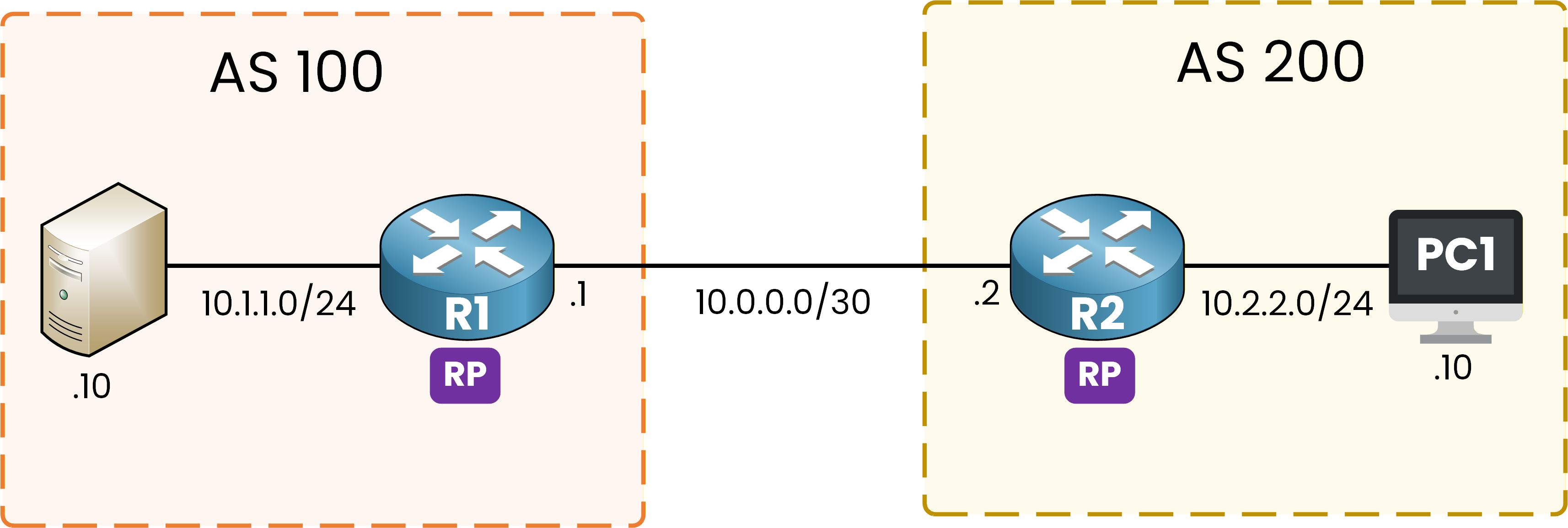
Figure 1 – Inter-domain topology with two PIM domains
Imagine PC1 wants to receive group 239.1.1.1, so it sends an IGMP Membership Report to its last-hop router.
Inside AS 200, R2 (the RP) now knows that PC1 is interested.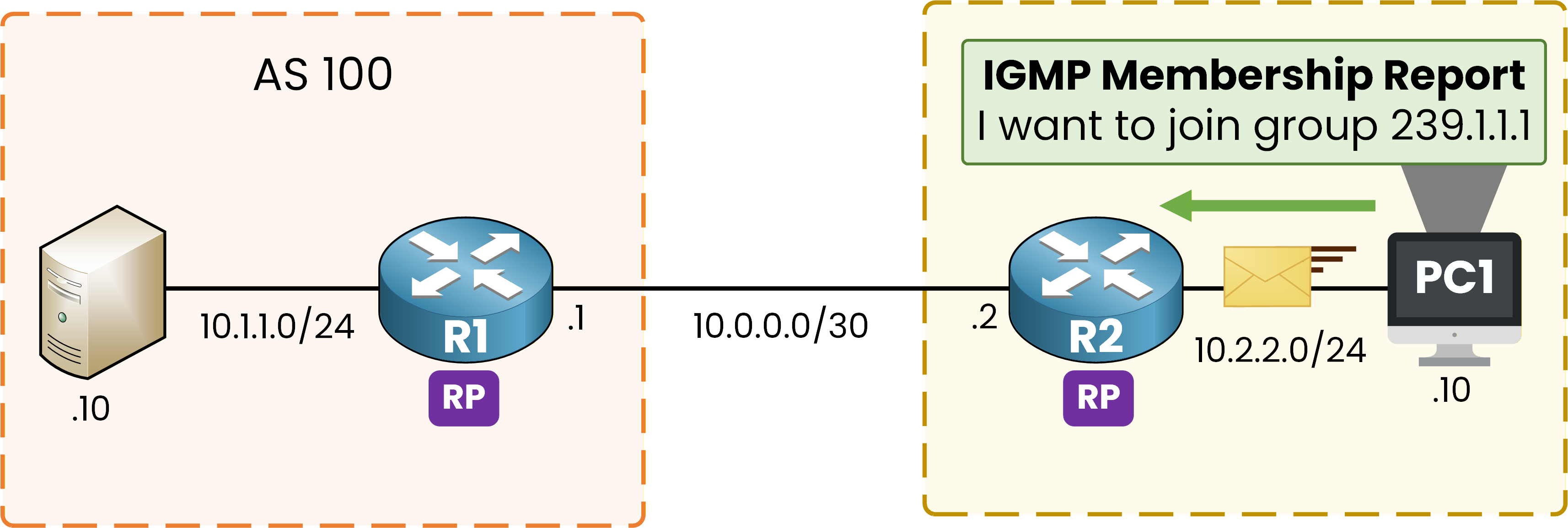
Figure 2 – PC1 sends an IGMP Join to R2 in AS 200
But R2 has no idea who can send to that group.
There is no source registered in AS 200.Answer the question below
R2 knows PC1 wants the group, but what is still missing in AS 200?
A Source in Another Domain
Meanwhile, on the other side of the WAN link, the Server starts sending the multicast stream.
Just like in PIM Sparse Mode, the first-hop router in AS 100 registers the source with its local RP.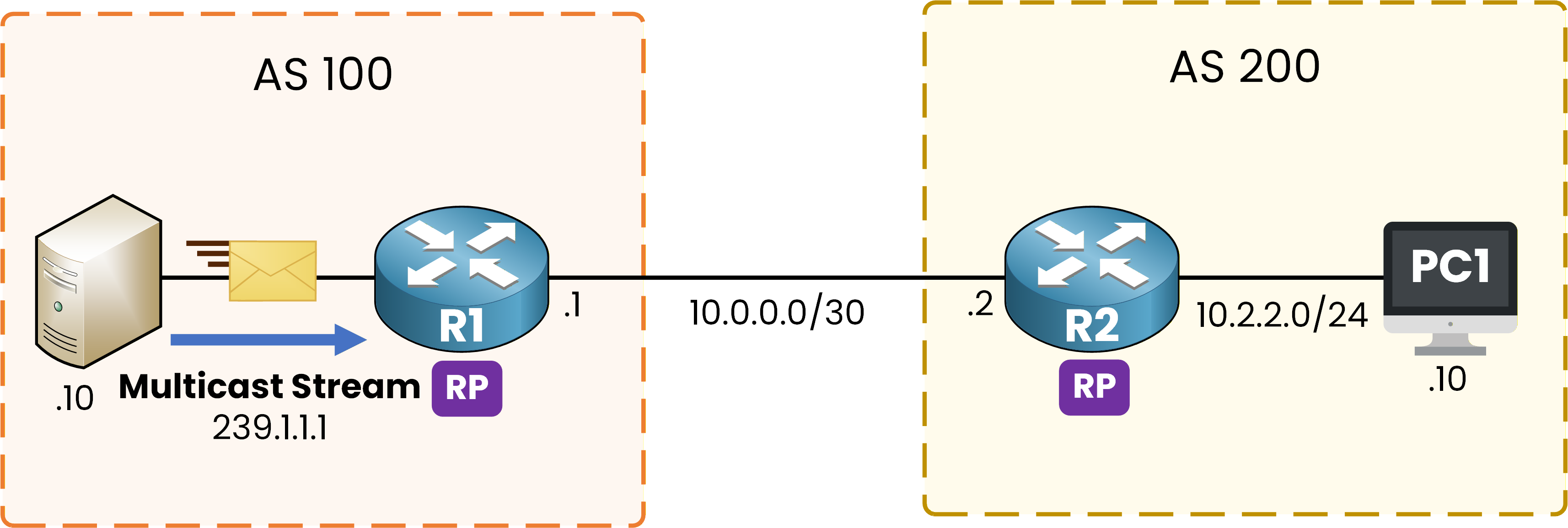
Figure 3 – R1 learns about the source in AS 100
R1 now has a registered source for group 239.1.1.1.
Inside AS 100, everything works exactly as PIM-SM expects.
But there is no receiver in AS 100. PC1 is on the other side, behind R2.Answer the question below
R1 has registered the source. What is missing in AS 100?
Two Domains, Two Blind Spots
So you end up with two RPs, each stuck with half of the puzzle.
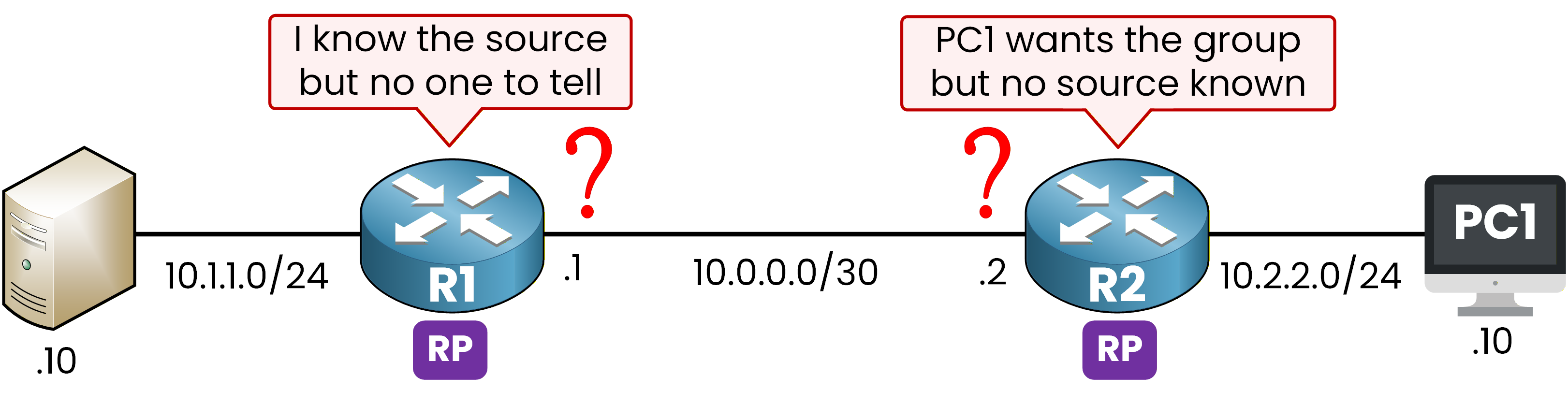
Figure 4 – The two RPs are isolated
Look at what each RP is thinking.
R1 has the source but nobody asking for it.
R2 has a receiver but no source to pull from.
So why can't they just talk to each other through PIM?
Because PIM-SM does not cross domains.
PIM Register, PIM Join, and the RP itself are all scoped to a single domain.
There is no native mechanism for one RP to learn about sources in another domain.40 % Complete: you’re making great progress
Ready to pass your CCNP exam?