In a typical network, most traffic follows a simple pattern: one source sends a packet to one destination. This is called unicast traffic.
Unicast works perfectly for web browsing, SSH sessions, or file transfers. Each conversation involves exactly two devices.But what happens when one source needs to send the same data to many receivers at the same time?
The Duplication Problem
Imagine a server streaming a live video feed to three receivers on the network.
With unicast, your server must create one separate copy for each receiver. Three receivers means three individual streams, each carrying the exact same data.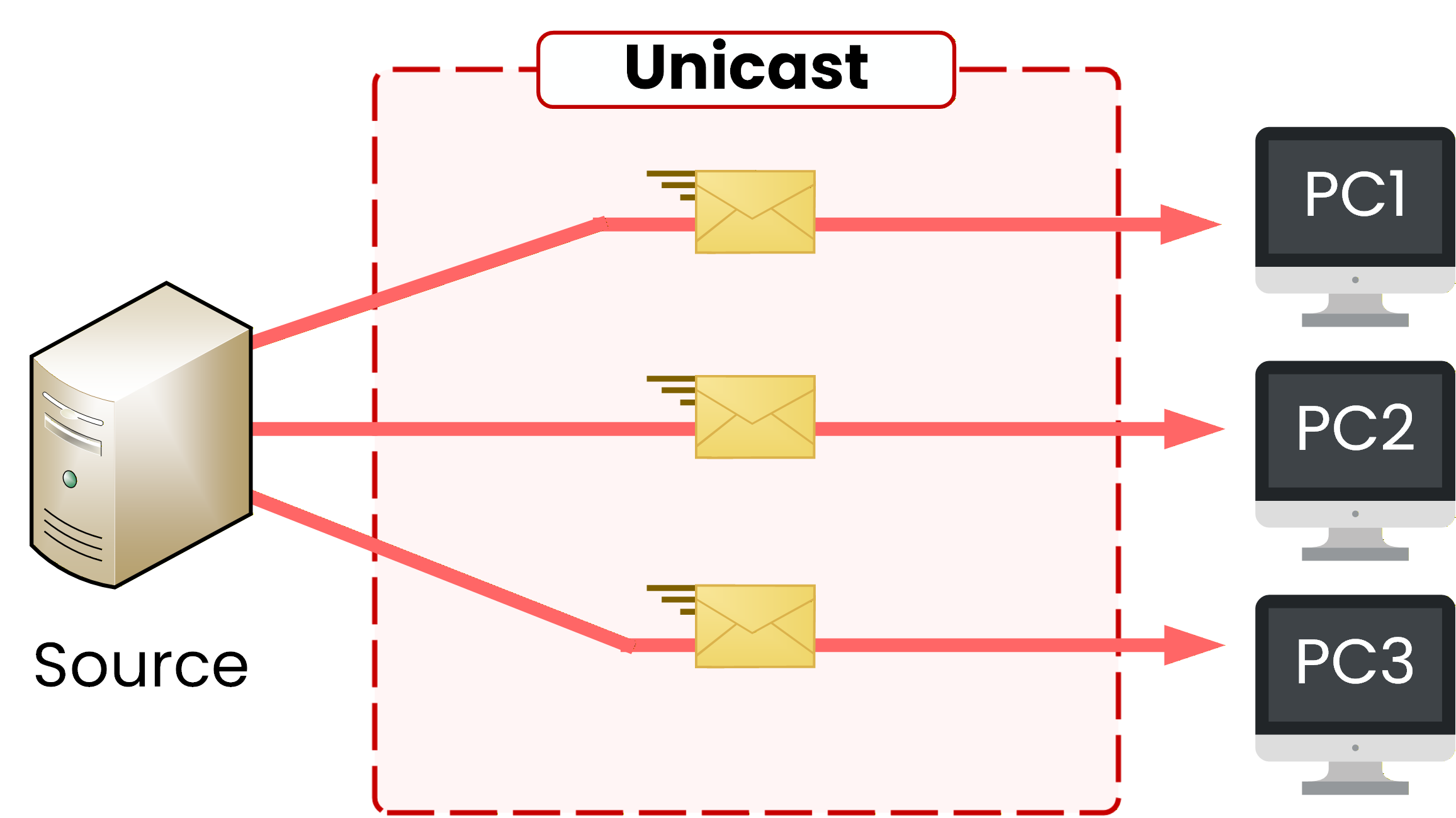
Figure 1 – Unicast sends multiple copies
Each copy carries the same payload. Yet every packet travels independently through the network, consuming bandwidth on every link it crosses.
Now scale this to hundreds of receivers. If each stream is 5 Mbps, your server pushes 1.5 Gbps of identical data out of a single interface for just 300 viewers.
This approach does not scale.
The more receivers you add, the more bandwidth you waste.Answer the question below
What type of traffic model sends one individual copy per receiver?
Why Not Use Broadcast?
You might think broadcast solves the duplication problem.
Instead of creating separate copies, the source sends a single frame that reaches every device on the segment.But broadcast has two serious limitations.
First, broadcast is limited to a single Layer 2 domain. Routers do not forward broadcast traffic. If your receivers span multiple subnets, broadcast cannot reach them.
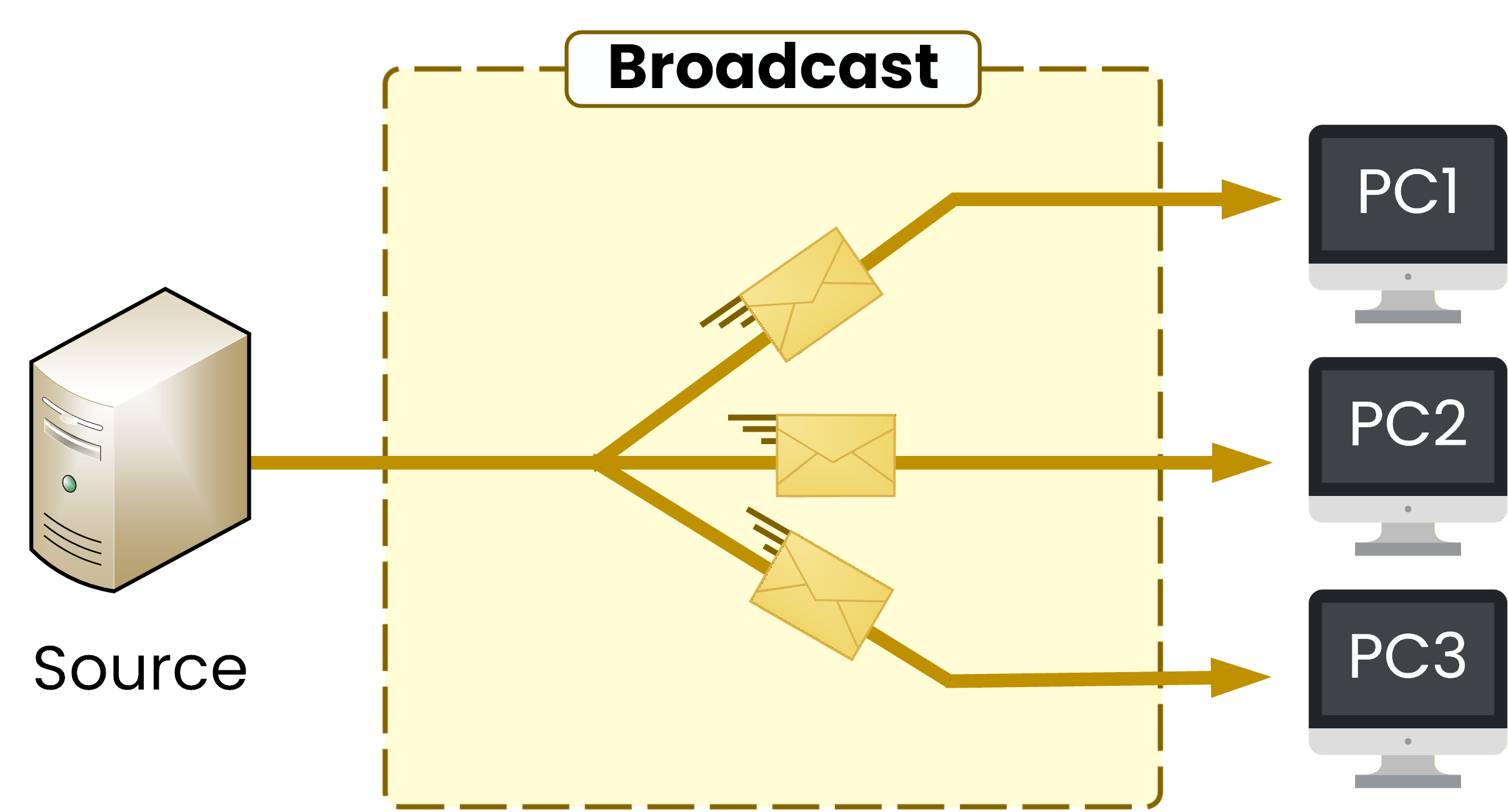
Figure 2 – Broadcast reaches all hosts
Second, broadcast forces every device on the segment to process the frame, even devices that have no interest in the stream. This wastes CPU cycles on every host and creates unnecessary interrupts.
Unicast wastes bandwidth. Broadcast wastes bandwidth and processing power, and cannot cross routers.
Your network needs a third model.Answer the question below
In a unicast model, how many copies of a stream does the server send if there are 100 receivers?
IP Multicast, defined in RFC 1112, introduces a delivery model built specifically for one-to-many and many-to-many communication.
With multicast, your source sends a single copy of each packet. The network itself takes responsibility for replicating that packet only where receivers exist.
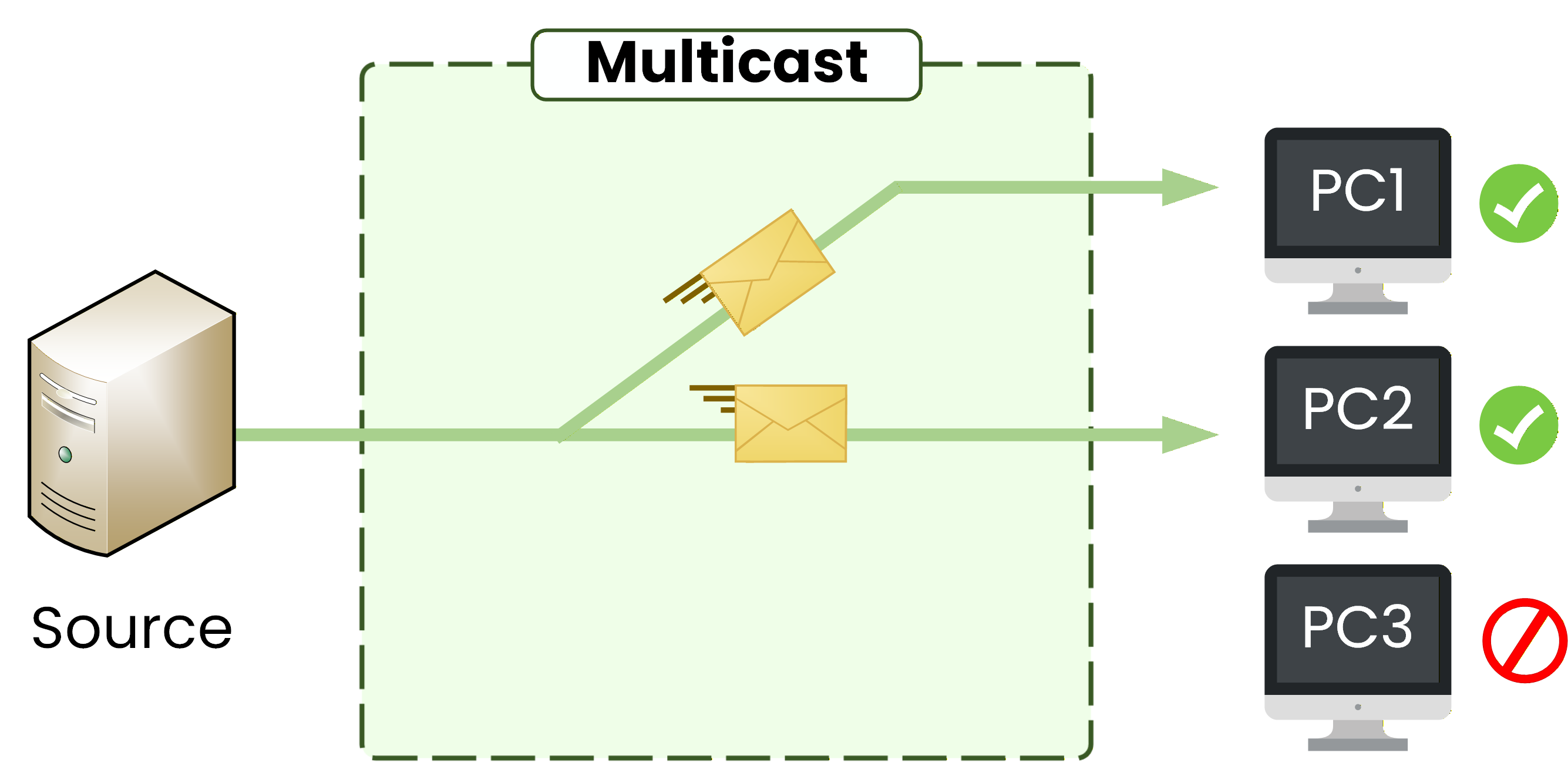
Figure 3 – Multicast targets interested receivers
Your server now sends a single stream regardless of how many receivers are watching.
Routers along the path duplicate the packets only at branching points where receivers are present.
Hosts that did not join the group receive nothing.This is the core advantage of multicast: the source’s load stays constant, and network links carry only one copy of the traffic until a fork is needed.
The Multicast Group Model
Multicast traffic is not addressed to a single host.
Instead, it is sent to a multicast group address.A multicast group is identified by a Class D IPv4 address in the range 224.0.0.0 to 239.255.255.255.
Any host that wants to receive the stream joins the group. Any host that is not interested simply ignores it.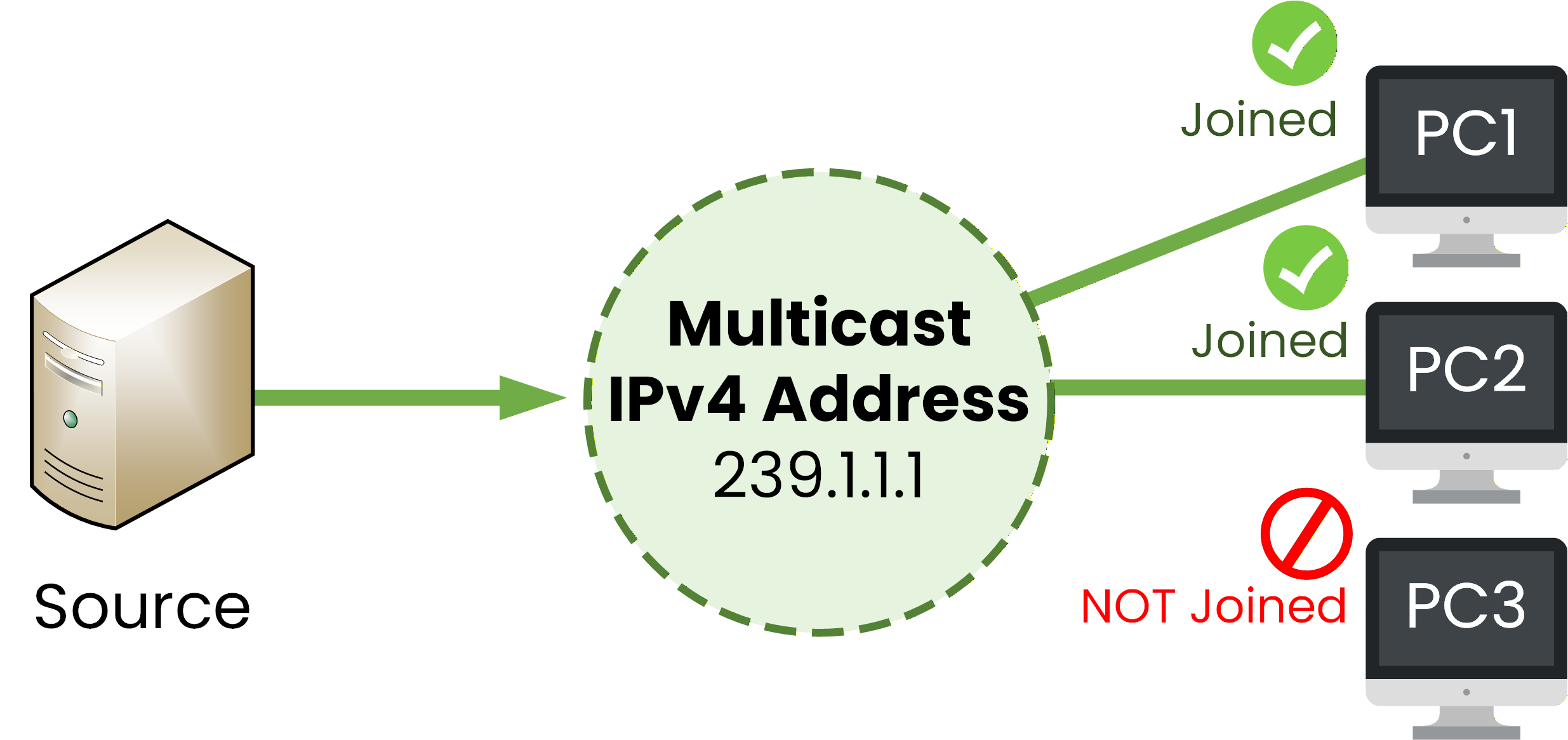
Figure 4 – Multicast group membership
The source does not need to know who the receivers are or how many exist. It simply sends traffic to the group address. The network handles the rest.
Answer the question below
Does a multicast source need to know the identity of each receiver?
Unicast, Broadcast, and Multicast Compared
Now that you understand the multicast model, let’s compare all three delivery models side by side.
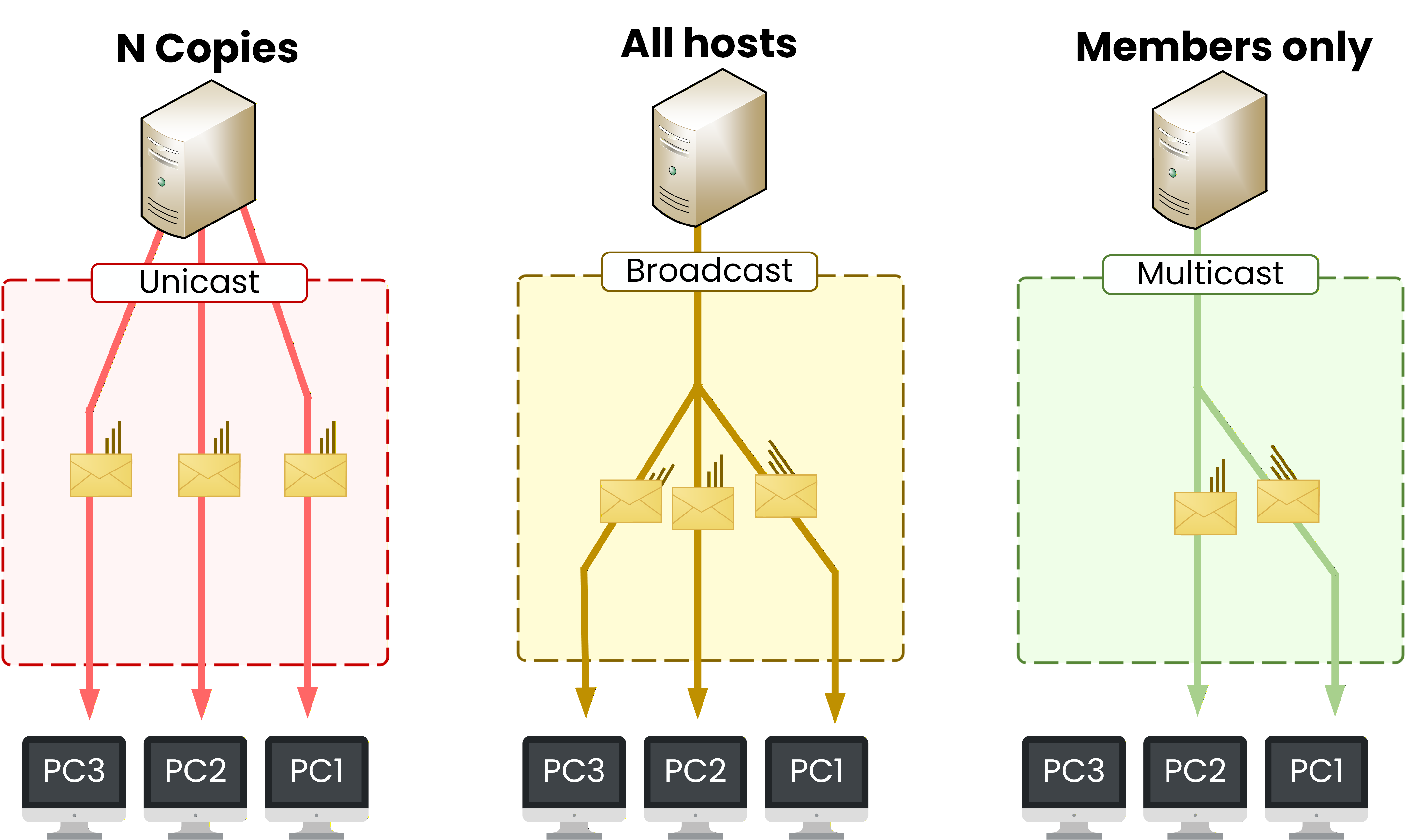
Figure 5 – Traffic models compared
40 % Complete: you’re making great progress
Ready to pass your CCNP exam?