To understand BGP, you first need to understand the problem it was designed to solve.
When you look at a single organization, routing seems straightforward.
All routers belong to the same administrative entity and follow the same objectives.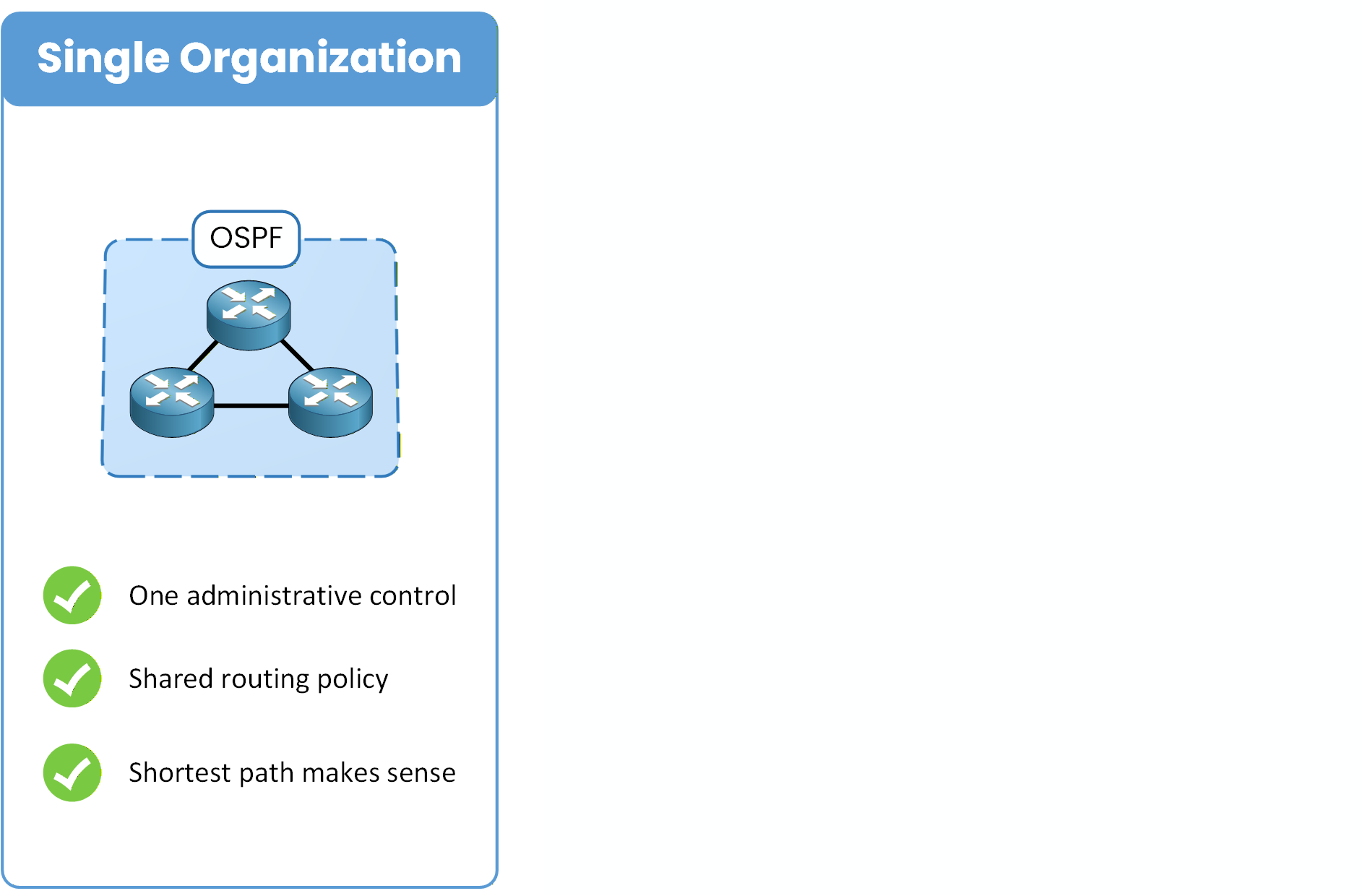
Figure 1 – Routing Inside a Single Organization
OSPF in a Single Organization
In this type of environment, an IGP such as OSPF works well because:
You have a single administrative control
The routing policy is shared across the network
Selecting the shortest path usually makes sense
Inside one organization, these assumptions are valid.
You control everything, and every router trusts the others.From Single Domain to Multiple Domains
Now expand your view.
Instead of one organization, imagine multiple independent networks that need to communicate.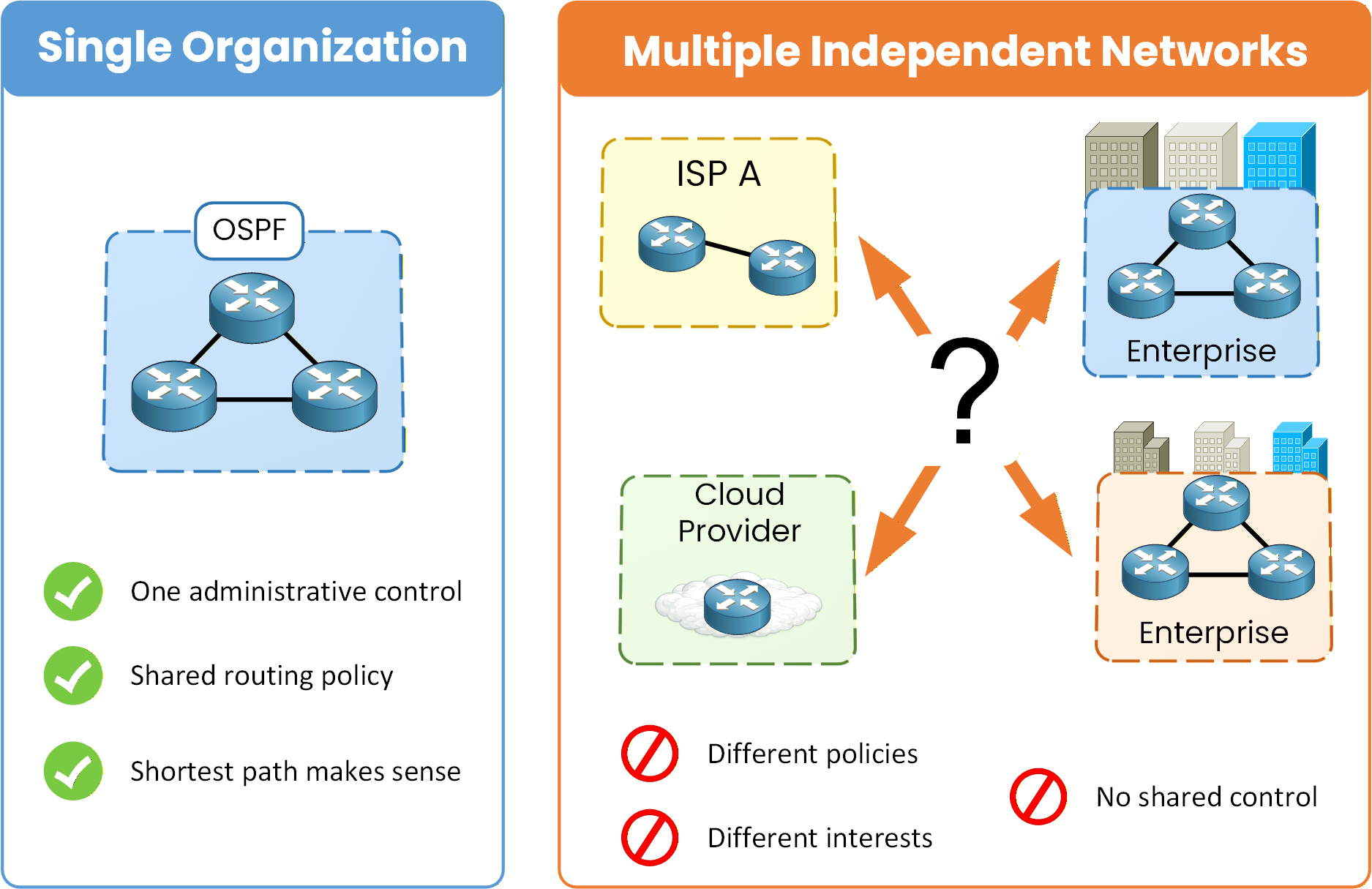
Figure 2 – Routing Between Independent Networks
You now have:
An ISP
A cloud provider
Several enterprises
Other independent organizations
Each of these networks is managed independently and operates under its own objectives and constraints.
Why OSPF Cannot Run the Internet
At this point, you might ask yourself:
Why not simply use OSPF everywhere?
The answer lies in the assumptions OSPF makes.OSPF assumes:
One trusted administrative domain
Shared routing policies
Full visibility of the network topology
Decisions based strictly on the shortest path
But on the Internet, none of these assumptions hold.
Independent networks:
Do not share administrative control
Do not expose their internal topology
Do not share business objectives
Do not always prefer the shortest path
At Internet scale, routing decisions are driven by policy rather than purely by topology.
A different approach is required.Answer the question below
What type of routing protocol typically works well inside a single organization with one administrative control?
Why BGP Exists
BGP was designed to interconnect independent networks while allowing each of them to enforce its own routing policy.
BGP is a Path Vector routing protocol.
Unlike link-state protocols, it does not build a full topology database of the network or calculate routes using a shortest-path algorithm.
Instead, it exchanges network reachability information between networks and applies routing decisions based on policy.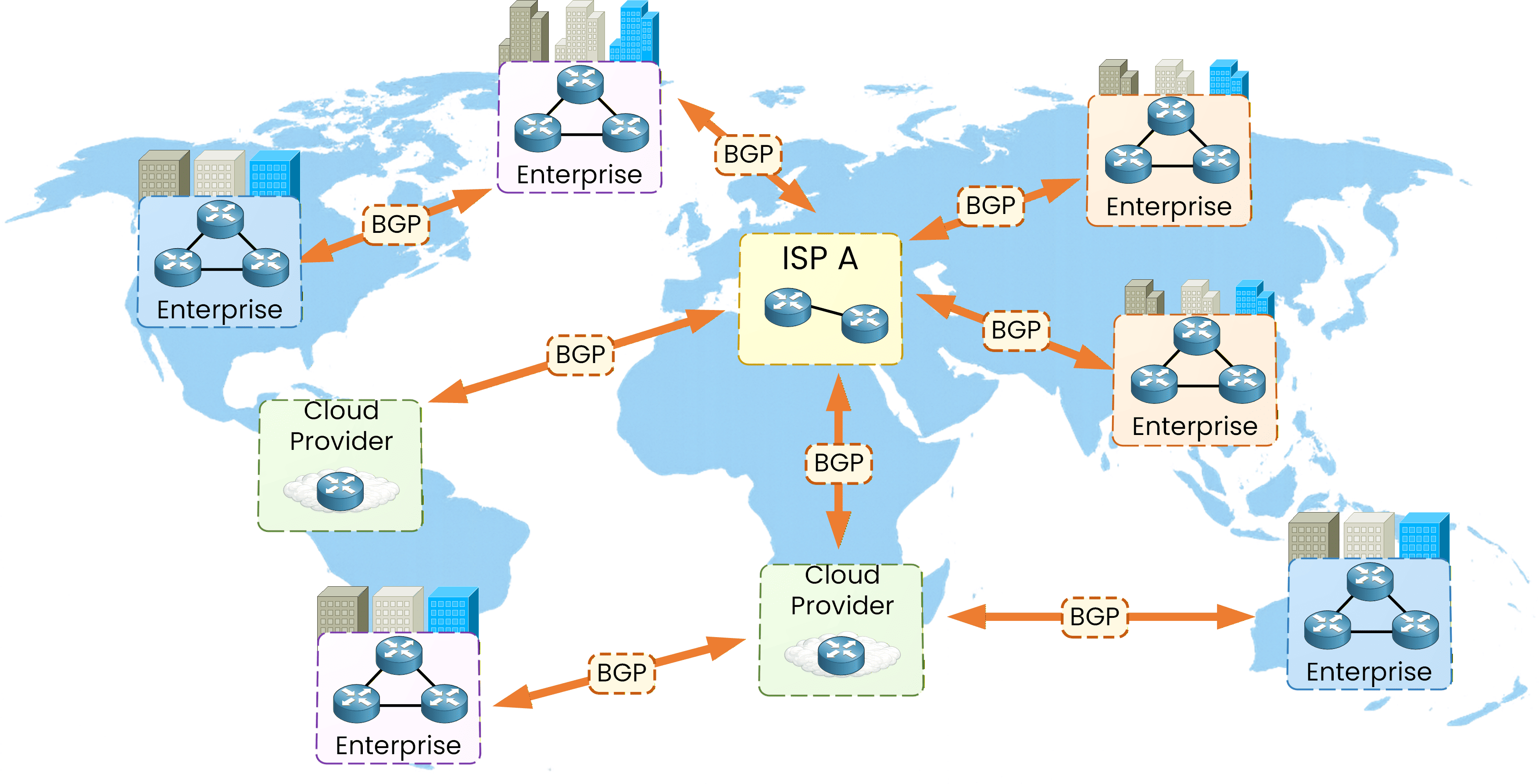
Figure 3 – Global BGP connectivity
With BGP, you do not share your internal topology.
You share reachability information.
You decide which routes to advertise and which routes to accept.The Internet is a collection of interconnected networks.
BGP is the protocol that enables this interconnection.Answer the question below
What drives routing decisions at Internet scale instead of purely topology?
Now that you understand why BGP is needed, you must understand how independent networks are identified.
When independent networks want to exchange their internal routes in order to communicate with each other, they must establish a BGP relationship.
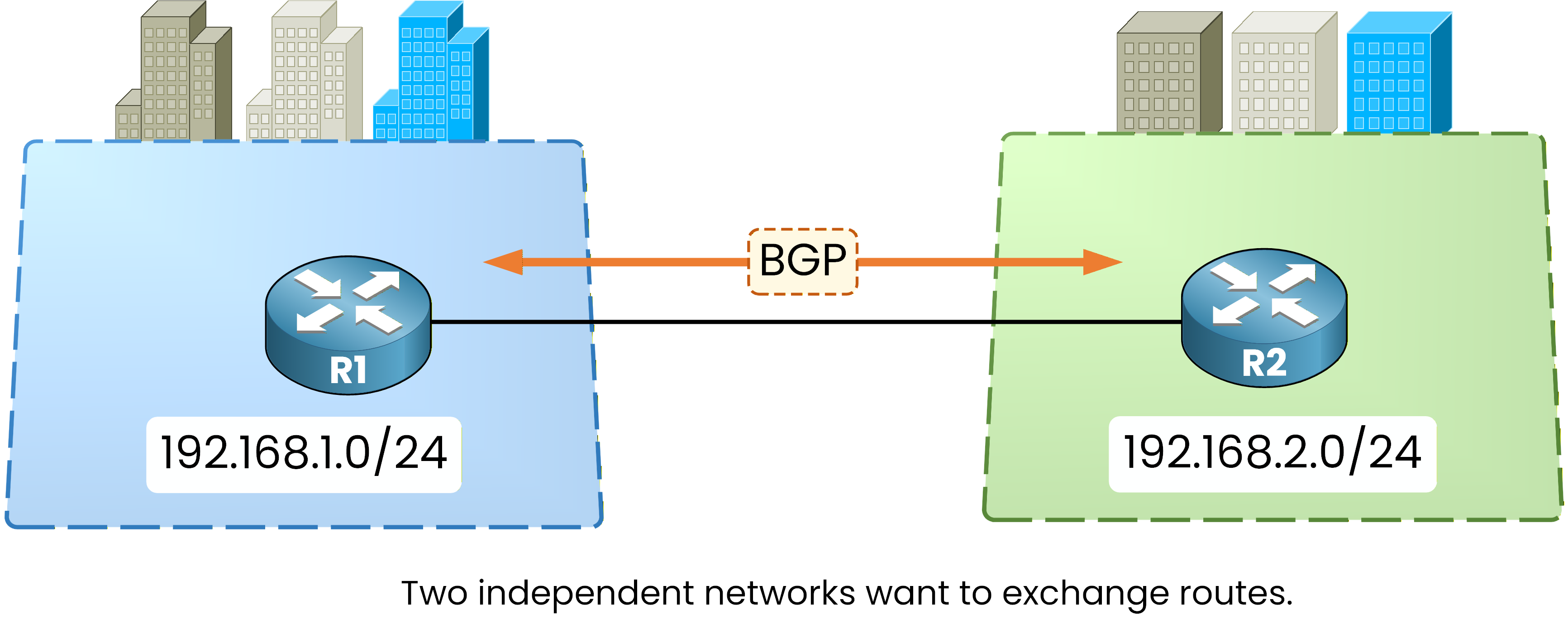
Figure 4 – Basic BGP exchange
40 % Complete: you’re making great progress
Ready to pass your CCNP exam?