In the previous lesson, you learned the five fabric roles.
Now you need to see how they work together when a user actually sends traffic.
Everything starts with one simple question: how does the fabric know where every user is?The Topology You Will Follow
Throughout this lesson, you will follow a small fabric with three Fabric Edges.
PC1 sits behind Edge 1 on Floor 1.
You want it to reach PC3, which sits behind Edge 3 on Floor 3.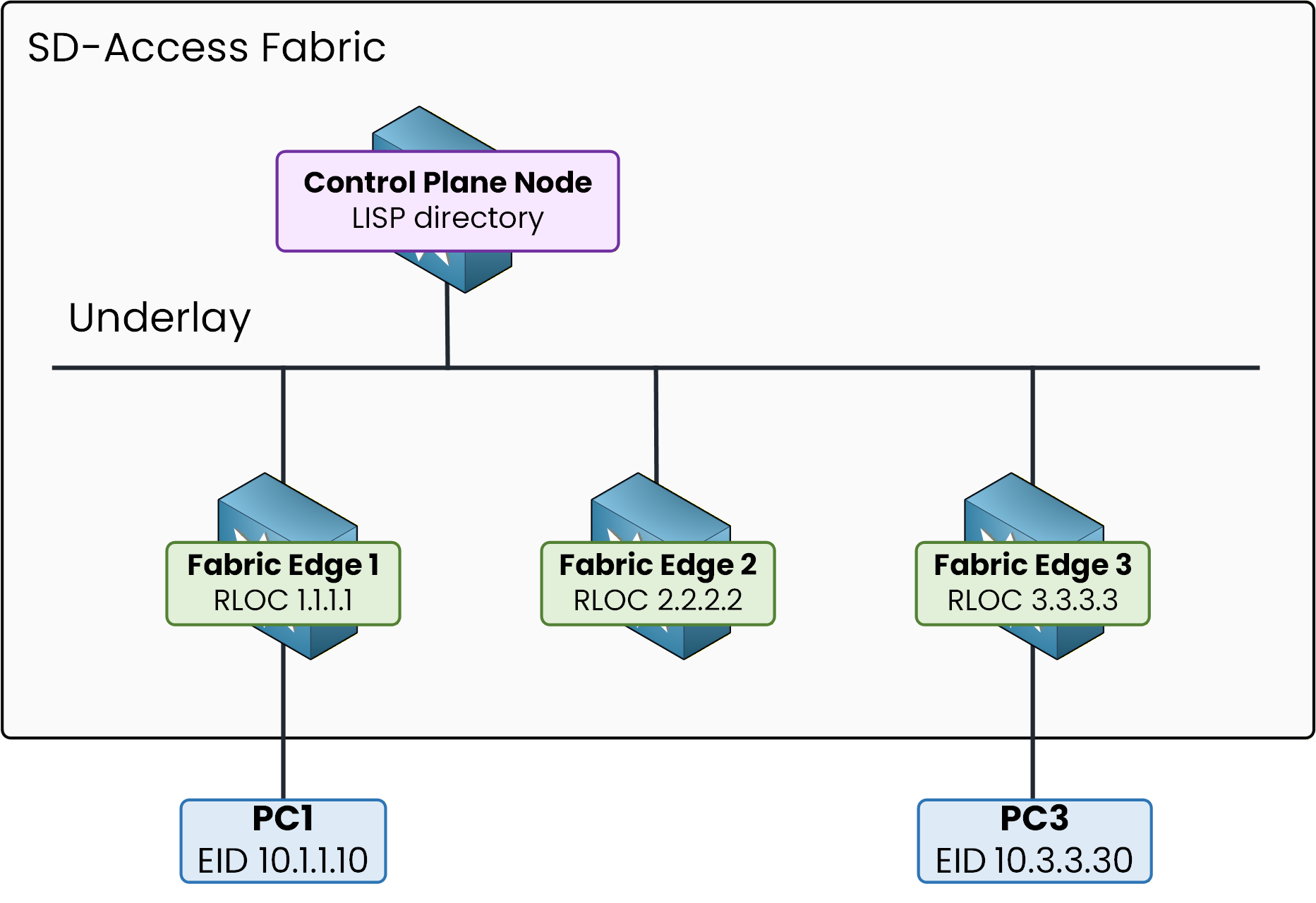
Figure 1 – The fabric topology
PC1 has the IP address 10.1.1.10.
PC3 has 10.3.3.30.
In LISP terms, these user IPs are called EIDs (Endpoint Identifiers).
Each Fabric Edge also has a routable IP, the RLOC (Routing Locator).You already saw both terms in the LISP Fundamentals lesson.
SD-Access uses LISP for its control plane: every user is identified by its EID and reached through its Edge's RLOC.RLOCs reach each other through the underlay, a routed Layer 3 network.
Catalyst Center provisions it for you, so you do not have to worry about it in this lesson.Map-Register
When PC1 connects to Edge 1, the switch learns its MAC and IP address through ARP.
But that knowledge stays local to Edge 1.
The rest of the fabric does not know PC1 exists.To fix this, Edge 1 sends a Map-Register message to the Control Plane Node.
It declares: "PC1 (10.1.1.10) is reachable through my RLOC (1.1.1.1)."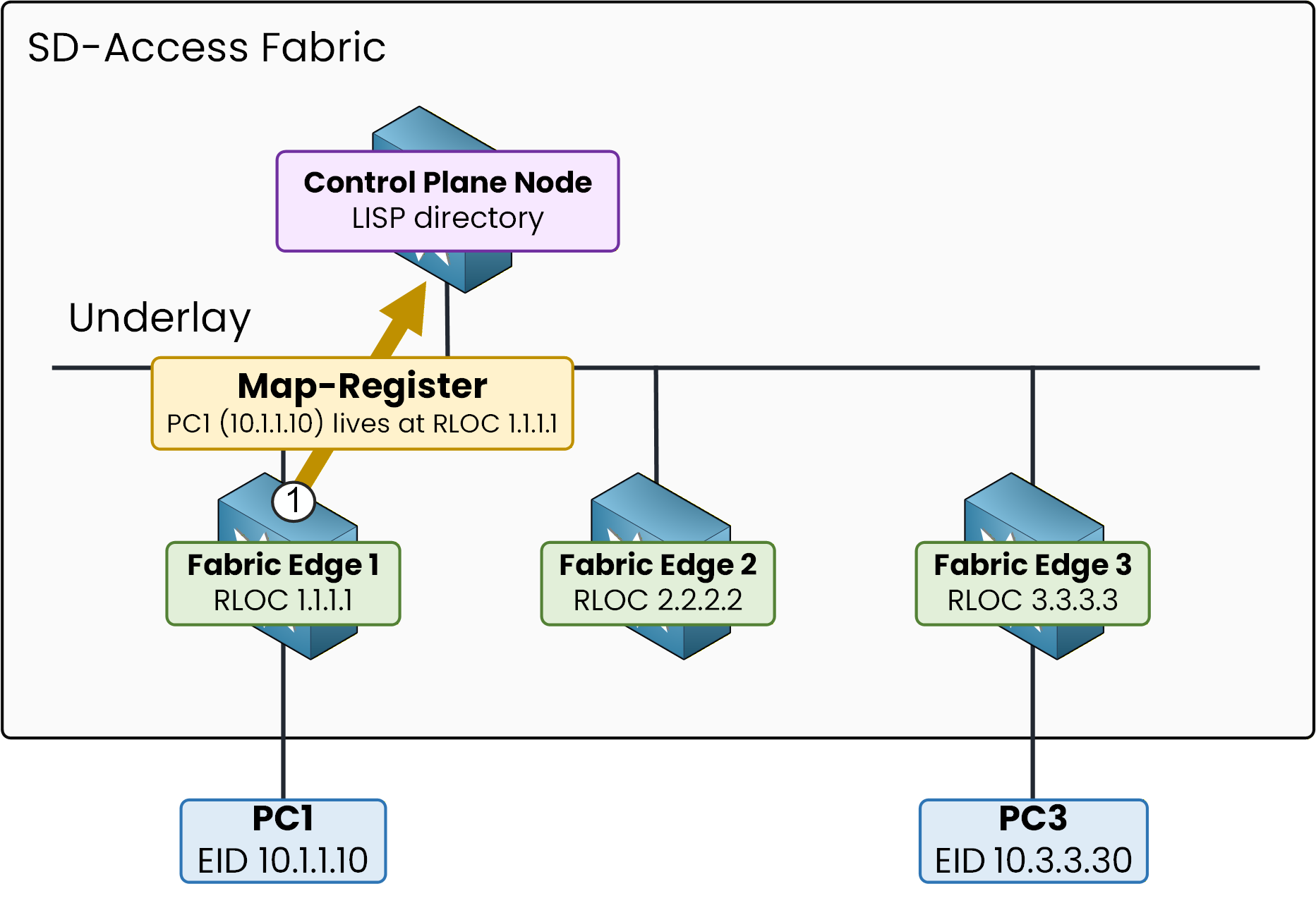
Figure 2 – Edge 1 registers PC1
The Control Plane Node stores this binding in its mapping database.
Map-Registers are sent every time a new endpoint connects.
They are also refreshed periodically to keep the entry alive.Answer the question below
Which fabric component receives the Map-Register from Edge 1?
The Mapping Database
Every Fabric Edge does the same thing for its own users.
Once they have all registered, the Control Plane Node holds a complete picture of the fabric.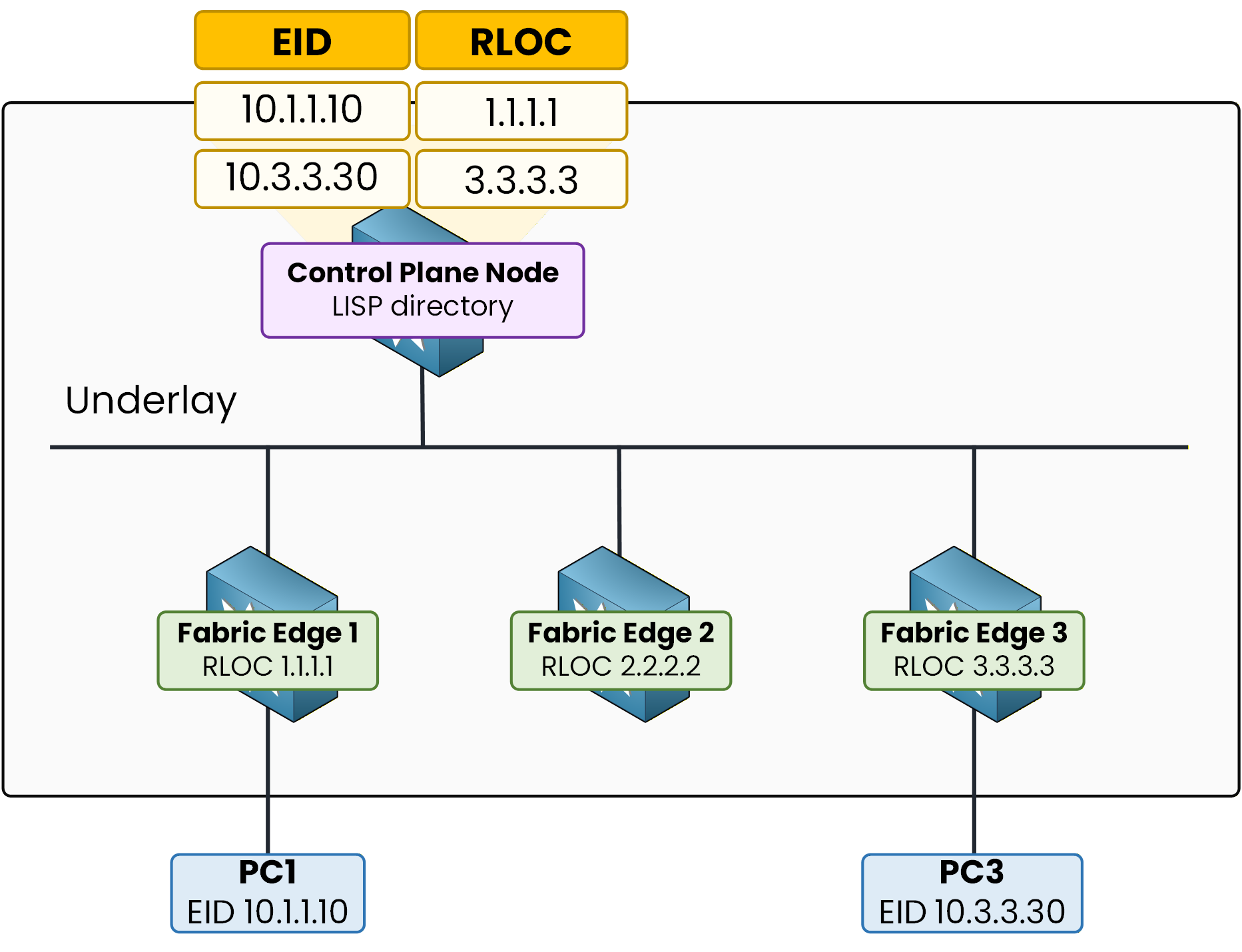
Figure 3 – The mapping database after registration
This mapping database is the foundation of SD-Access.
The Control Plane Node is the single source of truth for endpoint location.When a user moves from one floor to another, only the mapping database entry is updated.
If you have read the LISP Fundamentals lesson, the Fabric Edge plays the role of an xTR (ITR + ETR), and the Control Plane Node plays the role of MS/MR.
Answer the question below
Which message does a Fabric Edge send to register a connected user with the Control Plane Node?
The mapping database is built.
Now PC1 wants to talk to PC3.
How does Edge 1 figure out where to send the traffic?Cache Miss and Map-Request
PC1 sends a packet to 10.3.3.30.
It arrives at Edge 1 as it would on any switch.Edge 1 checks its local cache first.
Does it already know where 10.3.3.30 is?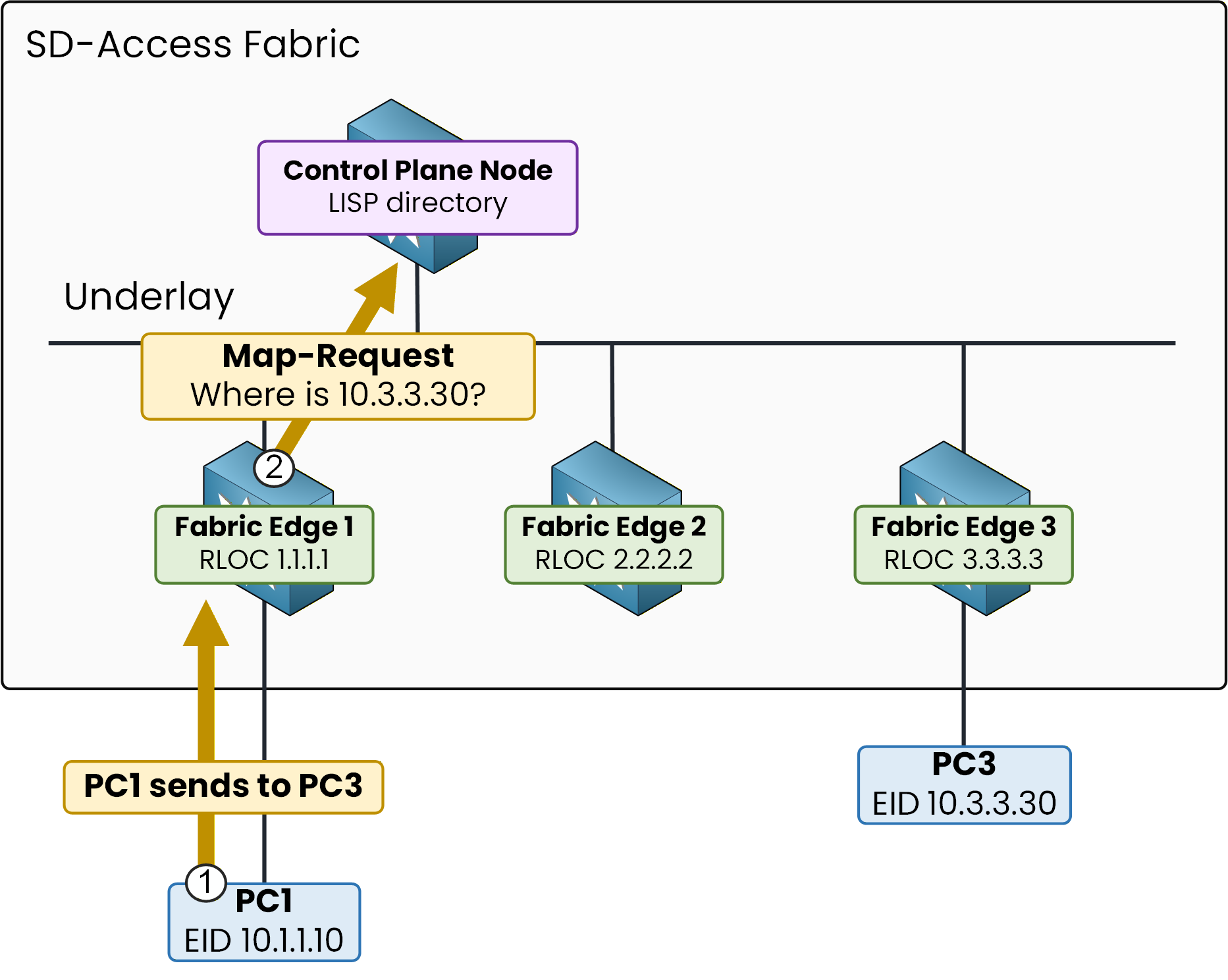
Figure 4 – Cache miss and Map-Request
The first time, the answer is no.
Edge 1 only knows about its own connected users.So Edge 1 sends a Map-Request to the Control Plane Node.
It asks the same thing you would ask a directory: "Where does 10.3.3.30 live?"Answer the question below
Which address represents a Fabric Edge's location in the underlay?
Map-Reply
The Control Plane Node looks up 10.3.3.30 in its mapping database.
It finds that PC3 lives behind Edge 3, which has the RLOC 3.3.3.3.40 % Complete: you’re making great progress
Ready to pass your CCNP exam?