To understand how EIGRP converges, you first need to understand how it detects a failure.
By default, EIGRP routers send Hello packets to their neighbors:Every 5 seconds on Ethernet interfaces
Every 60 seconds on low-speed WAN links
These Hello packets maintain neighbor relationships.
Hello and Hold Timers
If a router stops receiving Hello packets from a neighbor for the duration of the Hold Time, it considers that neighbor unreachable.
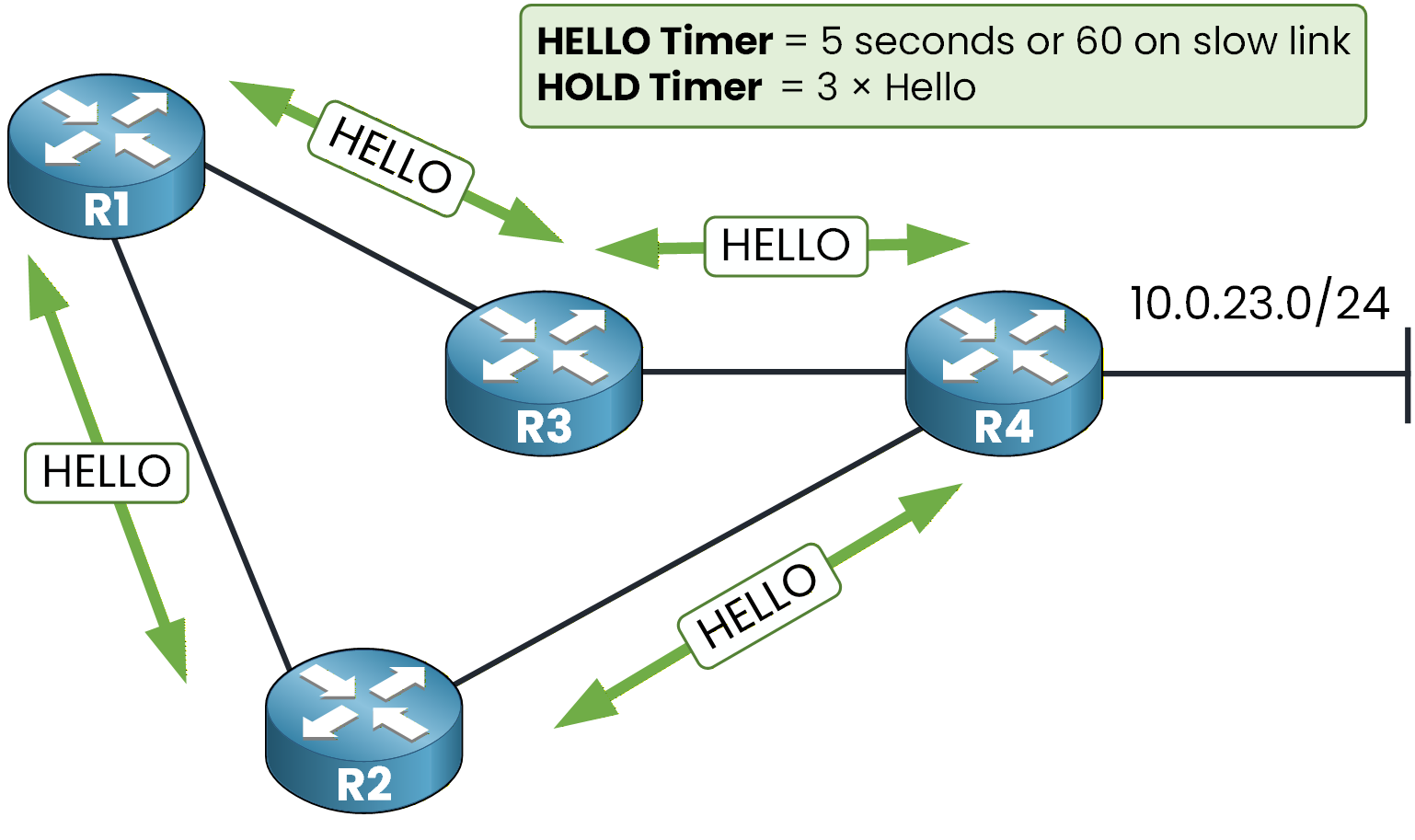
Figure 1 - Hello and Hold Timer EIGRP
The Hold Time is typically three times the Hello interval.
When the Hold Time expires:
The neighbor is removed from the neighbor table
DUAL is notified
A convergence process begins
At this point, EIGRP must determine whether it can immediately switch paths or if a recalculation is required.
CCNP ENCOR Focus
For ENCOR, you must understand what triggers convergence and what happens next (neighbor loss, DUAL notification, path decision).
You are not required to understand DUAL’s internal mathematical computations in depth.Successor and Feasible Successor
EIGRP operates proactively.
For every network, it calculates:
A Successor — the best path (installed in the routing table)
A Feasible Successor — a backup path that has already been validated
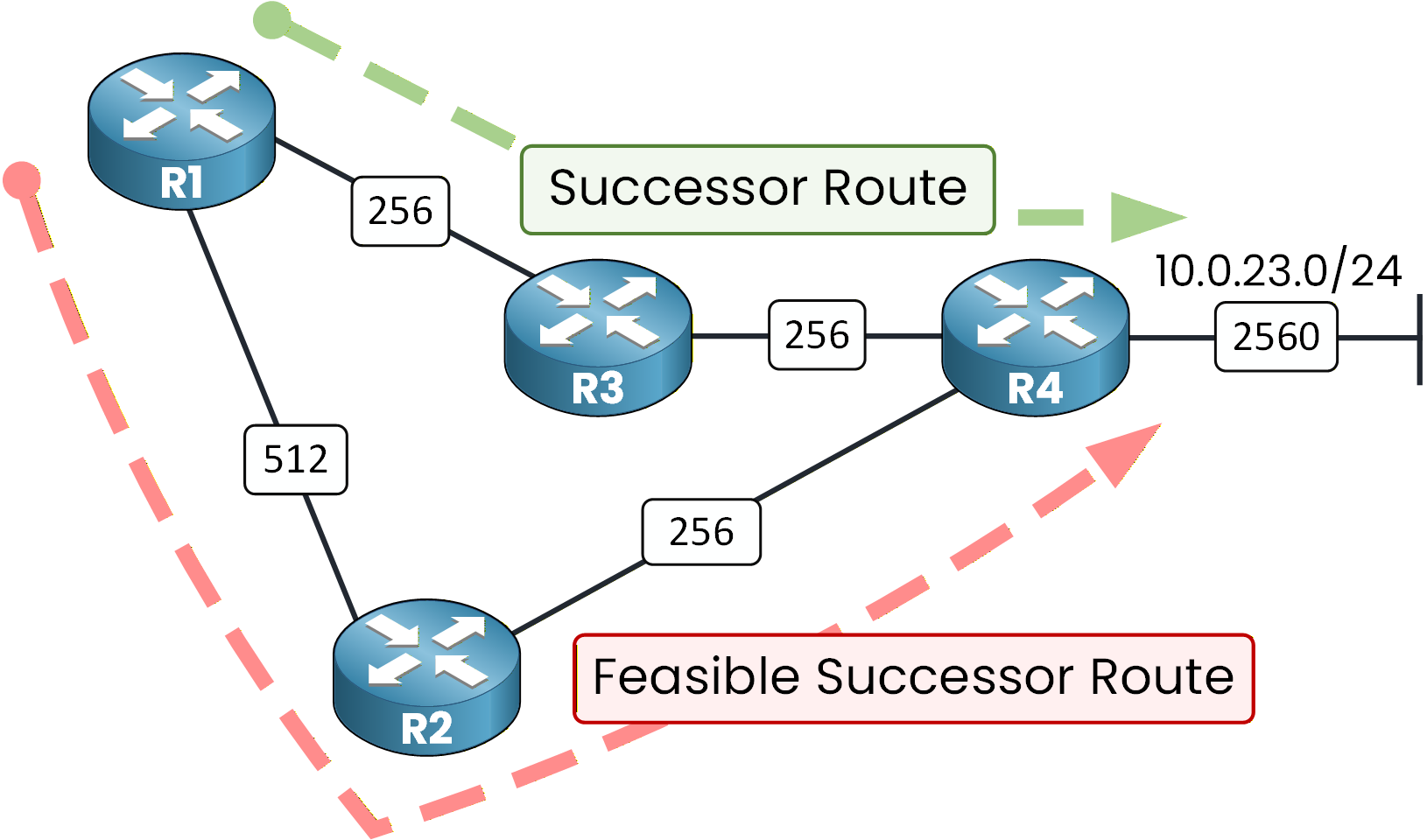
Figure 2 – Successor and Feasible Successor
A Feasible Successor is only accepted if its Reported Distance is lower than the current Feasible Distance.
This is known as the Feasibility Condition.Because EIGRP pre-validates backup paths, it can converge very quickly when failures occur.
Link Failure Scenario
Now imagine a link failure.
The router loses its Successor for a given network.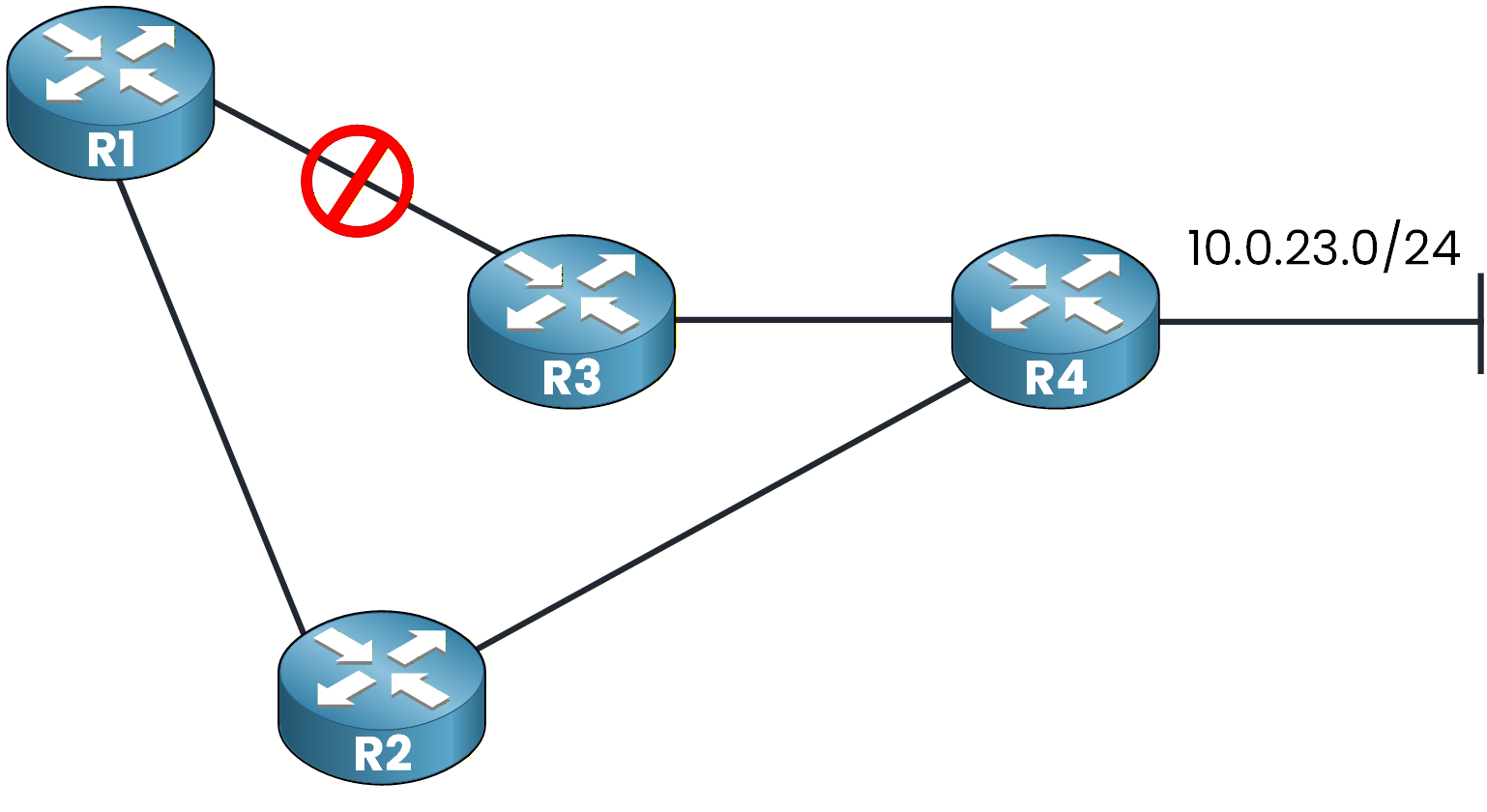
Figure 3 – Link Failure Scenario
At this point, two scenarios are possible:
A Feasible Successor exists
No Feasible Successor is available
What happens next depends entirely on whether a valid backup path was already calculated.
Answer the question below
What determines whether EIGRP switches immediately or must perform a full recalculation?
When a Feasible Successor already exists in the topology table, the router does not need to recalculate the entire EIGRP domain.
A valid backup path is already available.40 % Complete: you’re making great progress
Ready to pass your CCNP exam?