Imagine you manage 500 network devices and you want to automate their configuration.
Before you pick a tool, one question matters:
Do you need to install software on every device, or not?Agent-based tools require software on each device. Agentless tools do not.
The blueprint compares four tools on this axis: Chef, Puppet, Ansible, and SaltStack.Agentless Architecture
An agentless tool manages devices without installing any dedicated software on them.
The control node connects to each device using a standard protocol like SSH and pushes commands directly.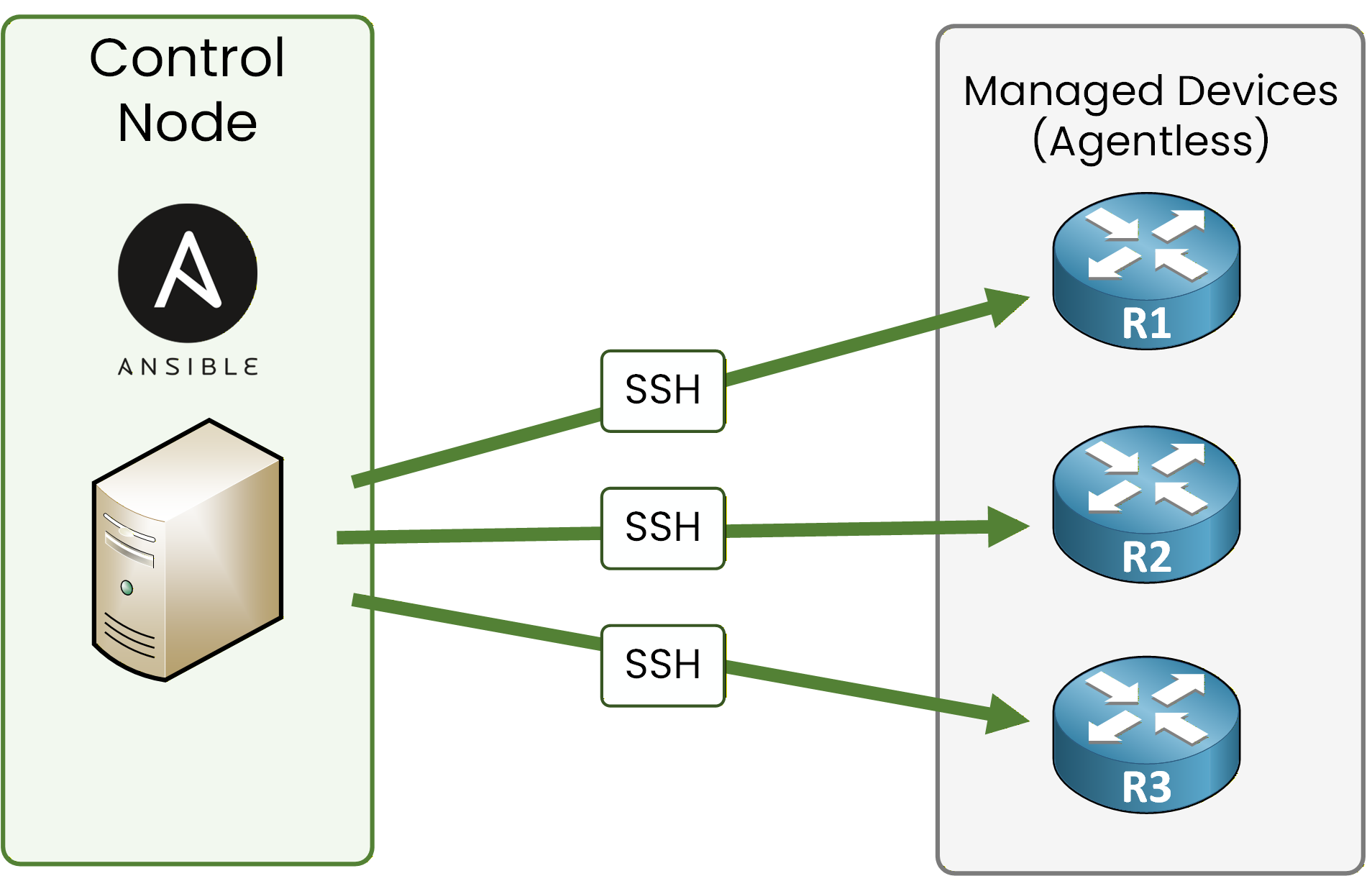
Figure 1 – Agentless architecture
This approach has three clear benefits:
Nothing to install, so deployment is fast
Works with devices that cannot run third-party software, which covers most network equipment
Lower resource footprint on the managed device
Agentless is the natural choice for network automation.
A router or switch rarely accepts custom software installed by a third party, but almost every network device supports SSH.Answer the question below
Which standard protocol is typically used by agentless tools to reach managed devices?
Agent-Based Architecture
An agent-based tool requires a small software component, called the agent, installed on every managed device.
The agent runs in the background and communicates with a central server, usually called the master.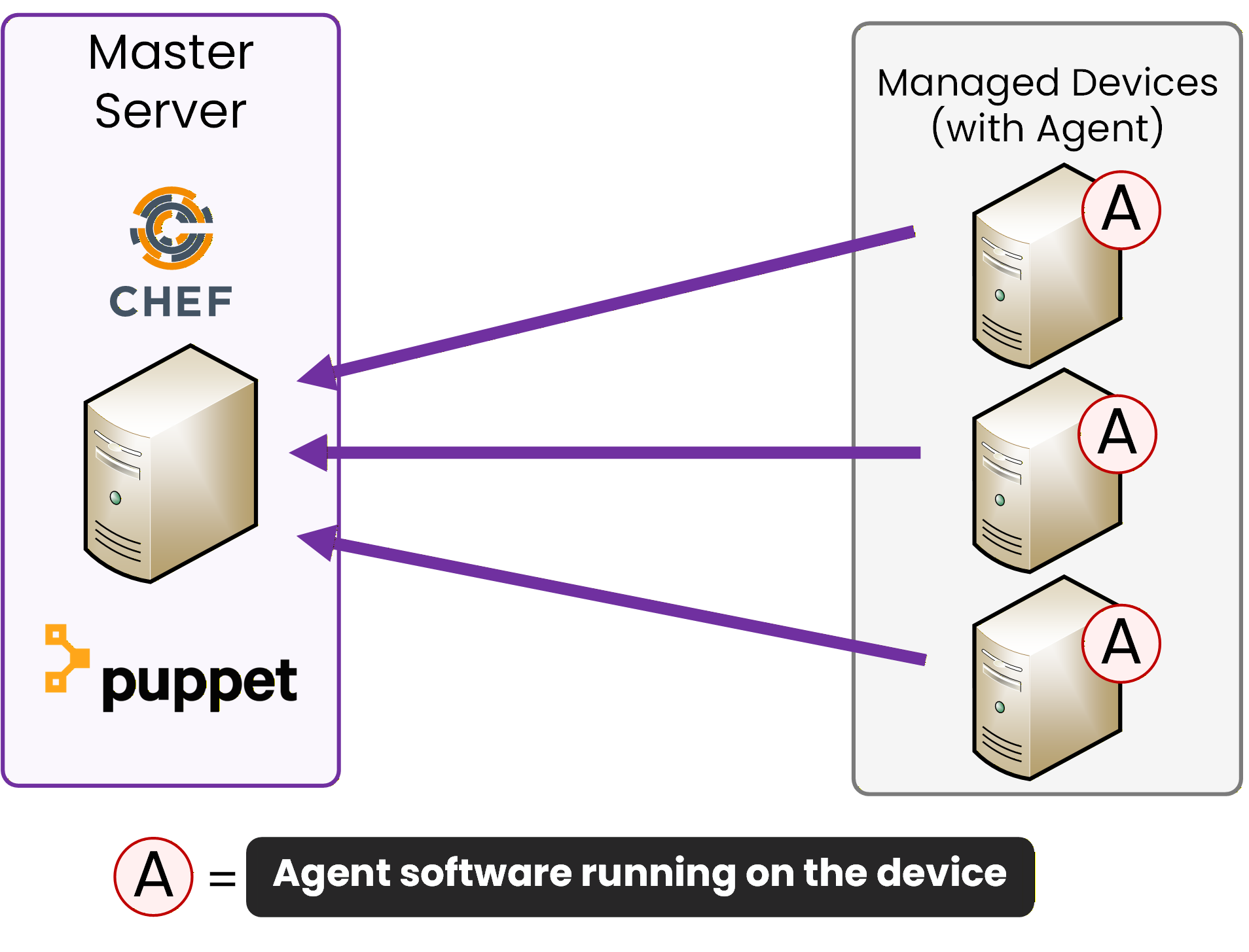
Figure 2 – Agent-based architecture
Because the agent is always there, it can enforce the desired state continuously.
If someone makes a manual change on the device, the agent notices the difference and reverts it to the expected configuration.But the agent comes with a cost.
You must install and maintain it on every device, which is rarely practical on network equipment.
This is why agent-based tools are most common on servers and virtual machines, not on routers and switches.Answer the question below
Which model requires software to be installed on each managed device?
Answer the question below
You manage 200 Cisco IOS-XE routers and want to automate their configuration. Which architecture fits your network?
When a change must be applied, who picks up the phone first: the controller or the device?
This is a different question from agent vs agentless, but the two axes usually come as a pair.
Agentless tools use push, and agent-based tools use pull.Push Model
In a push model, the control node initiates the connection and sends the configuration to the device.
The device waits and only acts when a change arrives from the controller.40 % Complete: you’re making great progress
Ready to pass your CCNP exam?