In the previous lesson, you learned that wireless security relies on three core principles: authentication, encryption, and integrity. These principles define what must be protected, but they do not explain how protection is implemented on a Wireless network.
We will now look at the various wireless security protocols that implement these protections on Wi-Fi networks.
They define how a wireless client authenticates, how data is protected, and how integrity is ensured.Open Authentication
Open Authentication is the simplest possible authentication method.
It provides no built-in security.As shown in Figure 1, the client sends an authentication request to the access point, and the access point accepts all authentication requests without verifying any credentials.
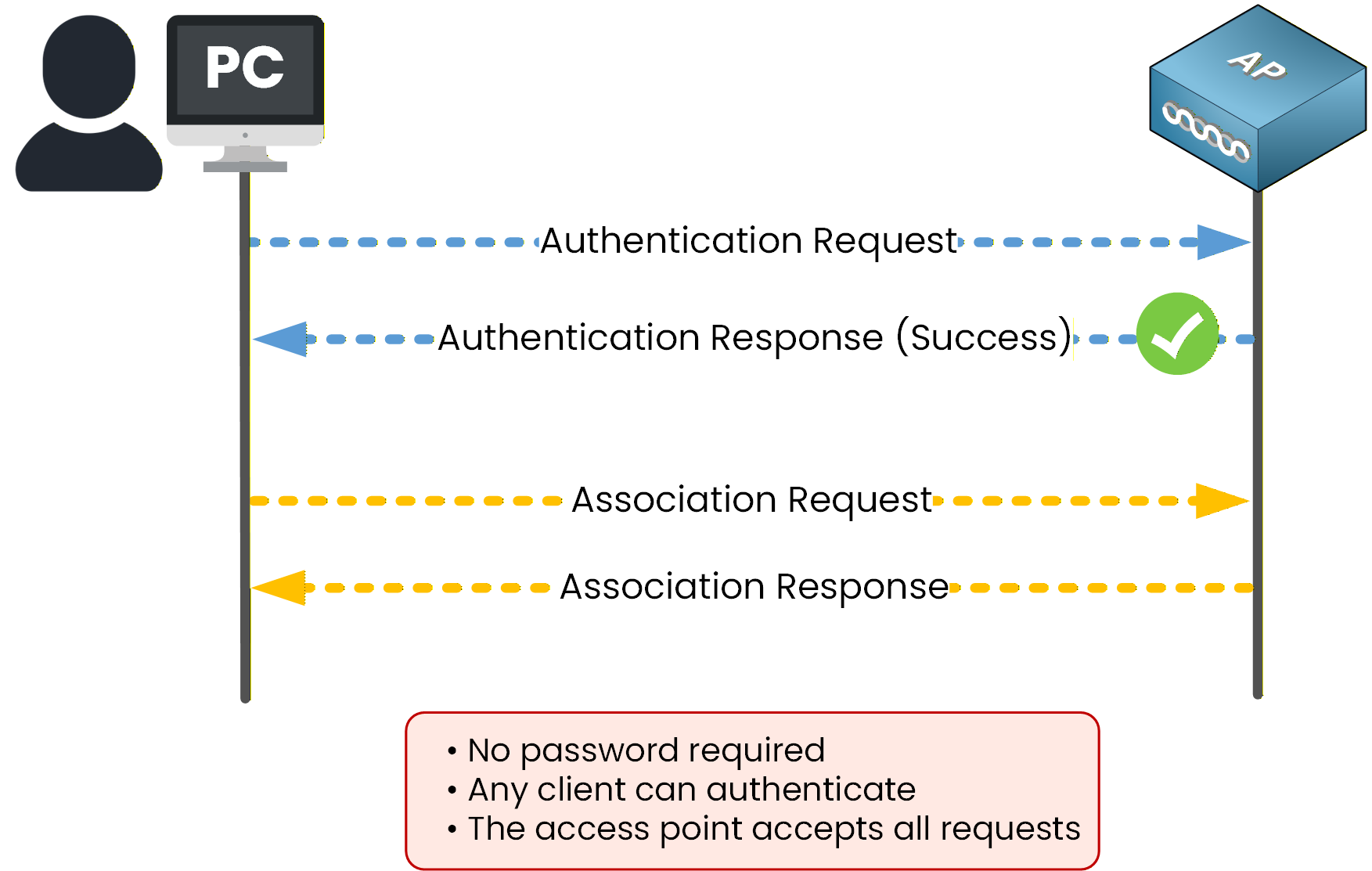
Figure 1 - Open authentication
In this model:
No password is required
Any client can authenticate
The access point does not verify the identity of the client
This type of authentication is commonly found in public Wi-Fi networks such as airports, cafés, or hotels.
⚠️ Important:
Because Open Authentication does not verify client identity and provides no encryption or integrity protection, the wireless network itself is not secure.From Open Authentication to Shared Secrets
Because Open Authentication provides no real security, additional mechanisms are required to protect wireless networks.
At a high level, wireless authentication mechanisms can be grouped into two categories:
Open Authentication
Authentication based on a shared secret
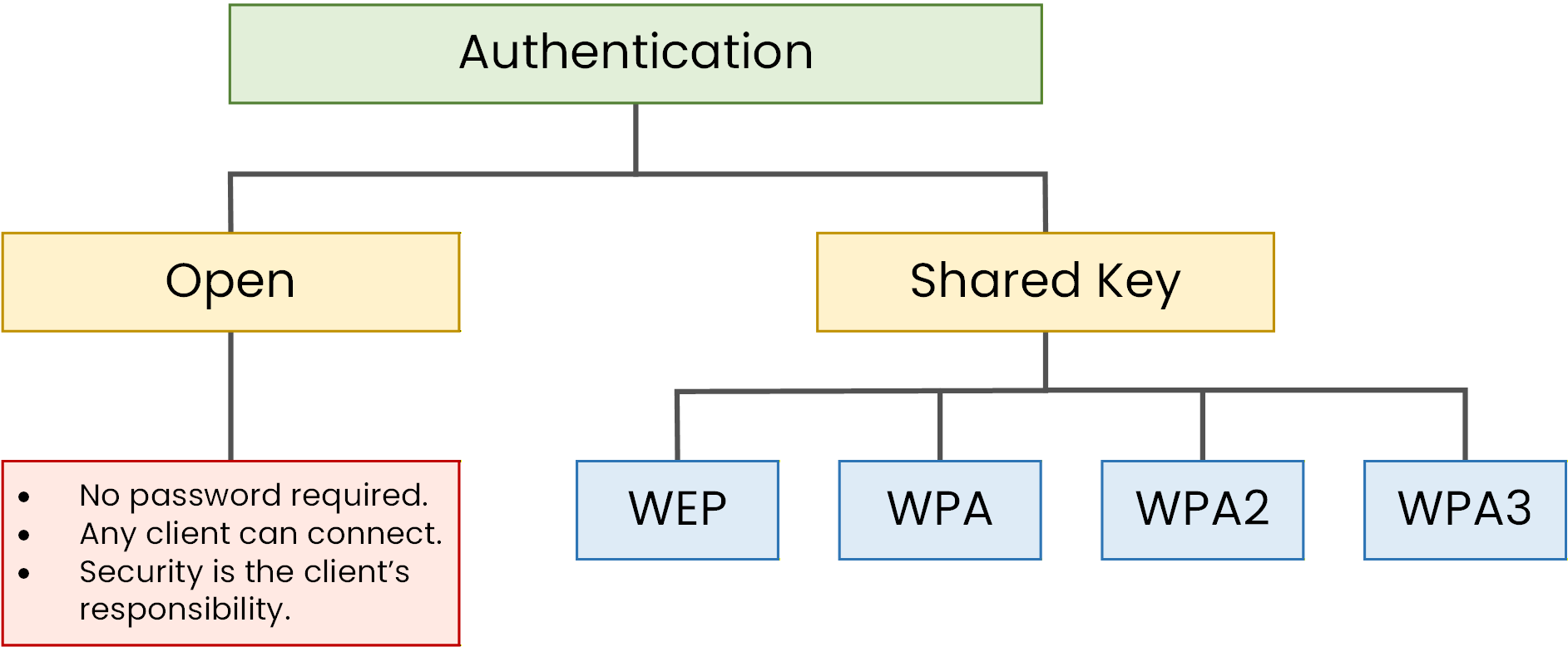
Figure 2 - Wireless authentication methods
Figure 2 summarizes this evolution, showing how wireless security protocols have changed over time.
Answer the question below
Which authentication method accepts all clients without verifying any credentials?
Shared Key–Based Security
Shared key–based security requires the client and the access point to share a secret.
This shared secret is used as the basis for authenticating clients and protecting wireless traffic.All major wireless security protocols rely on shared secrets in some form:
WEP
WPA
WPA2
WPA3
Each new protocol improves how the shared secret is used, how encryption is performed, and how integrity is ensured.
Let’s start with WEP, the first wireless security protocol to implement a shared secret.Answer the question below
What is required by Shared Key Authentication to authenticate a wireless client?
Wired Equivalent Privacy (WEP) was the first wireless security protocol defined by the IEEE 802.11 standard. It was introduced in 1997 with the goal of providing a level of security for wireless networks comparable to wired networks.
The design of WEP was based on a shared secret key configured on both the client and the access point.
This key was used for authentication, encryption, and integrity protection.WEP Process
To understand WEP, let's look at a practical example: you are the PC attempting to authenticate to a WEP-protected wireless network.
Authentication
You send an Authentication Request to the access point.
The access point replies with a challenge, which is a random value sent in plaintext.
You encrypt this challenge using the shared WEP key and the RC4 algorithm.
You send the encrypted challenge back to the access point.
The access point decrypts the response using its own copy of the shared key.
If the decrypted value matches the original challenge, the access point sends an Authentication Response (Success).
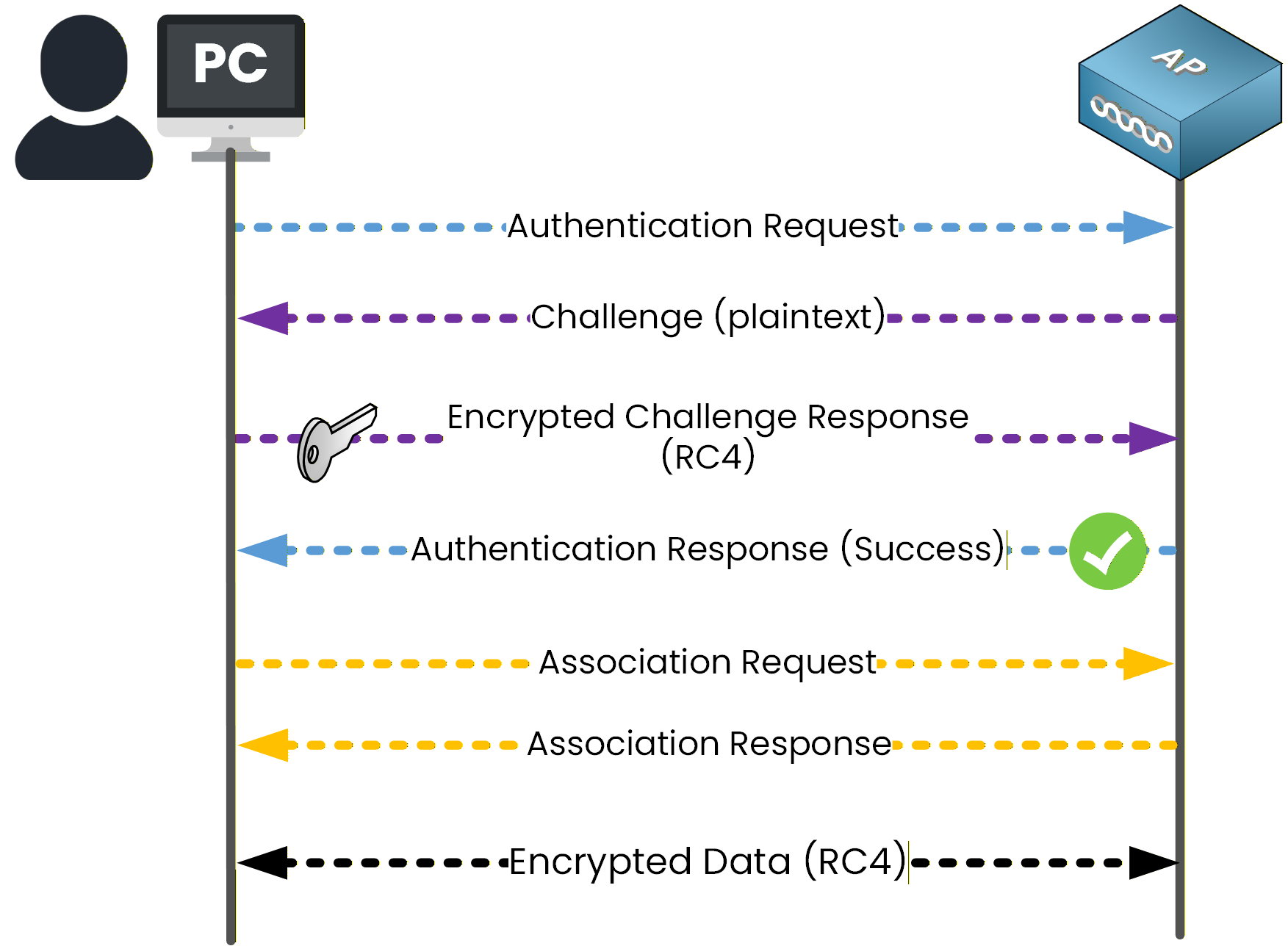
Figure 3 - WEPThe purpose of the challenge is to verify that both you and the access point possess the same shared secret key, without transmitting the key itself over the air.
Answer the question below
Which encryption algorithm is used by WEP?
Association
After successful authentication:
You send an Association Request to the access point.
The access point replies with an Association Response, allowing your device to join the wireless network.
Encrypted Data Transmission
Once association is complete:
All wireless traffic is encrypted using the RC4 stream cipher.
CRC (Cyclic Redundancy Check) is used to verify data integrity.
CRC is not a secure integrity mechanism and does not protect against intentional data modification.
WEP Characteristics
At first glance, WEP appears to be a complete wireless security protocol because it includes mechanisms for authentication, encryption, and integrity.
Authentication: Open System, Shared Key
Encryption: RC4
Integrity: CRC
However, WEP is an old protocol. Over time, attackers discovered multiple security weaknesses in its design, including flaws in key management, encryption implementation, and integrity checking.
These vulnerabilities made WEP easy to break and unsuitable for modern wireless networks. As a result, the industry had to improve wireless security standards.
In the next section, we will see how WPA was introduced to address these weaknesses and enhance wireless security.
Answer the question below
Which mechanism does WEP use to verify data integrity?
Wi-Fi Protected Access (WPA) was introduced in 2003 by the Wi-Fi Alliance as an interim solution to fix the most critical security weaknesses of WEP, while remaining compatible with existing hardware.
Instead of redesigning everything from scratch, WPA kept the shared key concept but significantly improved key management and integrity protection.
WPA introduced two operating modes that are still used today:
WPA Personal — for home and small networks
WPA Enterprise — for enterprise environments using centralized authentication
WPA Personal
WPA Personal is designed for home users and small offices.
It relies on a Pre-Shared Key (PSK) configured on both the client and the access point.Answer the question below
What type of key does WPA Personal use to authenticate clients?
WPA Personal Process
When you connect your PC to a WPA-Personal wireless network:
The client and the access point use the pre-shared key (PSK) to verify that they both know the same secret.
If this verification is successful, authentication succeeds.
The client and access point complete the association process.
All wireless traffic is then encrypted.
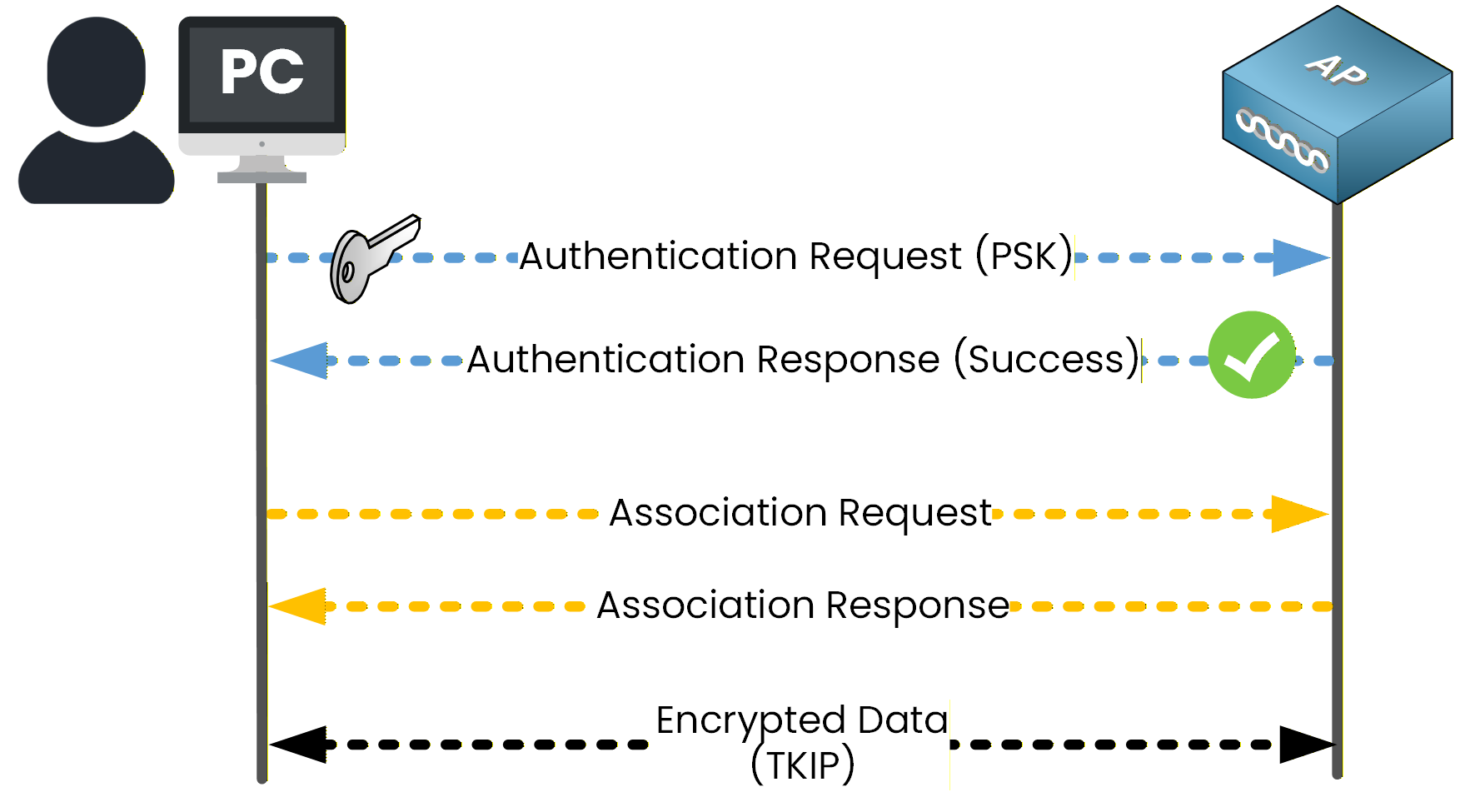
Figure 4 – WPA Personal
Encrypted Data Transmission
Once the association process is complete:
All wireless traffic is encrypted using TKIP (Temporal Key Integrity Protocol).
TKIP modifies the encryption key for each packet to prevent key reuse.
MIC (Message Integrity Check) is used to protect data integrity and detect packet tampering.
Answer the question below
Which protocol is used by WPA Personal to encrypt wireless traffic?
WPA Enterprise (802.1X)
WPA Enterprise is designed for professional and enterprise environments where a simple shared password is not sufficient.
Instead of using a single pre-shared key for all users, WPA Enterprise relies on 802.1X authentication and a RADIUS server to authenticate each user individually.
WPA Enterprise Process
As shown in Figure 5, three components are involved:
You (the client / supplicant)
The access point or wireless controller (authenticator)
The RADIUS server (authentication server)
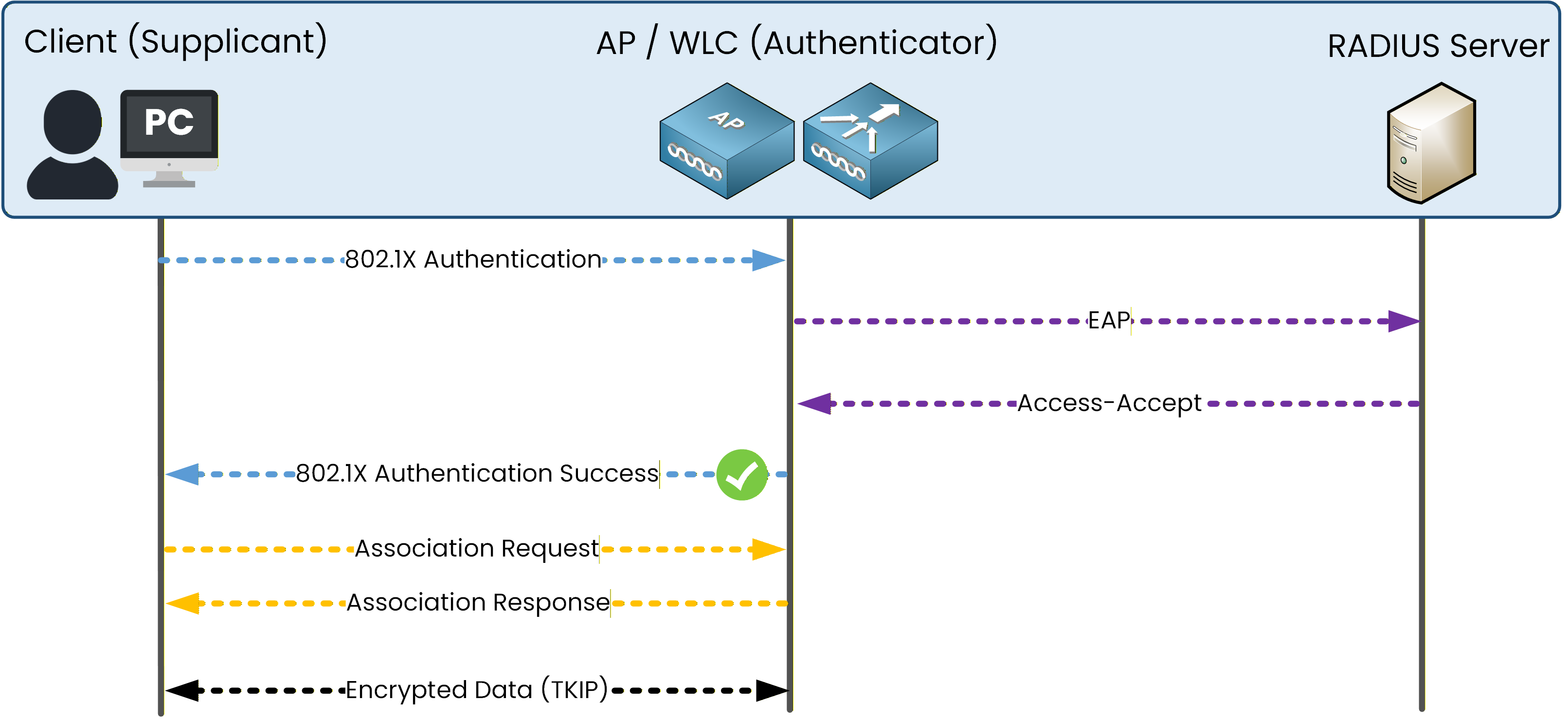
Figure 5 – WPA Enterprise authentication
When you connect to a WPA Enterprise wireless network:
You initiate an 802.1X authentication with the access point.
The access point forwards your authentication information to the RADIUS server using EAP (Extensible Authentication Protocol).
The RADIUS server validates your credentials.
If authentication is successful, the RADIUS server sends an Access-Accept message.
The access point informs you that authentication has succeeded.
You and the access point complete the association process.
All wireless traffic is then encrypted.
The key point is that the access point does not authenticate you directly.
It acts as an intermediary and relies on the RADIUS server to make the authentication decision.Answer the question below
Which server is responsible for authenticating users in WPA Enterprise?
WPA Characteristics
WPA represents a significant improvement over WEP by strengthening key management and integrity protection, while maintaining compatibility with older wireless hardware.
Authentication:
WPA supports two authentication modes:PSK (Personal) for home and small networks
802.1X (Enterprise) for centralized, per-user authentication
Encryption:
WPA uses TKIP (Temporal Key Integrity Protocol).
TKIP is based on RC4 but introduces dynamic per-packet key generation, which prevents key reuse.Integrity:
WPA replaces CRC with MIC (Message Integrity Check), providing improved protection against packet tampering and replay attacks.
Although WPA is much more secure than WEP, it still relies on RC4, which is now considered a legacy encryption algorithm.
For this reason, WPA is considered a transitional standard and was later replaced by WPA2.Answer the question below
Which integrity mechanism does WPA use instead of CRC?
After WPA, the next major step in wireless security evolution is WPA2.
WPA2 was introduced in 2004 and quickly became the industry standard for securing Wi-Fi networks.
Its goal was not to change how clients authenticate, but to fix the remaining cryptographic weaknesses of WPA.The authentication models remain the same:
Personal mode using a pre-shared key (PSK)
Enterprise mode using 802.1X and a RADIUS server
The improvement introduced by WPA2 is mainly about encryption and integrity.
WPA2 Personal
The connection flow is the same as WPA Personal: the client and the access point verify that they both know the same pre-shared key, associate with the access point, and then exchange encrypted data.
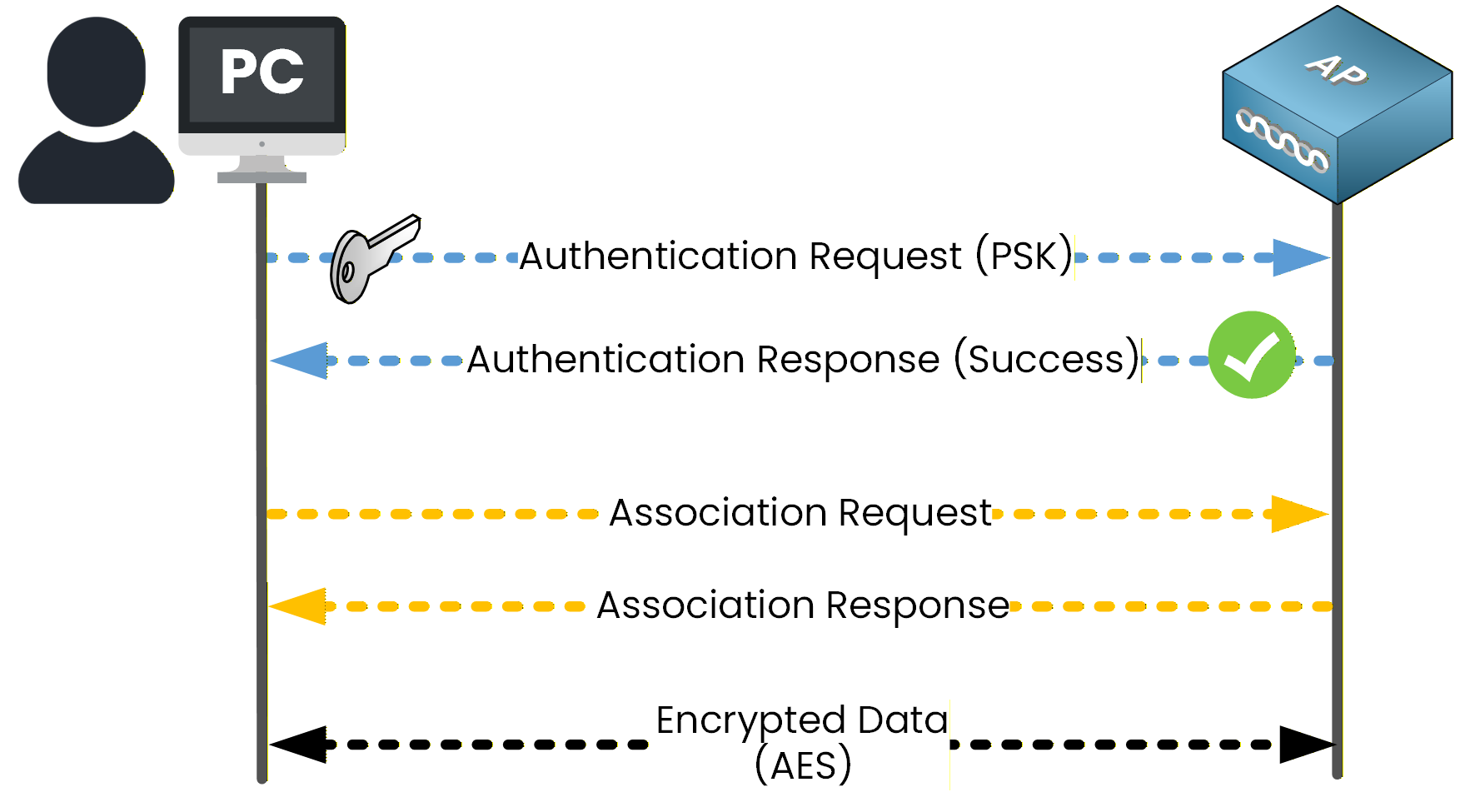
Figure 6 – WPA2 Personal
WPA2 replaces TKIP with AES for encryption, using a 128-bit key, and CCMP for integrity and replay protection.
Answer the question below
WPA2 replaced TKIP with which encryption algorithm?
WPA2 Enterprise
In WPA2 Enterprise, the authentication mechanism remains the same as WPA Enterprise.
Authentication is still performed using 802.1X and a RADIUS server.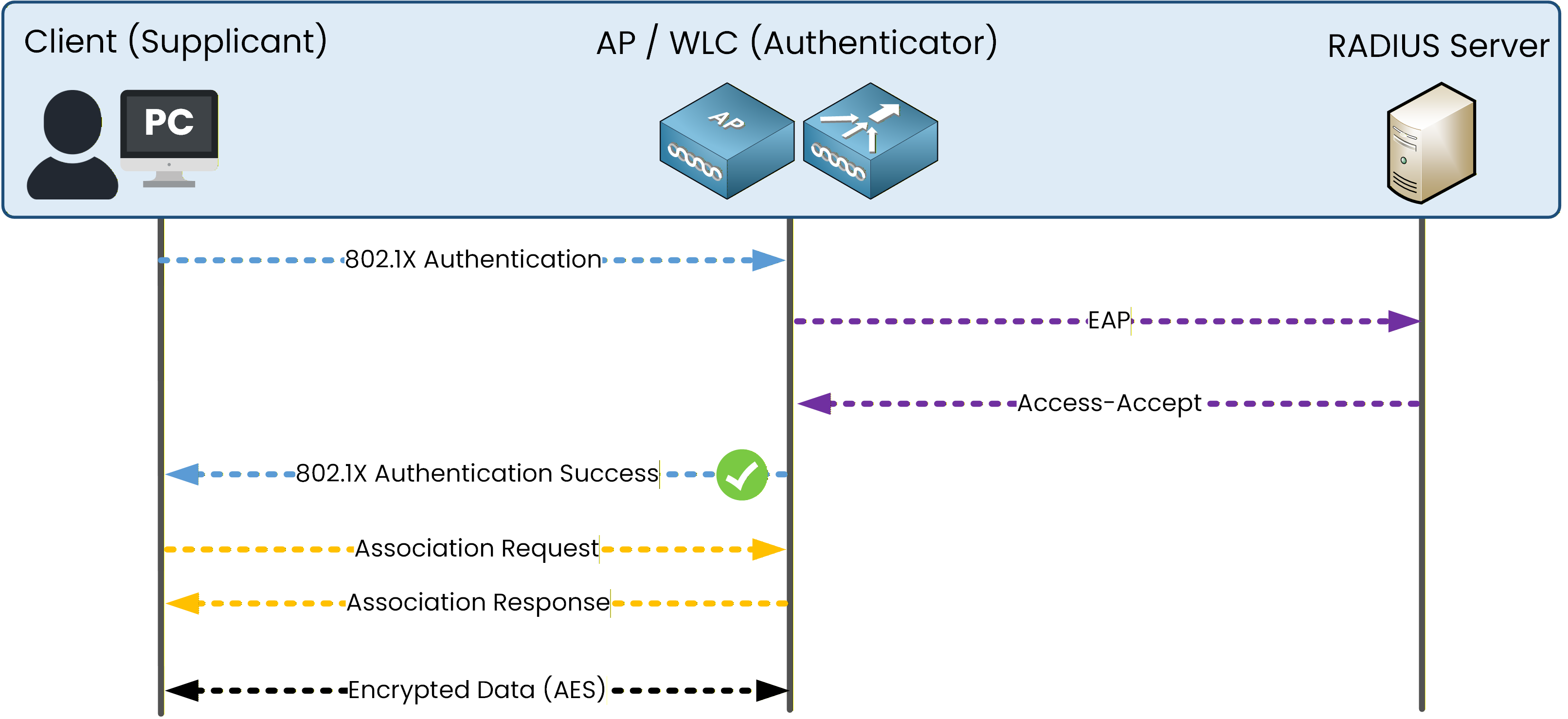
Figure 7 – WPA2 Enterprise authentication
After authentication, the traffic is encrypted using AES. CCMP then provides integrity and replay protection.
Why WPA3 Was Introduced
However, even though WPA2 significantly improved wireless security, some limitations remained.
In particular, WPA2 still relies on pre-shared keys in Personal mode and is vulnerable to certain offline password attacks.To address these remaining weaknesses, a new generation of wireless security was introduced: WPA3.
Answer the question below
WPA2 uses AES with how many bits of encryption?
WPA3 is the modern standard for wireless security.
It was introduced to fix the remaining security weaknesses of WPA2 and to provide stronger protection for wireless networks.WPA3 Personal
WPA3 Personal introduces a new authentication method called SAE (Simultaneous Authentication of Equals).
In WPA3 Personal, the client and the access point authenticate using SAE instead of a traditional pre-shared key (PSK).
SAE was introduced because WPA2 Personal is vulnerable to offline dictionary attacks.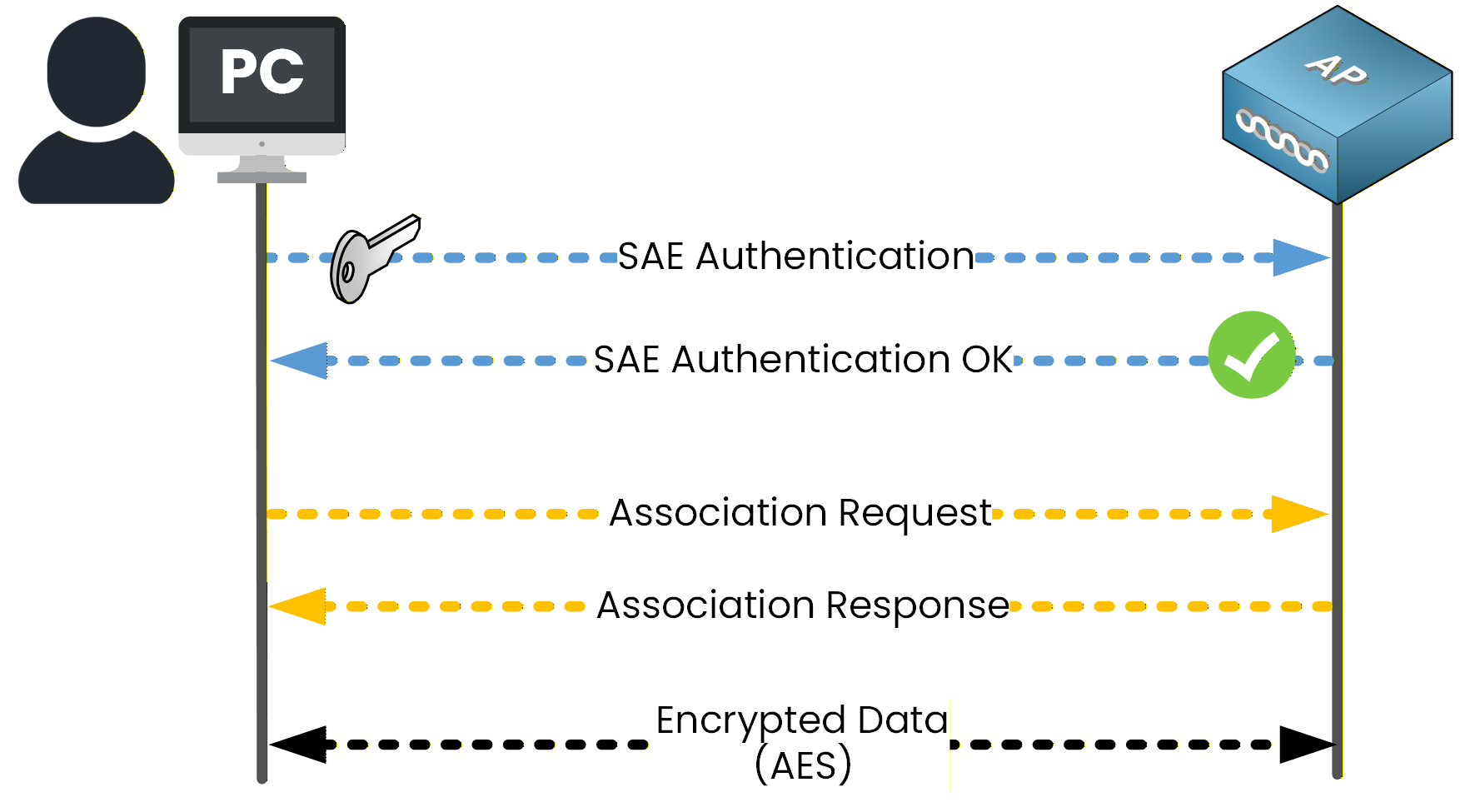
Figure 8 - WPA3 Personal
With SAE, each authentication attempt is unique.
This prevents an attacker from capturing traffic and testing passwords offline.After successful SAE authentication, the client and the access point complete the association process, and all wireless traffic is encrypted using AES, with GCMP providing integrity.
Answer the question below
Which authentication method is used by WPA3 Personal?
WPA3 Enterprise
WPA3 Enterprise functions similarly to WPA2 Enterprise but introduces an optional 192-bit security mode for high-security environments.
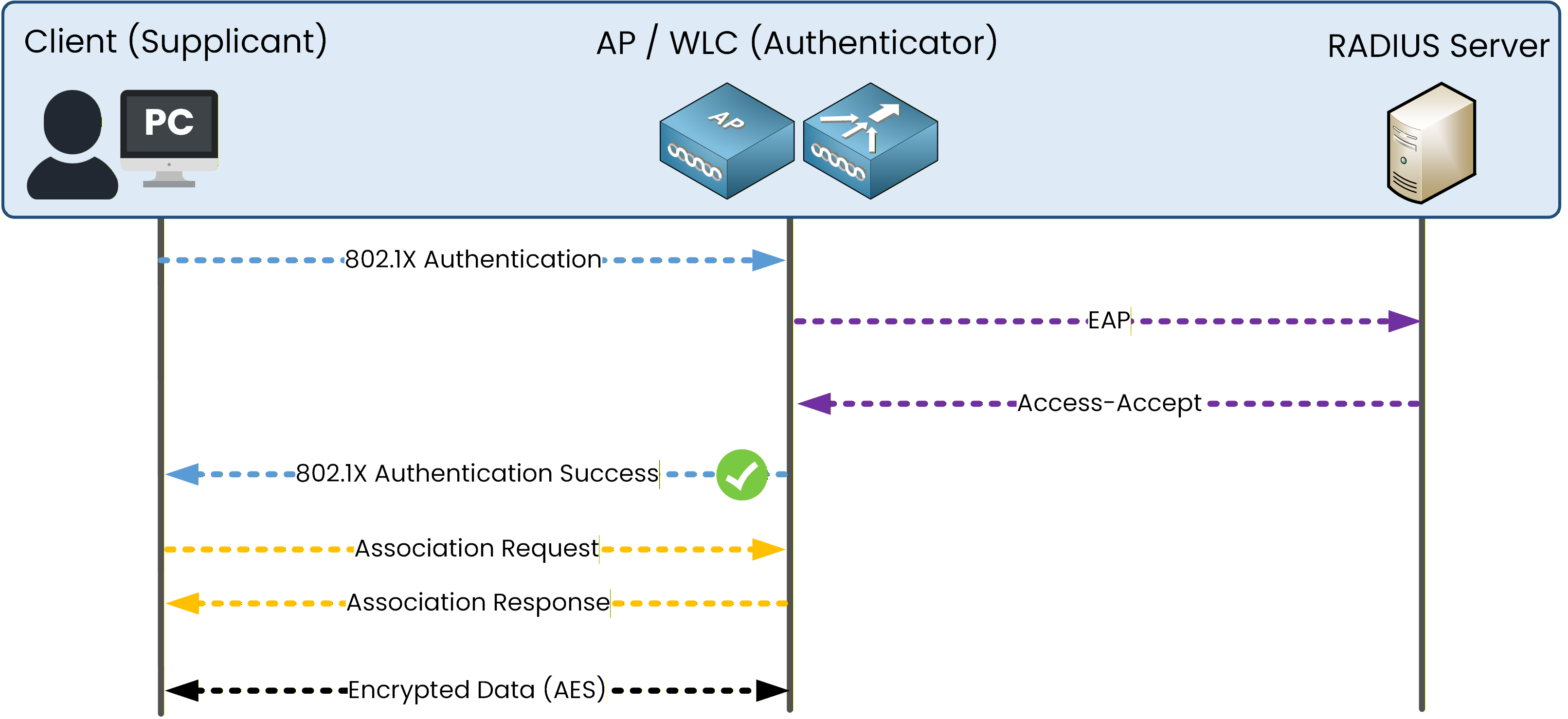
Figure 9 - WPA3 Enterprise
After successful authentication and association, all wireless traffic is encrypted using AES.
Answer the question below
In WPA3 Enterprise, how many bits can be used for enhanced security?
WPA3 Characteristics
At first glance, WPA3 appears to be the most complete wireless security protocol so far.
It improves authentication, encryption, and integrity to address the remaining weaknesses of WPA2.Authentication:
SAE (Personal)
802.1X (Enterprise)
Encryption:
AES
Integrity:
GCMP
Key / Crypto Strength:
128-bit (Personal)
192-bit (Enterprise)
WPA3 significantly strengthens wireless security by preventing offline dictionary attacks in Personal mode and offering higher cryptographic strength in Enterprise environments.
Answer the question below
Which integrity mechanism is used by WPA3?
To recap everything we have seen so far, multiple wireless security protocols are used in networking.
For the CCNA exam, you must know the authentication, encryption, integrity, and key lengths used by each protocol.Wireless Security Protocols Summary
Protocol
Mode
Authentication
Encryption
Integrity
Key / Crypto Strength
WEP
—
Open / Shared Key
RC4
CRC
❌ 40-bit / 104-bit
WPA
Personal / Enterprise
PSK / 802.1X
TKIP
MIC
🔸 128-bit
WPA2
Personal / Enterprise
PSK / 802.1X
AES
CCMP
✅ 128-bit
WPA3
Personal / Enterprise
SAE / 802.1X
AES
GCMP
🔐 128-bit (Personal)
🔐 192-bit (Enterprise)Table 1 - Wireless Security Protocol Summary
Over time, wireless security protocols have continuously evolved to address newly discovered vulnerabilities.
As attackers find new ways to break existing standards, wireless security continues to improve.You may encounter newer wireless security protocols in the future, but the concepts covered here form the foundation you must master for the CCNA.
Answer the question below
Which wireless security protocol supports both 128-bit and 192-bit encryption?