Subnetting (sub + network) is the practice of dividing one large IP network into smaller subnets. This lets you match address counts to real needs and avoid unused IPs.
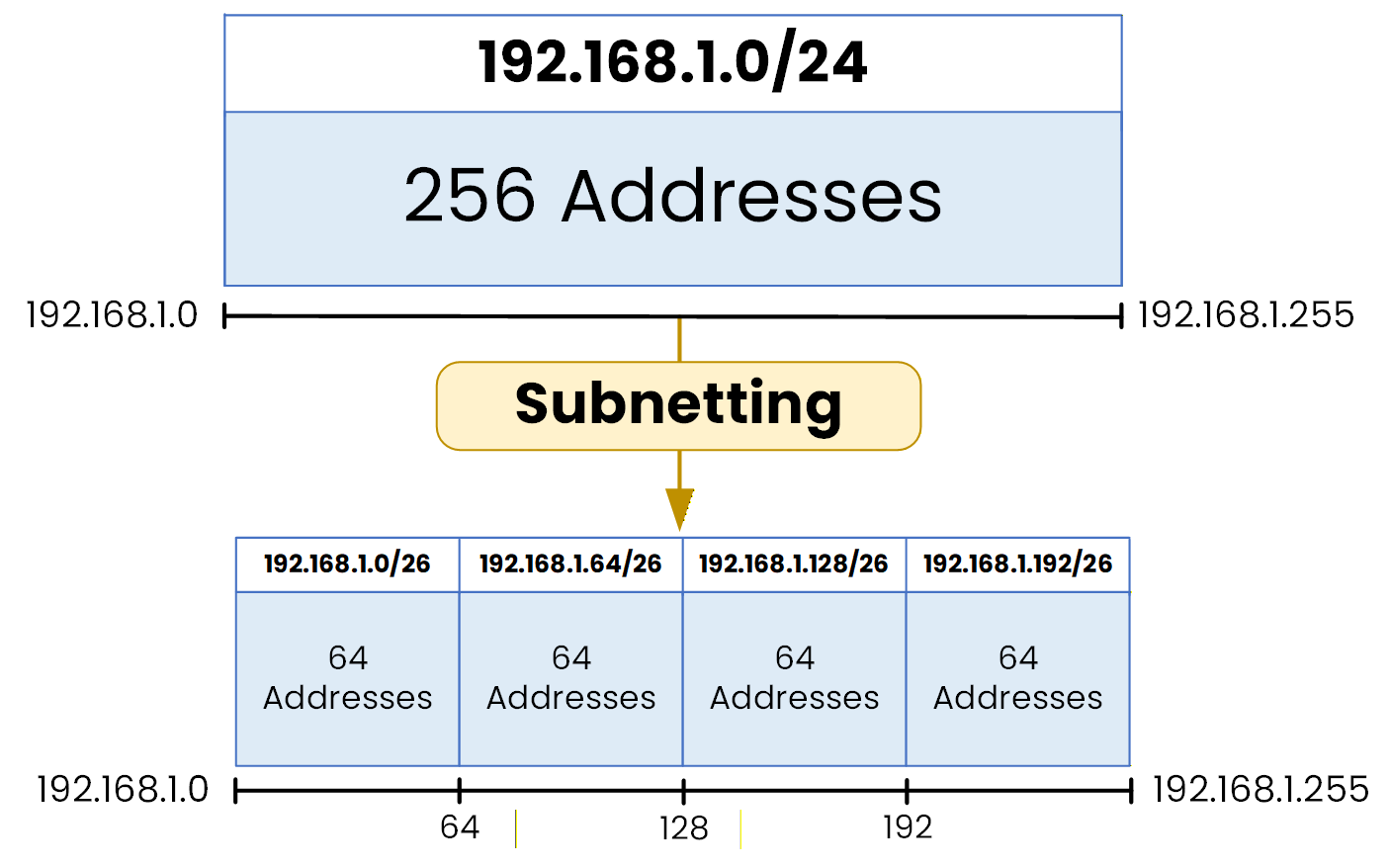
Figure 1 – Subnetting a /24 into four /26 networks.
For example, if you have
192.168.1.0/24(256 addresses), subnetting lets you split it into four /26 subnets, each with 64 addresses.In this lesson, you’ll see why subnetting was created. First, we’ll look at how IPv4 addressing worked before subnetting and the problems it caused. Then, as you progress through the learning path, you’ll learn how to subnet step by step.
Answer the question below
What does subnetting divide a large network into?
Let me take you back more than 40 years, to 1981, when IPv4 was released, and I’ll show you why subnetting was created.
Back then, addresses were classified into A, B, C, D, and E. Each class had a first-octet range, a default mask, and a typical host capacity per network.
Class
First Octet
Default Mask
Prefix
Hosts
Use
A
0–127
255.0.0.0
/8
16,777,214
Very large networks
B
128–191
255.255.0.0
/16
65,534
Medium-sized networks
C
192–223
255.255.255.0
/24
254
Small networks
D
224–239
–
–
–
Multicast
E
240–255
–
–
–
Experimental / Reserved
Table 1 – IPv4 address classes
At that time, companies requested address blocks from IANA (Internet Assigned Numbers Authority), which managed the global pool and ensured each allocation was unique.
For example:
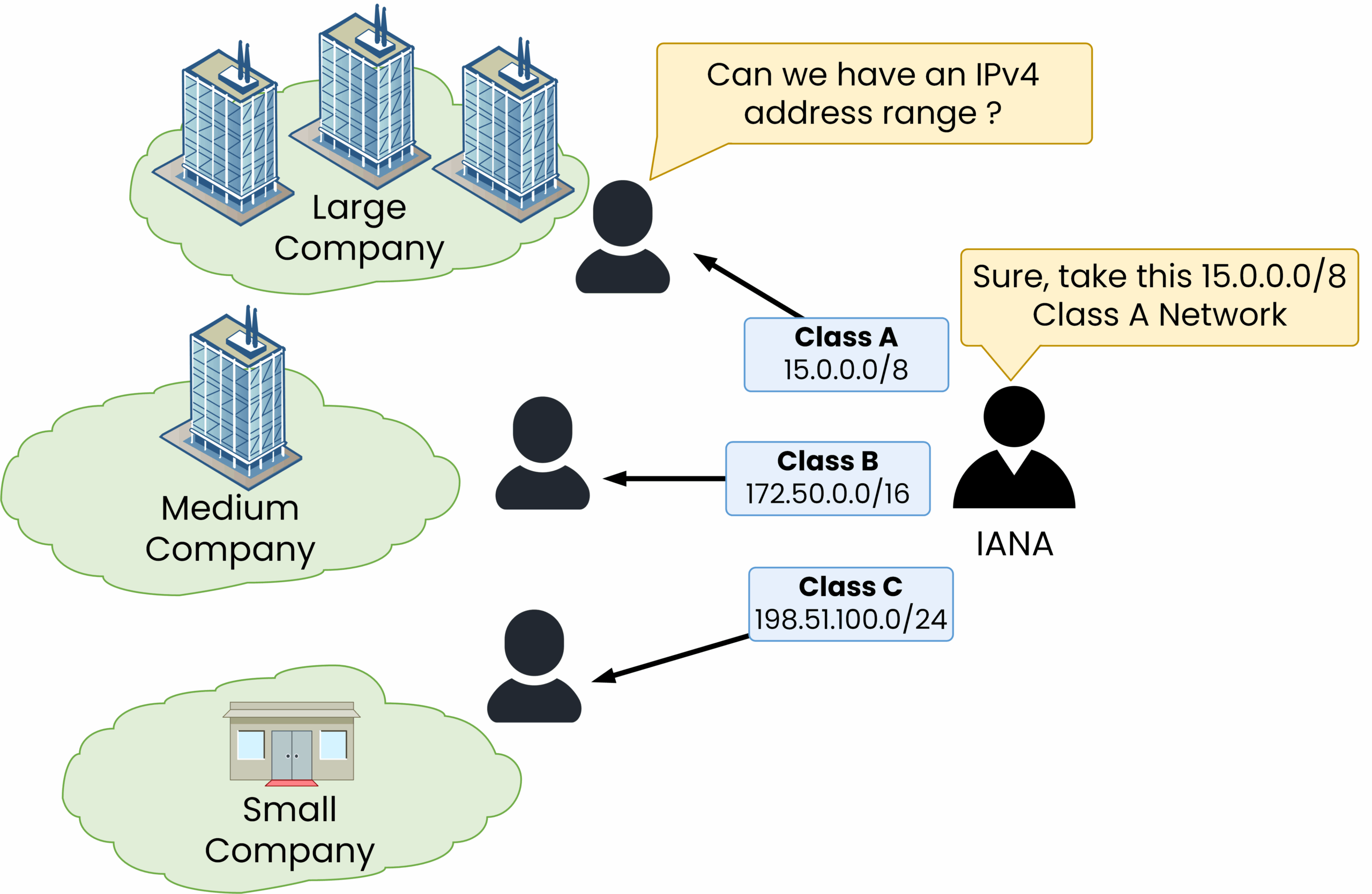
Figure 2 – IANA assigns Class A 15.0.0.0/8, Class B 172.50.0.0/16, Class C 198.51.100.0/24.
A large company needing about 1,000,000 IPs could receive a
Class A(≈16.7M usable).A company needing around 50,000 IPs could receive a
Class B(≈65.5k usable).A small company could receive a
Class C(254 usable).
This worked at the very beginning of the Internet. But usage grew much faster than expected, leading to problems you’ll see in the next section.
Answer the question below
What is the default subnet mask of a Class B?
Classful addressing isn’t optimized for real network needs. Fixed block sizes with IPv4 classes mean you reserve far more IP addresses than you actually use, leading to significant waste.
Example 1 — Class C (/24) on a point-to-point link
Imagine you’re the network engineer tasked with assigning a network between two routers for a point-to-point link.
Under the classful model, you might assign a Class C /24, for example:198.51.100.0/24.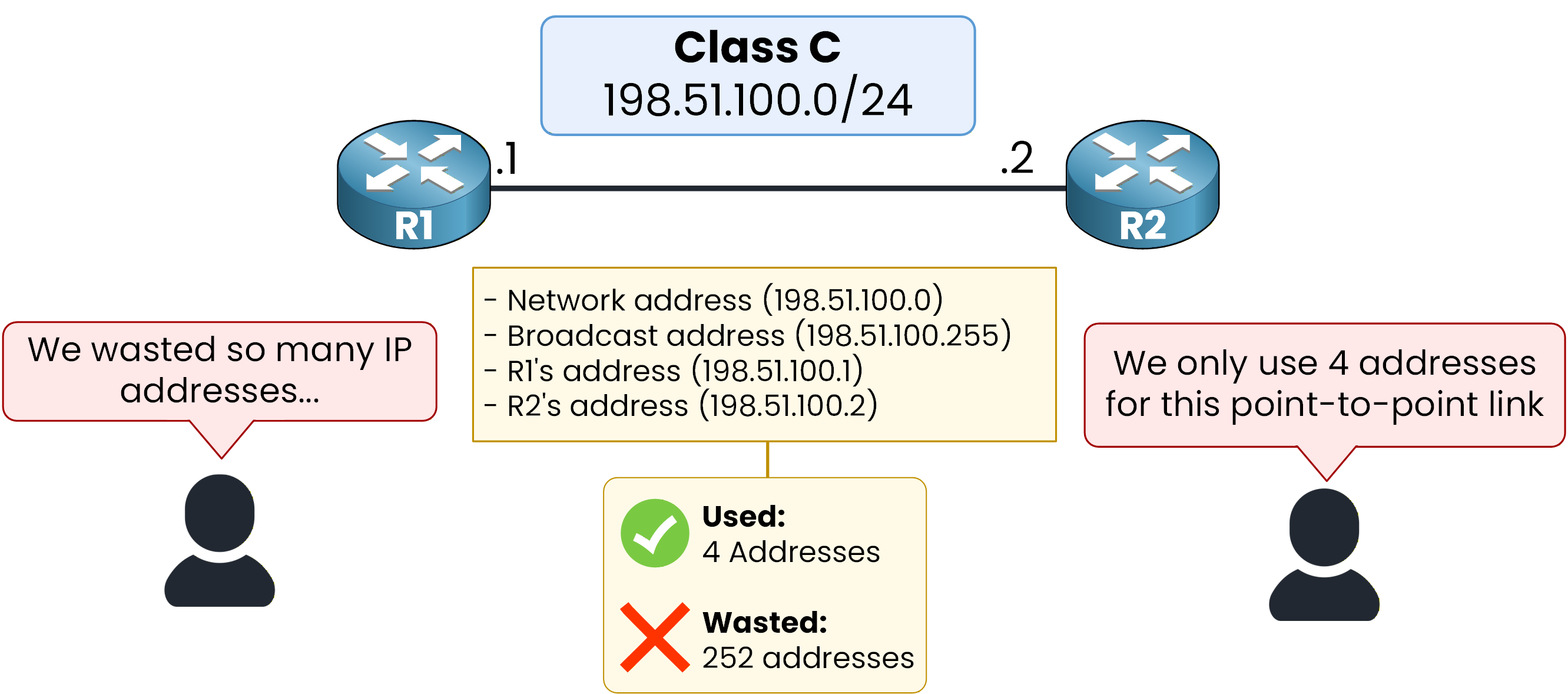
Figure 3 – Wasting a Class C (/24) Network for a Point-to-Point Link
To make this concrete, here is what one of the routers would show:
R1# show ip interface G0/0
GigabitEthernet0/0 is up, line protocol is up
  Internet address is 198.51.100.1/24
  Broadcast address is 255.255.255.255
The interface is configured with a /24 mask.
Now look at the routing table.R1# show ip route C 198.51.100.0/24 is directly connected, GigabitEthernet0/0The router installs the entire 198.51.100.0/24 network in its routing table.
Even though only two routers are connected, the full range from 198.51.100.0 to 198.51.100.255 is reserved for this link.Out of 256 total addresses:
1 network address
1 broadcast address
2 usable addresses (R1 and R2)
252 remaining addresses unused
A subnet capable of supporting 254 hosts is being used for a link that requires only two.
This is the inefficiency of classful addressing in action.Example 2 — Class B (/16) for ~5,000 hosts
Now imagine your company opens a large branch and needs about 5,000 IP addresses for users, servers, and devices.
A Class C (254 usable) is too small, so under the classful system you’d be assigned a Class B:172.50.0.0/16→ ~65,000 addresses.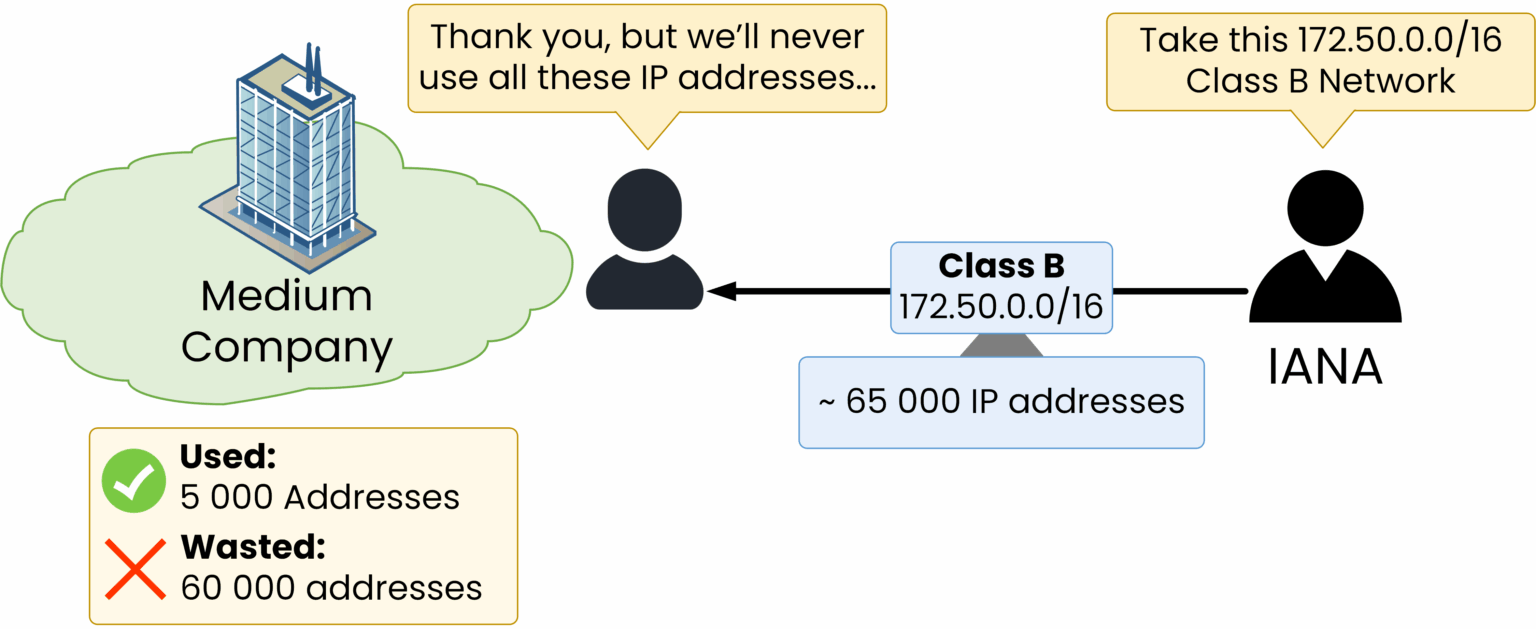
Figure 4 – Company receives Class B 172.50.0.0/16 but needs fewer IPs.
Here, you’d use about 5,000 addresses, leaving roughly 60,000 addresses unused. This is another major waste caused by class-based allocation.
Answer the question below
How many usable IPs are in a /24?
When these address classes were introduced in 1981, no one imagined we would one day face an IPv4 address shortage due to growing demand.
Over time, network engineers began looking for ways to design networks that better matched real needs.
That’s when subnetting was introduced in 1985, still within the classful addressing system. At this time, each network still had to follow its original class boundaries, but subnetting allowed engineers to divide large networks into smaller, more manageable sub-networks.
Example – Splitting a Class A into Multiple Class B–sized Networks
For example, a company assigned a
Class A/8 (≈16.7 million usable addresses) could use subnetting to split it into multipleClass B–sized networks (/16, ≈65,534 usable addresses each).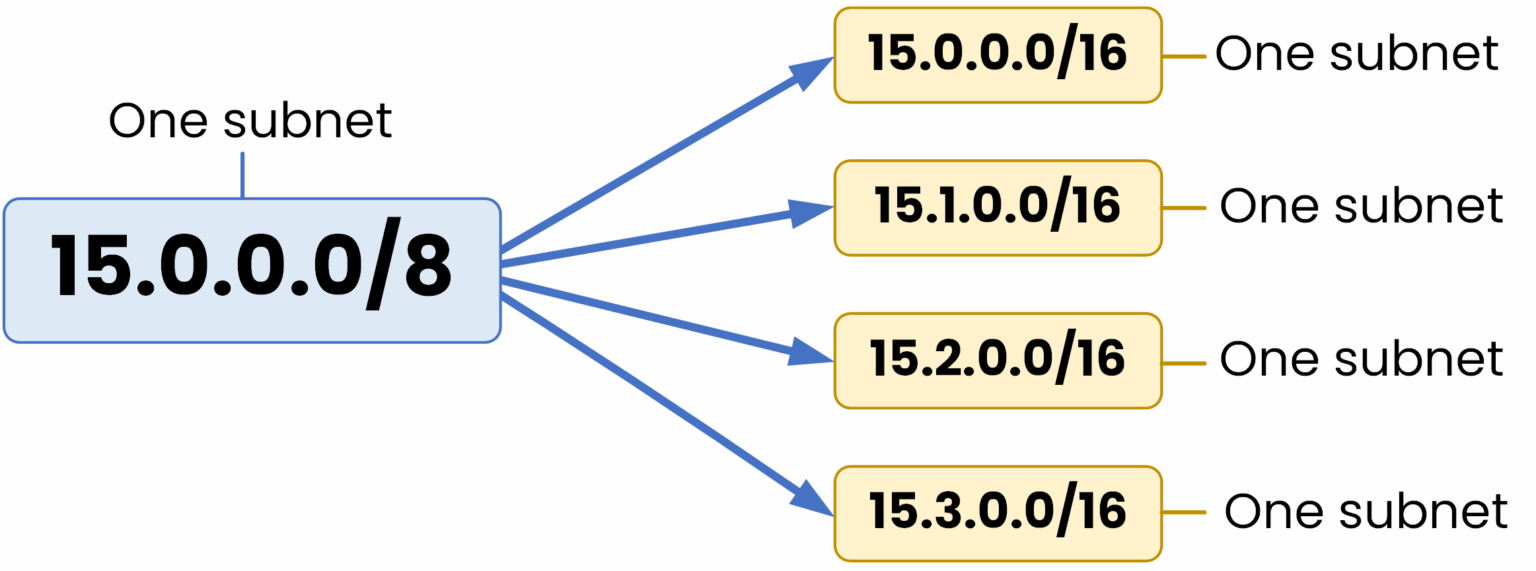
Figure 5 – Subnetting Class A 15.0.0.0/8 into multiple Class B–sized /16 networks.
This way, one large allocation could be turned into several medium networks, reducing wasted addresses and improving network organization.
Later, in 1993, CIDR (Classless Inter-Domain Routing) was introduced. CIDR removed the rigid class boundaries and allowed subnetting with any prefix length, making IP address allocation far more flexible and efficient.
We’ll explore CIDR in the next lesson.
Answer the question below
In which year was subnetting introduced?
What is Subnetting? – From sub (under) + network, it means taking one large IP network and splitting it into smaller, more manageable networks that match the number of hosts you actually need.
Before Subnetting – IPv4 originally used fixed address classes (A, B, C…), which often gave organizations far more addresses than they needed.
The Waste Problem – Classful addressing led to massive unused address space, such as using a full /24 for a point-to-point link or a /16 for only a few thousand hosts.
Subnetting (1985) – Introduced in the classful system to divide large allocations into smaller networks, reducing waste but still bound to the original class sizes.
CIDR (1993) – Removed class boundaries, allowing any prefix length and making address allocation far more efficient.
Now, let’s see in the next lessons how CIDR works and why it was a major improvement over subnetting.
Answer the question below
In which year was CIDR introduced?