'%3e%3crect%20width='398'%20height='248'%20fill='%23fff'/%3e%3cg%20transform='translate(115%2040)%20scale(7)'%20fill='%23102A43'%3e%3cpath%20d='M11%2019.425v-6.85L5%209.1v6.85zm2%200l6-3.475V9.1l-6%203.475zm-1-8.575l5.925-3.425L12%204L6.075%207.425zM4%2017.7q-.475-.275-.737-.725t-.263-1v-7.95q0-.55.263-1T4%206.3l7-4.025Q11.475%202%2012%202t1%20.275L20%206.3q.475.275.738.725t.262%201v7.95q0%20.55-.262%201T20%2017.7l-7%204.025Q12.525%2022%2012%2022t-1-.275zm8-5.7'/%3e%3c/g%3e%3c/g%3e%3c/svg%3e)
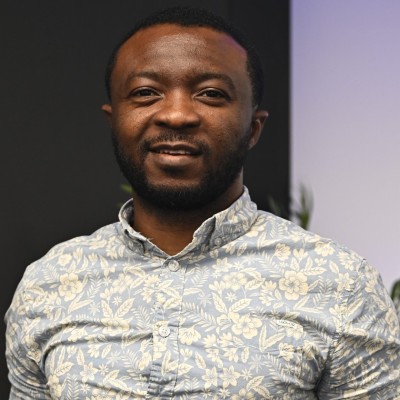
The starting point
Before networking, I spent years as a Structural Special Inspector, working in high-stakes environments where precision and accountability weren't optional. They were the standard.
At some point, I made a deliberate pivot into tech. I started freelancing as a Network Technician, getting hands-on with Cisco networking, Palo Alto firewalls, and enterprise troubleshooting across client environments. In parallel, I started my Master of Science in Information Systems at the University of South Alabama.
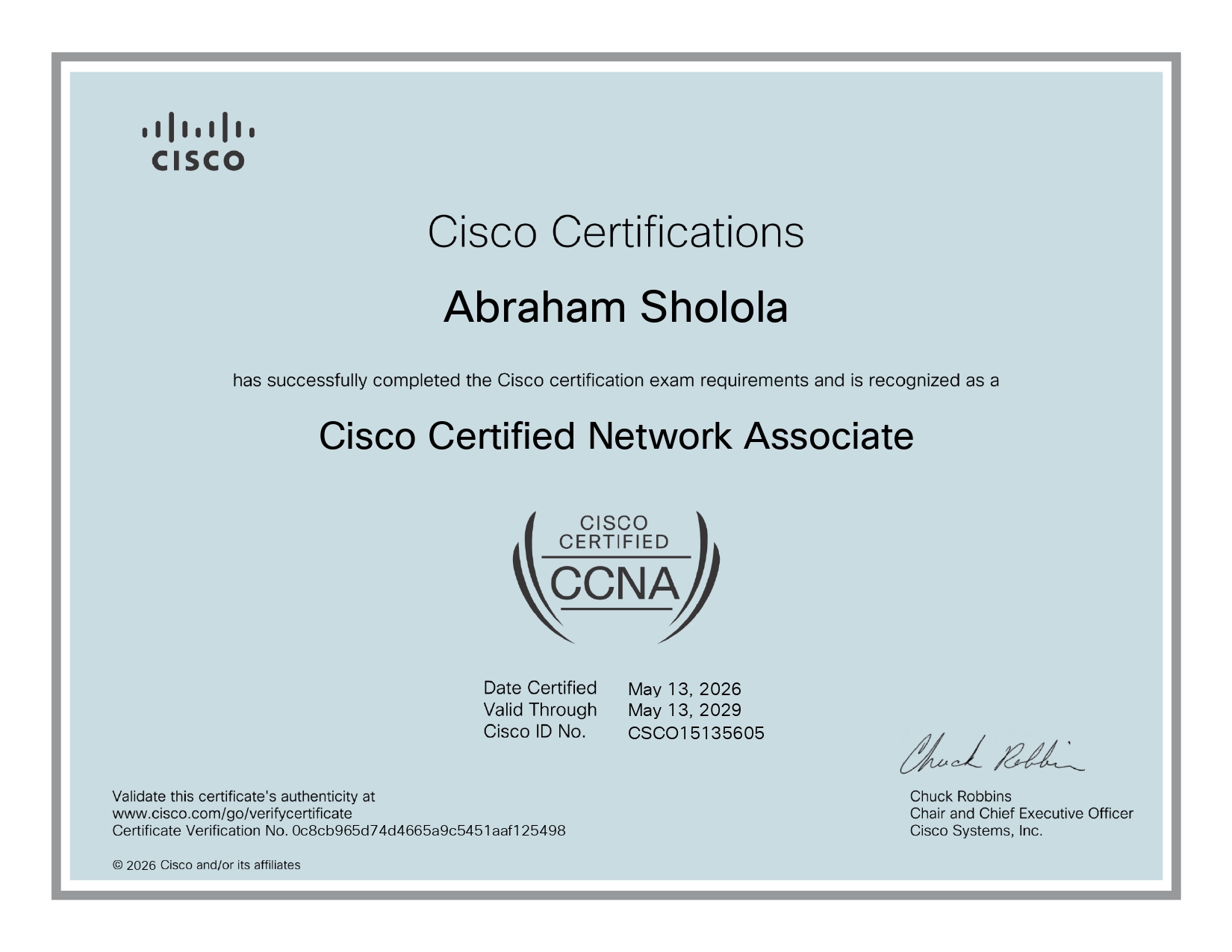
The CCNA mattered to me because I wasn't just looking for a credential. Coming from a non-traditional path into networking, I needed validation that the skills I'd been building in the field were real and exam-worthy. Certification was my way of saying: I belong in this space.
The hardest part of my prep
Bridging the gap between reading concepts and actually applying them.
I could follow along with documentation. I could understand the theory on paper. But when it came to troubleshooting real scenarios, the picture changed completely.
Diagnosing routing failures. Resolving IP addressing conflicts across multi-router topologies. Working through problems under pressure. I struggled to think through any of it systematically. Reading and watching weren't translating into action.
What made it click
The hands-on lab environment.
Being able to configure routers, break things intentionally, and then work through the fix in a structured way built the kind of muscle memory that no amount of reading alone could give me.
Once I started approaching labs with a real troubleshooting methodology, the concepts stopped feeling abstract. They became something I could see and act on.
The areas I spent the most time on:
IP addressing and subnetting
Static and dynamic routing with RIP, OSPF, and EIGRP
VLANs, trunking, and STP
Network security fundamentals
Automation and programmability basics
PingMyNetwork helped me stay consistent and gave me the right scenarios to practice on. The platform pushed me into situations that mirrored what the exam actually tests, not just theory, but applied thinking.
How long it took
About 5 months of study before sitting the exam.
The moment I passed
I was sitting at my computer, and when the result came up on the screen, I just exhaled.
It was one of those quiet moments where everything you put in suddenly has a weight to it. I sat there for a second just taking it in before I picked up my phone.
The first person I told was my wife. Then a friend, Ife Williams. Honestly, even explaining it to them made it feel more real. It wasn't just relief. It was confirmation.
Every late night working through labs suddenly made complete sense. Every config I'd broken and fixed, every topology I'd troubleshooted, every concept I'd struggled with. It all came together in that moment.
My advice
Don't just study to pass. Study to understand. The exam will test your thinking, not just your memory.
Build the labs, break the configs, and troubleshoot your way to the answer. Stay consistent and don't shy away from the hard scenarios.
The struggle is the learning.