You already covered this in CCNA.
Quick recap before ENCOR pushes into MST.The Redundant Path
SW1 connects to both SW2 and SW3, and SW2 and SW3 also connect directly to each other.
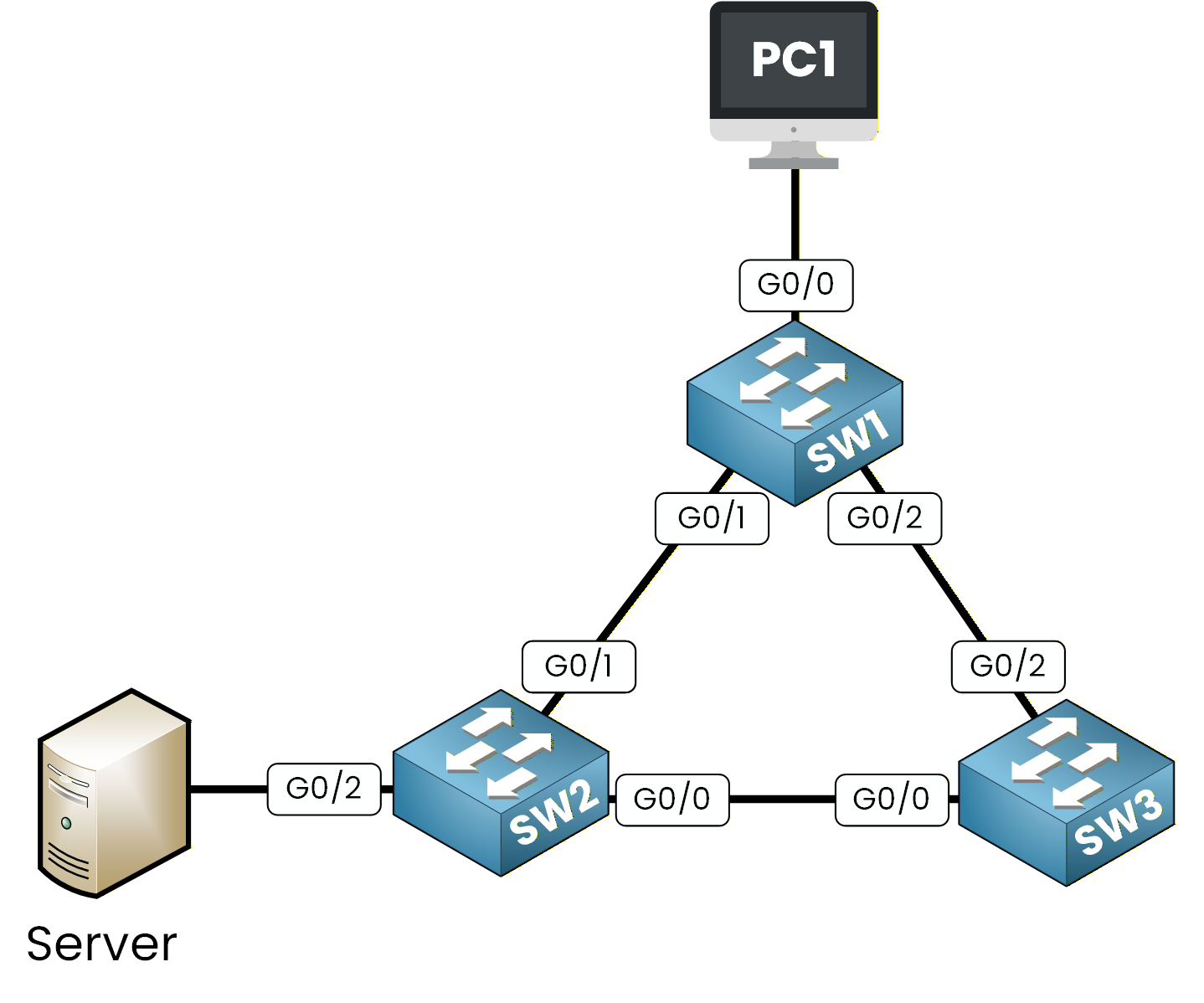
Figure 1 – Redundant topology: two physical paths from PC1 to the server
That gives PC1 more than one path to the server.
The Broadcast Spreads
Watch what happens when PC1 needs the server's MAC address: it sends an ARP broadcast.
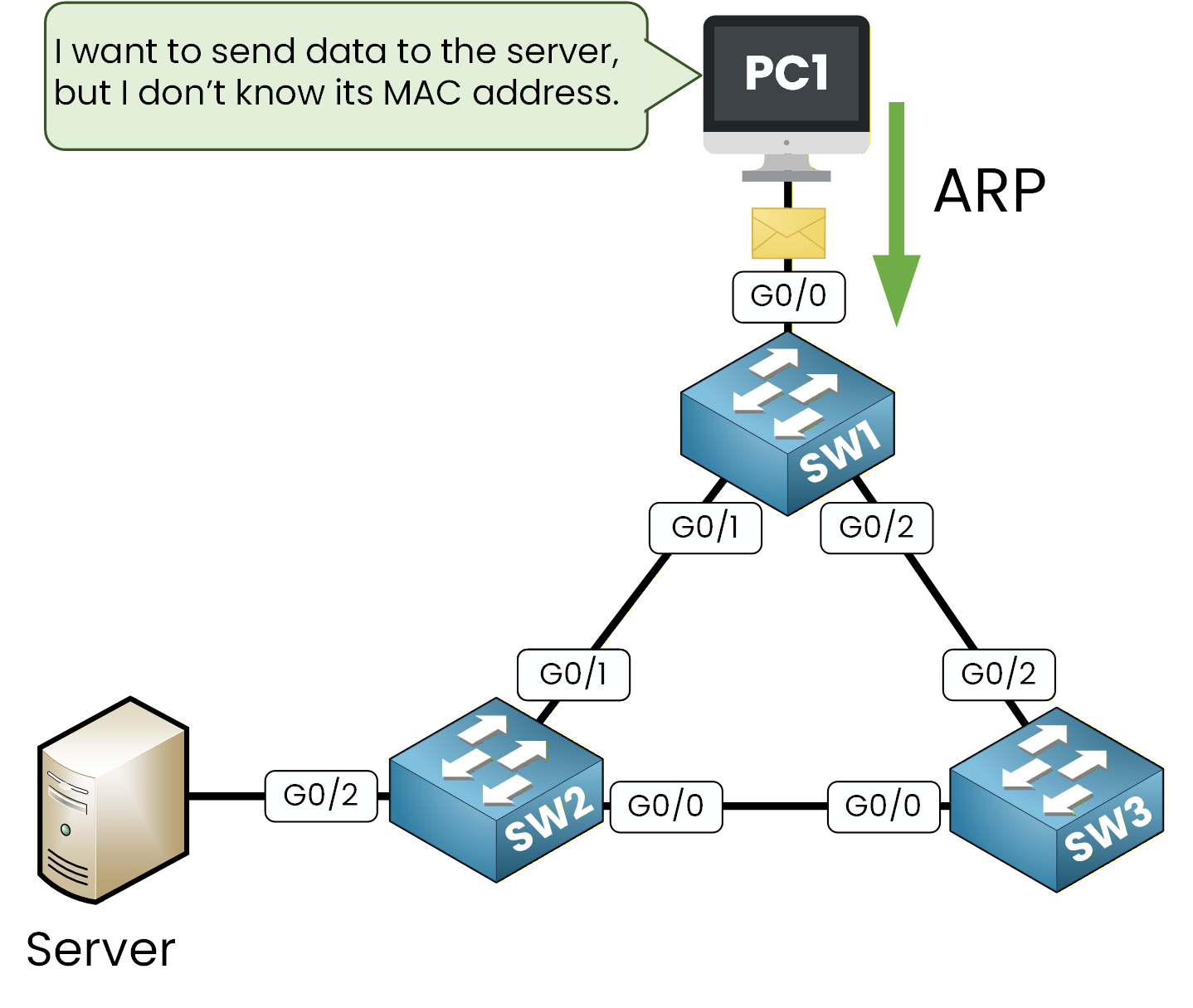
Figure 2 – PC1 sends an ARP broadcast
SW1 floods it out every other port, duplicating the frame toward both SW2 and SW3.
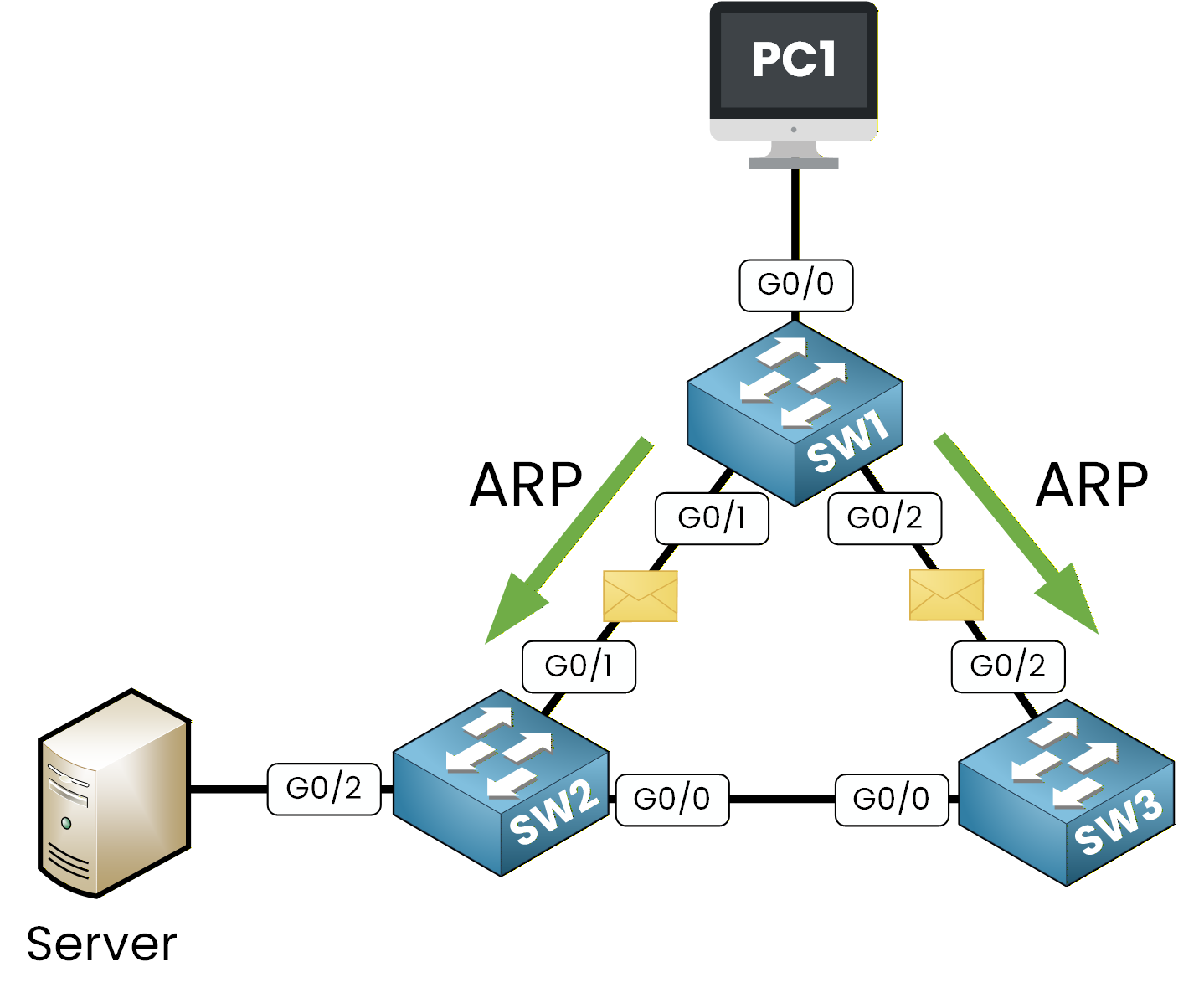
Figure 3 – SW1 floods the broadcast toward SW2 and SW3
Answer the question below
What type of frame does SW1 flood toward SW2 and SW3?
The Loop Forms
SW2 and SW3 flood it again, and the same frame starts circulating back and forth between all three switches: a switching loop.
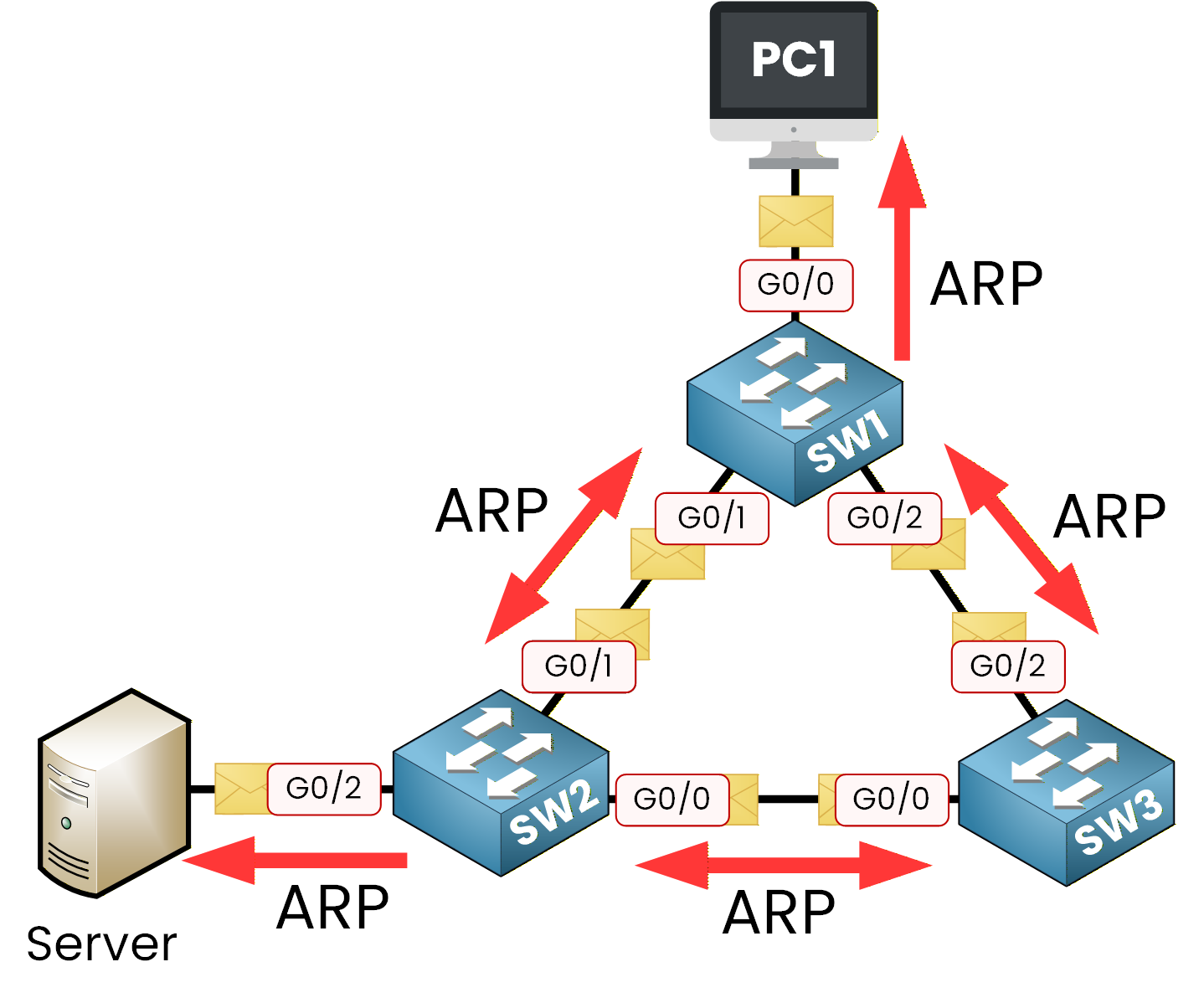
Figure 4 – SW2 and SW3 flood it again, the loop begins
Each pass through the loop duplicates the frame again. CPU usage spikes, MAC address tables flap between interfaces, and the network eventually stops responding under a broadcast storm.
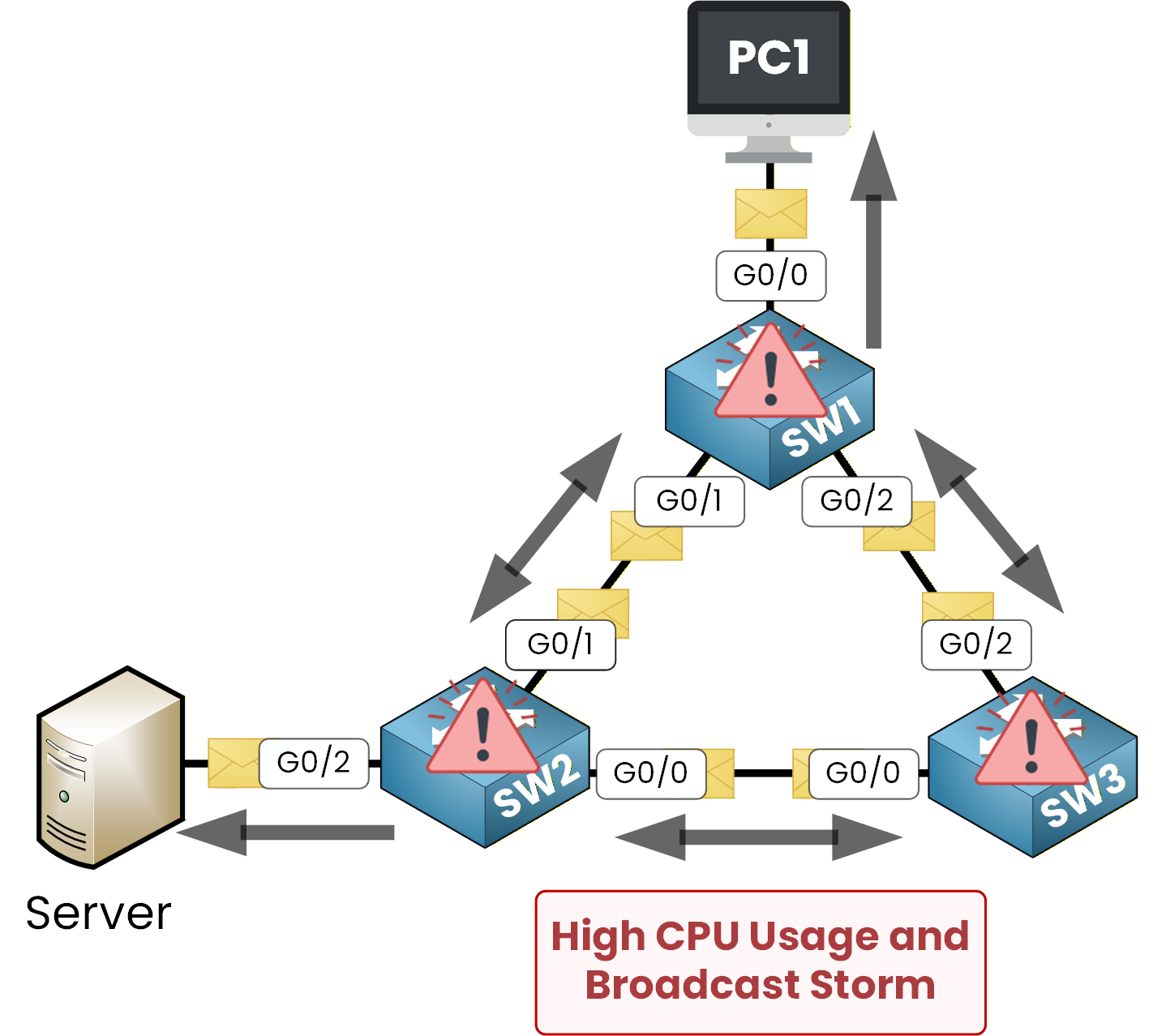
Figure 5 – CPU spikes as the loop multiplies frames
Answer the question below
What does the network turn into when frames circulate endlessly?
STP solves the loop problem by picking one active path between any two switches and putting every redundant port into a blocking state. The port stays physically up but forwards no user traffic.
Blocking the Redundant Port
One port on SW3 gets picked to sit in blocking state while every other port keeps forwarding.
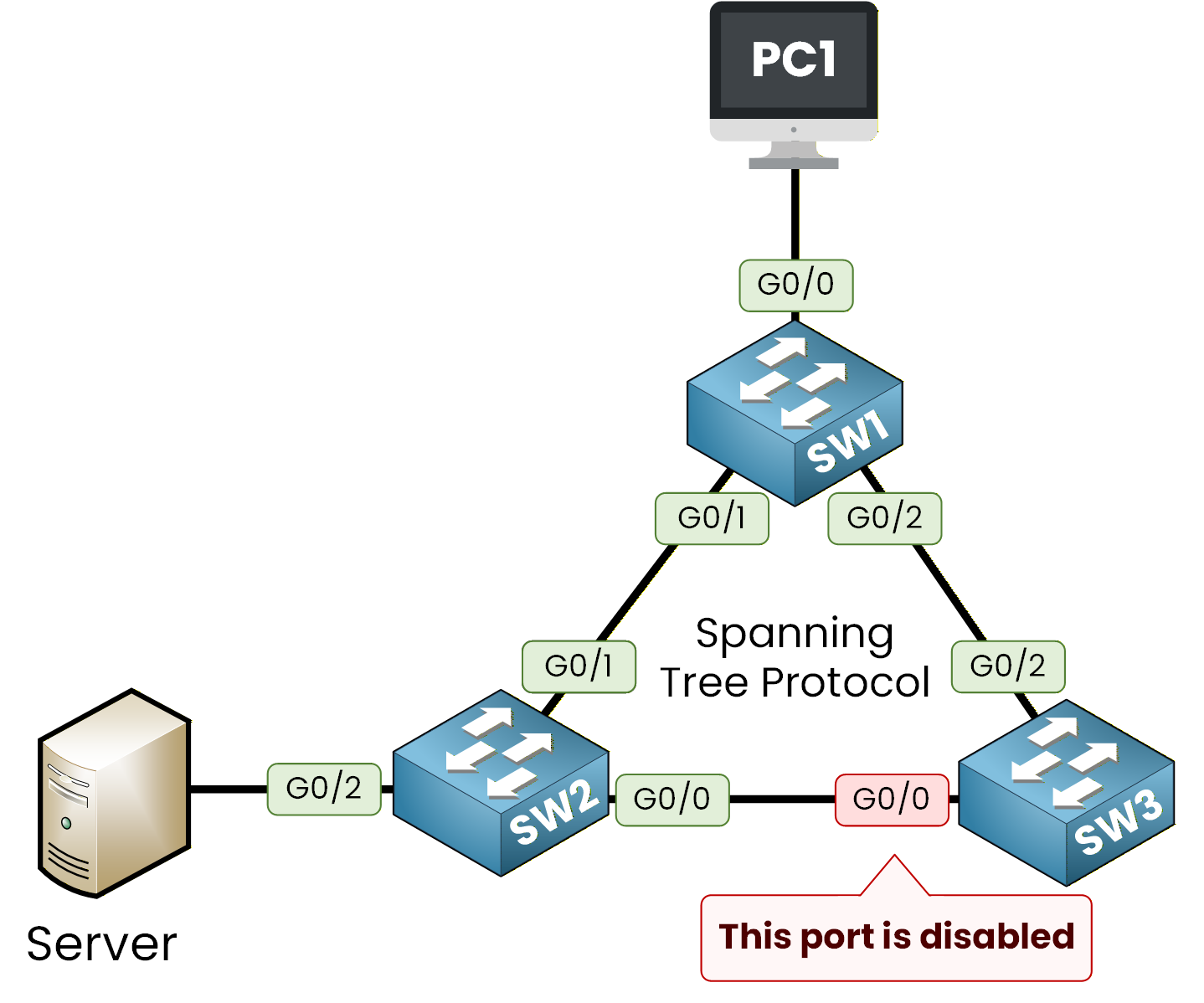
Figure 6 – STP blocks the redundant path
Verifying the Block
Verify it on SW3:
40 % Complete: you’re making great progress
Ready to pass your CCNP exam?