In the previous lesson, you saw how EIGRP calculates the classic metric from the minimum bandwidth and the total delay.
That formula works well until the links become very fast.Classic EIGRP was originally designed when high-speed interfaces were limited to 1 Gbps.
At that time, the metric formula scaled correctly for available link speeds.
However, modern networks now operate with 10 Gbps, 20 Gbps, 40 Gbps, and even 100 Gbps interfaces.This is where the limitation appears.
A 10 Gbps Link vs a 20 Gbps Link
In this topology, one path uses a 10 Gbps link and another uses a 20 Gbps link.
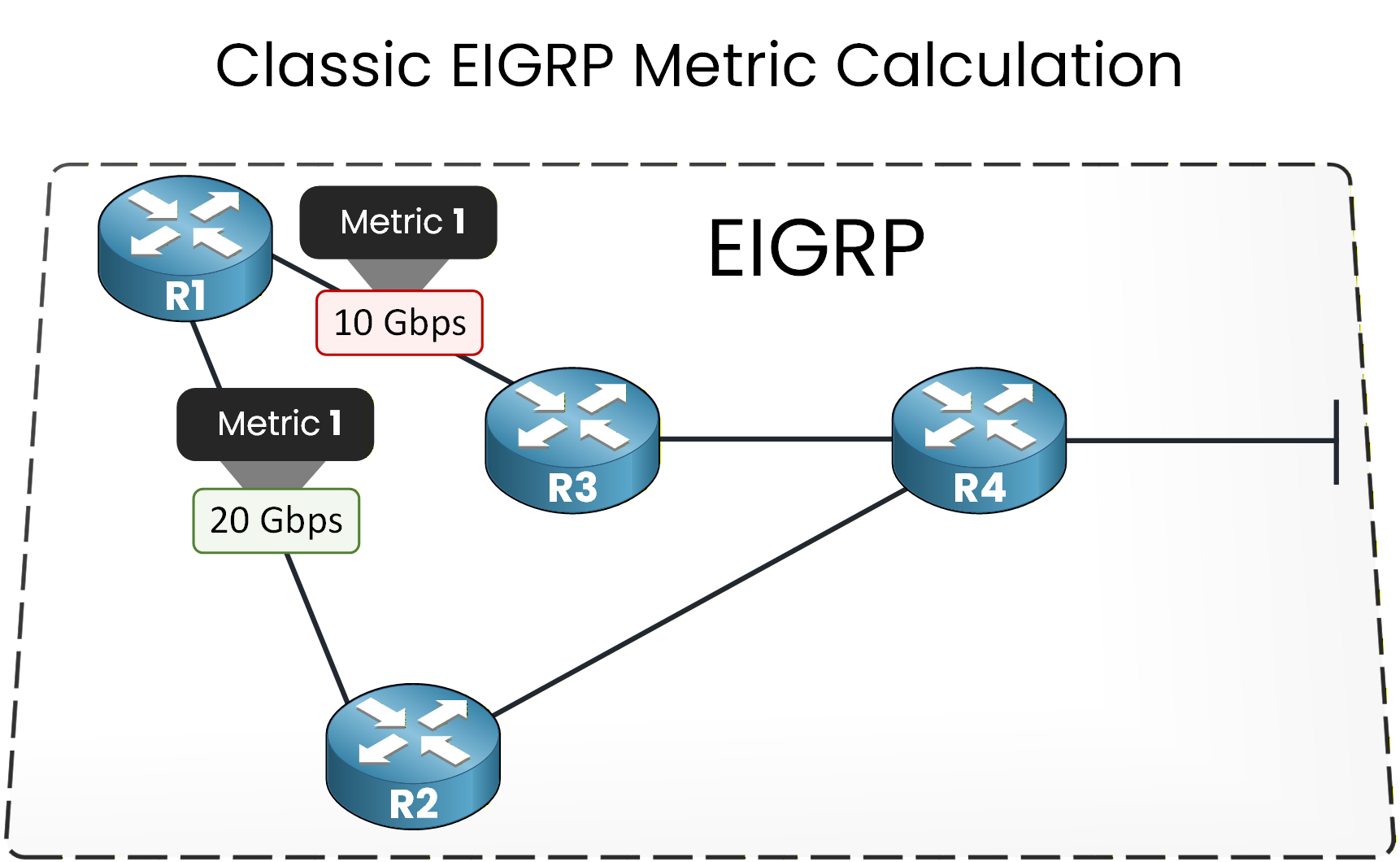
Figure 1 – Classic EIGRP metric where 10G and 20G links produce the same cost
Even though 20 Gbps is twice as fast, the calculated metric is identical.
From EIGRP's perspective, both paths have the same cost.The Bandwidth Term
The reason lies in how the bandwidth term is calculated in the classic formula:
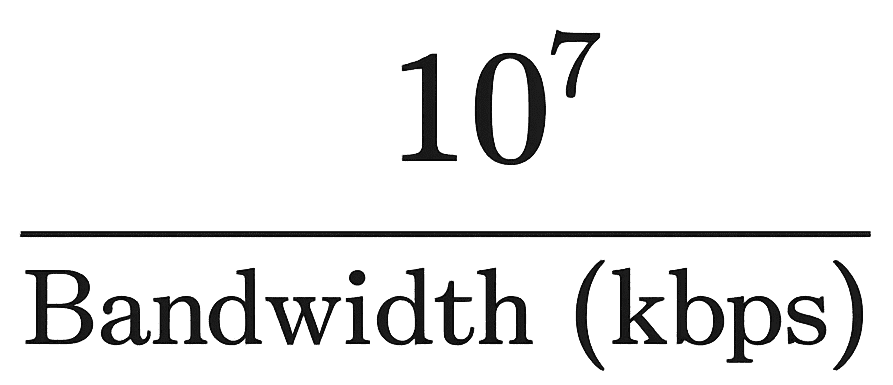
Figure 2 – Classic EIGRP Bandwidth Term Calculation
The key limitation is that this value cannot go below 1.
Once the result reaches 1, it is treated as the minimum possible value.Answer the question below
What is the lowest value the classic bandwidth term can take?
The Bandwidth Term per Link Speed
Bandwidth
10,000,000 / BW (kbps)
Value Used by EIGRP
Final Metric (delay = 1)
1 Gbps
10
10
(10 + 1) × 256 = 2816
5 Gbps
2
2
(2 + 1) × 256 = 768
10 Gbps
1
1
(1 + 1) × 256 = 512
20 Gbps
0.5
1 (minimum value)
(1 + 1) × 256 = 512
40 Gbps
0.25
1 (minimum value)
(1 + 1) × 256 = 512
100 Gbps
0.1
1 (minimum value)
(1 + 1) × 256 = 512
Table 1 - Classic EIGRP Metric Saturation at 10 Gbps
40 % Complete: you’re making great progress
Ready to pass your CCNP exam?