You already know the first job of a virtual link: attaching an area that never touched Area 0. There is a second case, and this one hits the backbone itself. Here, Area 0 is not missing, it is broken in two.
The Healthy Backbone
Start from a working design. Area 0 is present on both sides of the topology, connected through R10 at the top:
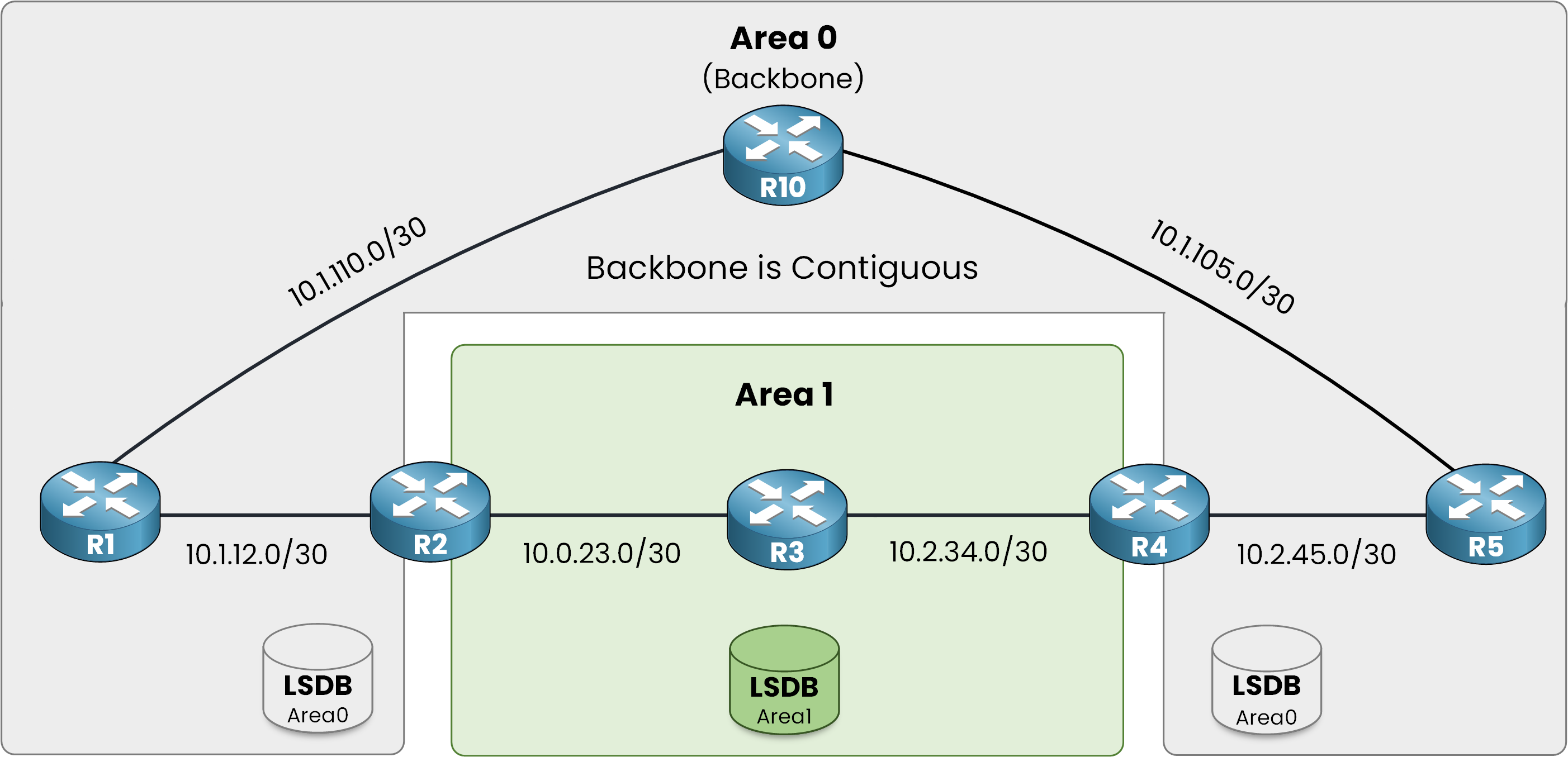
Figure 1 - The backbone is contiguous
As you can see, the topology forms a ring: R1, R2, R10, R5, and R4 are all connected inside Area 0.
The backbone is contiguous. Contiguous simply means in one piece: starting from any Area 0 router, you can reach every other Area 0 router using only Area 0 links. As long as this is true, everything works.
Answer the question below
A backbone that is in one piece is called _______.
The Backbone Partition Event
Now the link between R10 and R5 goes down:
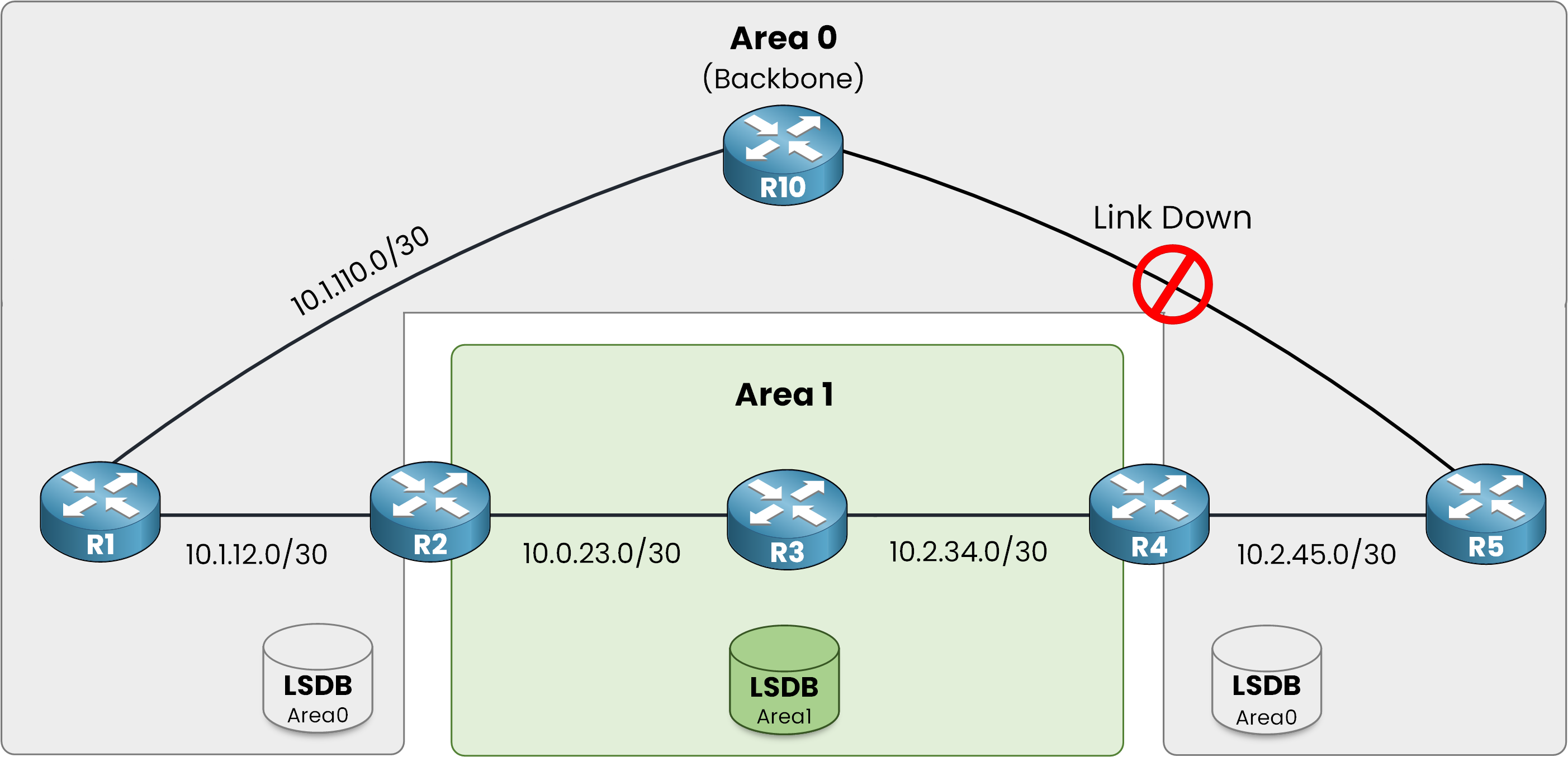
Figure 2 - The backbone link fails
One cable, and Area 0 is cut in two pieces: the backbone is discontiguous.
Discontiguous means the opposite: Area 0 is no longer in one piece. The left half and the right half are separated by Area 1, and no Area 0 link connects them anymore.
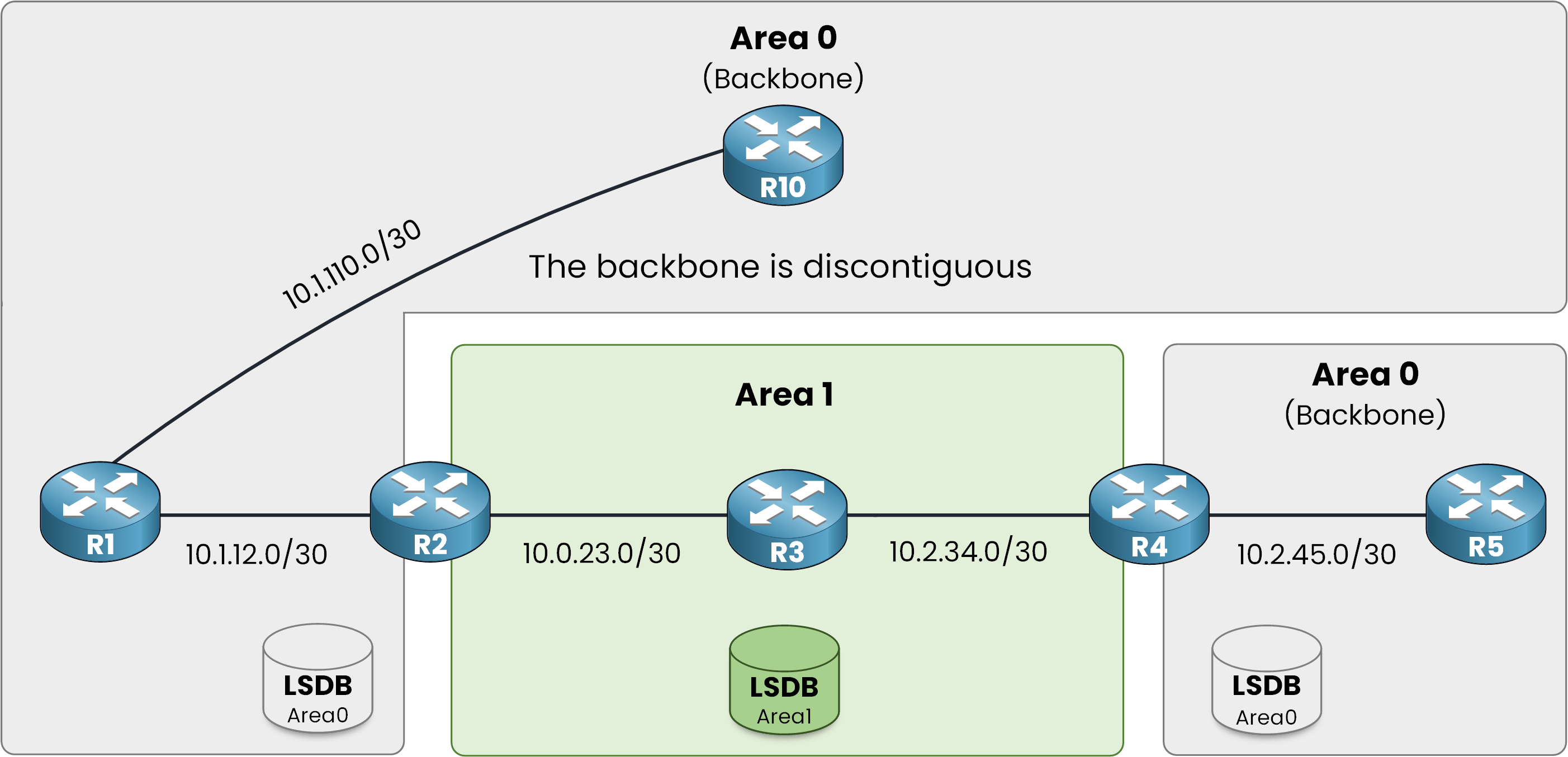
Figure 3 - Area 0 is split in two
Each half still floods its LSAs and converges on its own. But the two halves never exchange their routes again: the routers on the left can no longer reach the networks on the right.
Why this confuses engineers: Area 1 is still up and forwarding traffic. The physical path exists, but the OSPF path does not because OSPF strictly forbids inter-area routing through a non-backbone area to reach another Area 0 segment.
Answer the question below
When Area 0 is split in two pieces, the backbone is called _______.
The fix uses the same tool as before, but for a different job.
Instead of attaching an orphan area, the virtual link stitches the broken backbone back to itself across Transit Area 1.Identifying the Transit ABRs
A virtual link always runs between two ABRs through a non-backbone area.
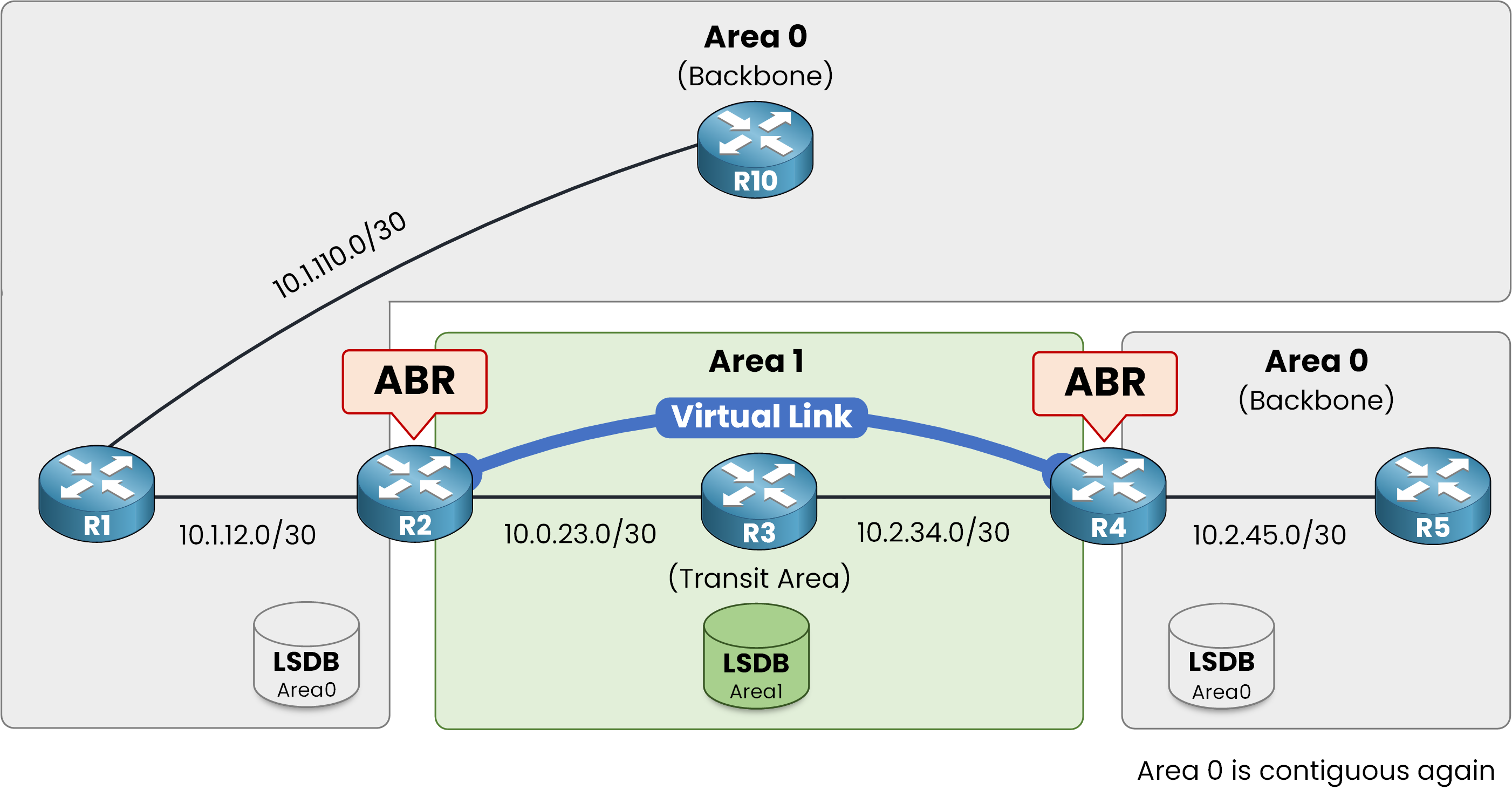
Figure 4 - The Virtual Link repairs the backbone
Area 1 sits directly between the two severed halves of Area 0:
R2 borders Area 0 and Area 1 on the left.
R4 borders Area 1 and Area 0 on the right.
R2 and R4 serve as your endpoints, and Area 1 acts as the Transit Area.
Key Requirement: The transit area cannot be configured as a Stub or NSSA area. Virtual links require standard Type 3 summary LSAs to function.
Check the Router IDs on both ABR endpoints first:
R2# show ip ospf | include ID
 Routing Process "ospf 1" with ID 2.2.2.2
Same check on the other endpoint, R4.
R4# show ip ospf | include ID
 Routing Process "ospf 1" with ID 4.4.4.4
Answer the question below
Which area does the virtual link cross in this topology?
Applying the Configuration
Configure R2 first, pointing the virtual link at R4's Router ID across Area 1:
R2# configure terminal
R2(config)# router ospf 1
R2(config-router)# area 1 virtual-link 4.4.4.4
R2(config-router)# end
Nothing happens until the other end is configured.
Move to R4 and mirror the command:R4# configure terminal R4(config)# router ospf 1 R4(config-router)# area 1 virtual-link 2.2.2.2 %OSPF-5-ADJCHG: Process 1, Nbr 2.2.2.2 on OSPF_VL0 from LOADING to FULL, Loading Done R4(config-router)# endThe adjacency comes up immediately on interface
OSPF_VL0.Answer the question below
On which interface does the virtual-link adjacency come up on R4?
One command tells you whether the backbone is stitched back together:
R2# show ip ospf virtual-links

Virtual Link OSPF_VL0 to router 4.4.4.4 is up
  Run as demand circuit
  DoNotAge LSA allowed.
  Transit area 1, via interface GigabitEthernet0/1
 Topology-MTID    Cost    Disabled     Shutdown      Topology Name
        0           2        no           no            Base
  Transmit Delay is 1 sec, State POINT_TO_POINT,
  Timer intervals configured, Hello 10, Dead 40, Wait 40, Retransmit 5
    Hello due in 00:00:01
    Adjacency State FULL (Hello suppressed)
The link is up and the adjacency is FULL: the two halves of Area 0 are communicating again through the logical tunnel.
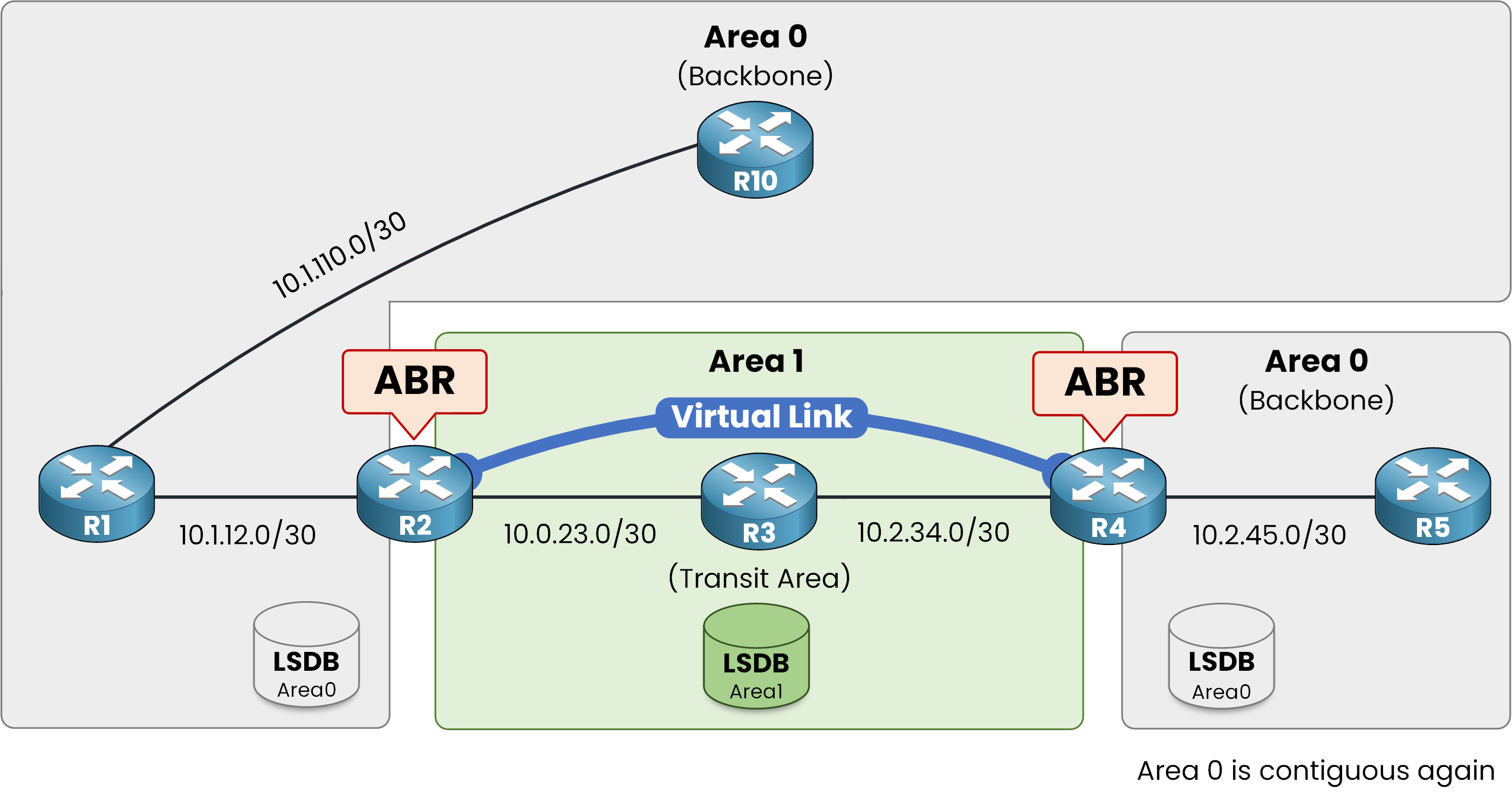
Figure 5 - The Virtual Link repairs the backbone
The virtual link reconnects the two pieces of Area 0.
The backbone is contiguous again, and routing updates flow seamlessly across both sides.(Note: Keep in mind this is a temporary patch, not a permanent design.
The real fix remains repairing the physical link between R10 and R5).Answer the question below
In this repair, which routers are the two endpoints of the virtual link?