OSPFv3 is the evolution of OSPF designed to support IPv6.
For the CCNP ENCOR exam, you need to understand how OSPFv3 differs from OSPFv2.OSPF exists in two main versions:
OSPFv2 → Designed for IPv4
OSPFv3 → Designed for IPv6 (and can also carry IPv4)
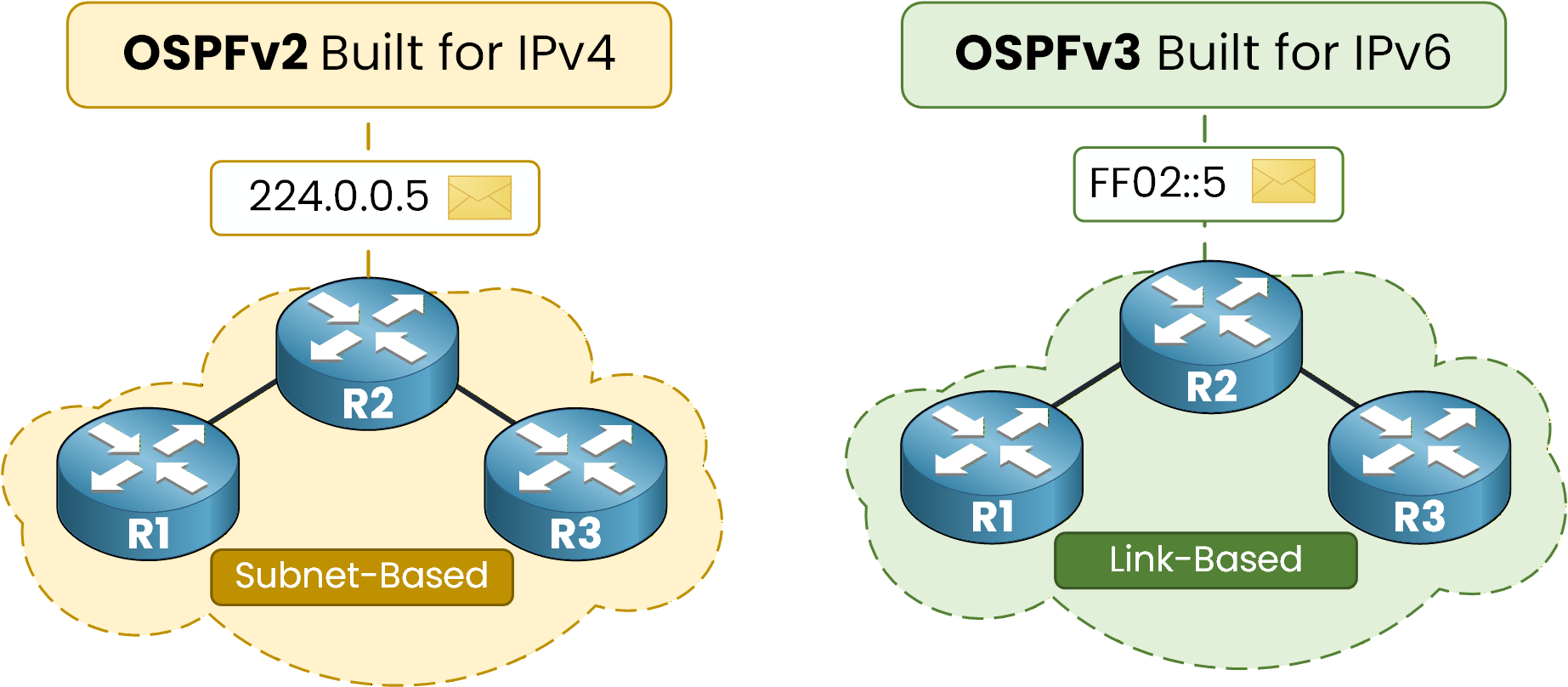
Figure 1 - OSPFv2 vs OSPFv3 fundamentals
Even though the core logic of OSPF remains the same (SPF algorithm, areas, DR/BDR election, LSAs), OSPFv3 introduces important structural changes.
OSPFv3 is not backward compatible with OSPFv2, and the two versions cannot form an adjacency with each other.
OSPFv3 Packet Transport and Multicast Communication
OSPFv3 still uses IP protocol 89, but it runs over IPv6 instead of IPv4.
It uses the IPv6 multicast addresses:FF02::5 (AllSPFRouters)
FF02::6 (AllDRouters)
These two addresses are used for neighbor communication.
Answer the question below
OSPFv3 was introduced primarily to support which protocol version?
To form an OSPFv3 adjacency, a valid Router ID is mandatory.
Router ID Requirement
You must understand that:
The Router ID is still 32-bit
It is written in IPv4 format
It must be unique in the OSPF domain
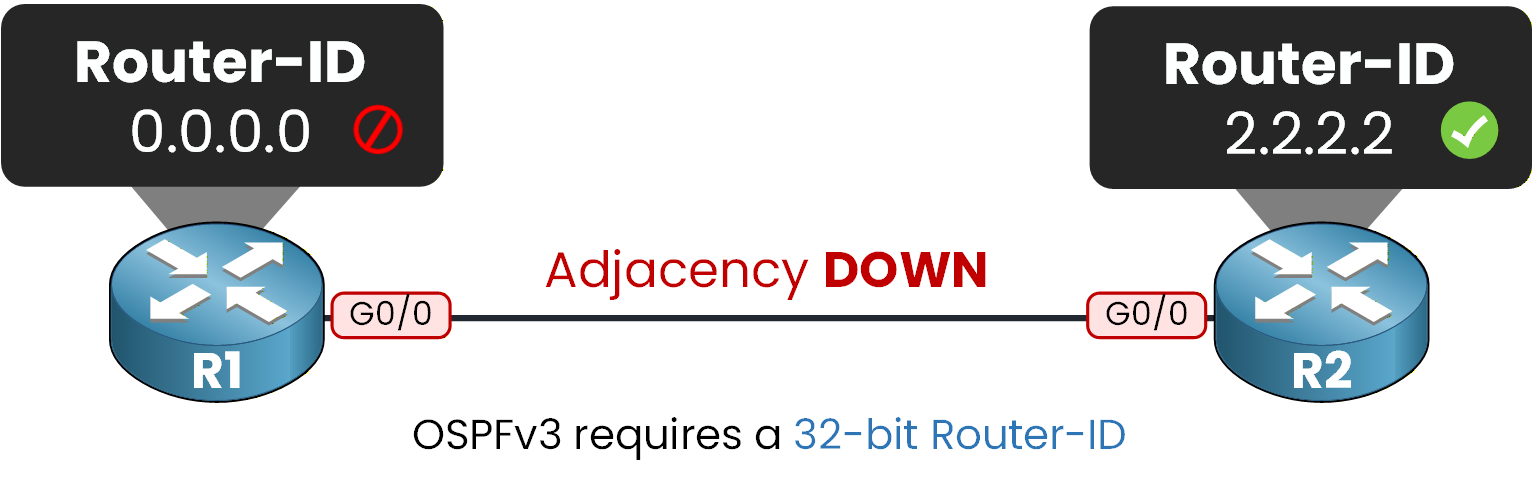
Figure 2 - Adjacency requirement not respected
If a router does not have a Router ID configured and no IPv4 address is available, the Router ID becomes 0.0.0.0, and adjacency will not form.
Once both routers have valid Router IDs, adjacency can be established.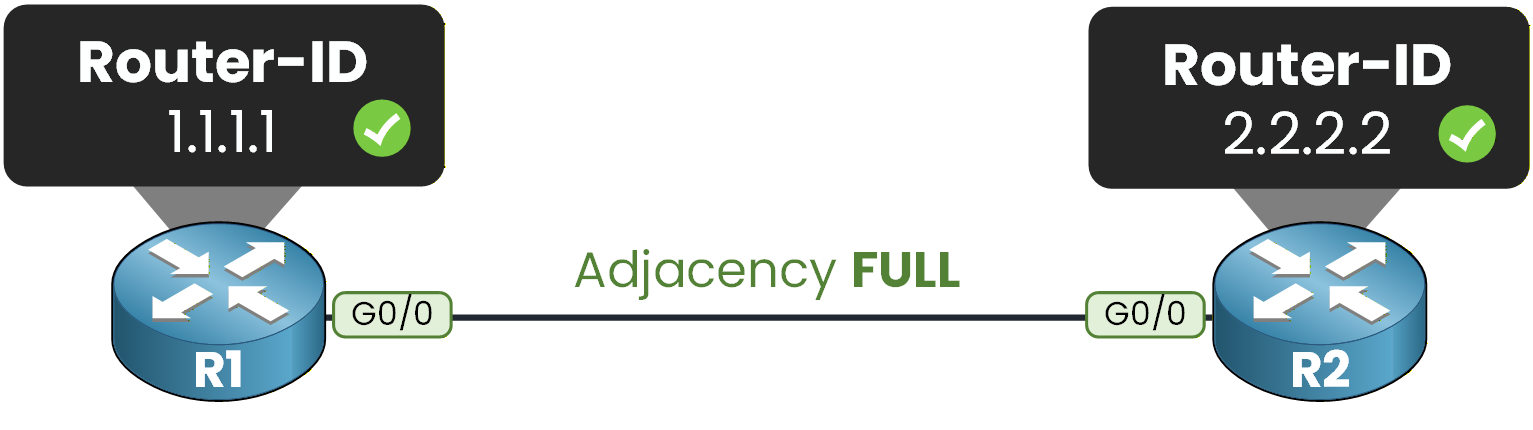
Figure 3 - Adjacency requirement is respected
In addition to the Router ID, neighbors must also match:
Area ID
Hello and Dead timers
Network type
MTU
Link-Local Based Adjacency
Another key concept you must remember:
OSPFv3 forms adjacency using IPv6 link-local addresses only.
Global IPv6 addresses are not used for neighbor relationships.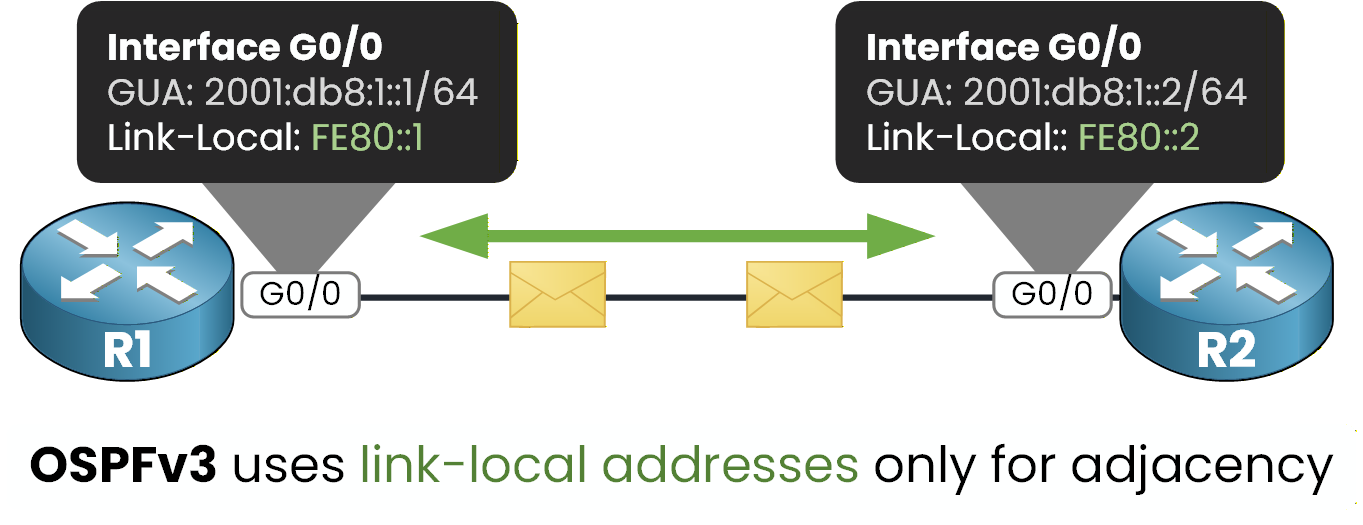
Figure 4 - OSPFv3 link-local adjacency
For the exam, think:
OSPFv3 adjacency = link-local based communication.
Answer the question below
What type of IPv6 address is used to form OSPFv3 adjacency?
In OSPFv2, you are used to advertising networks using the
networkstatement under the routing process.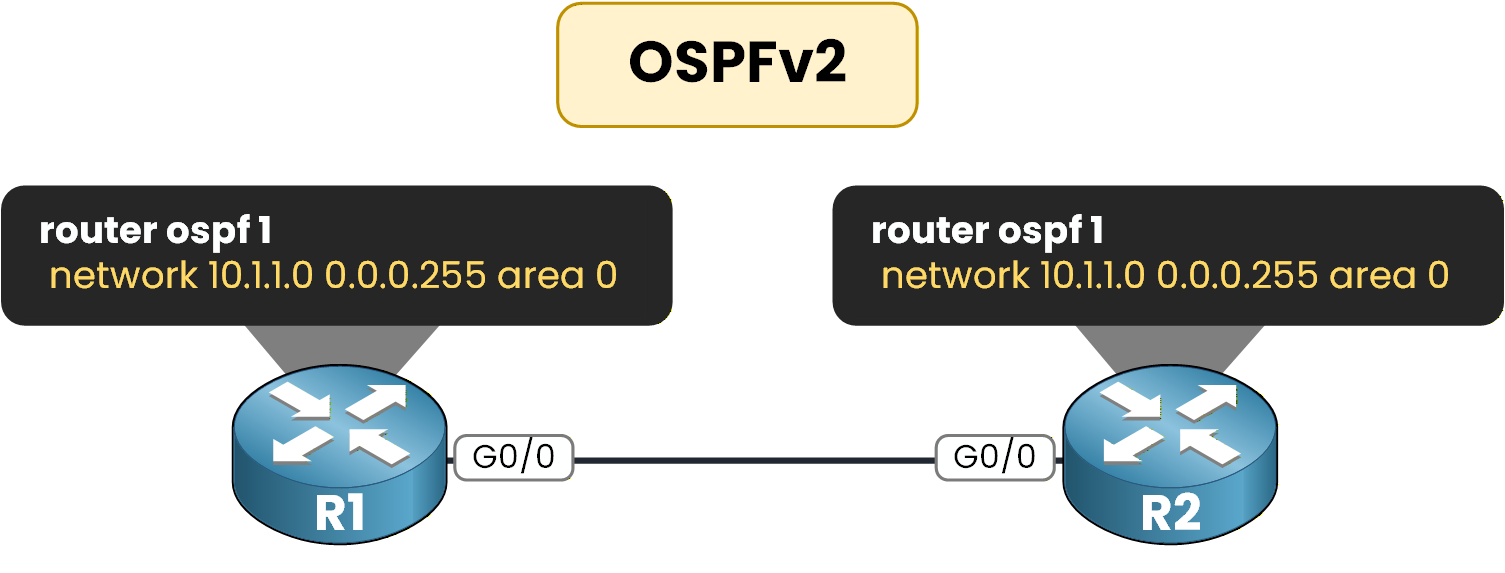
Figure 5 - OSPFv2 network statement configuration
In OSPFv3, this changes.
Thenetworkstatement no longer exists.Instead, you:
Create the OSPFv3 process
Configure the Router ID
Enable OSPF directly on the interface
This is called interface-based activation.
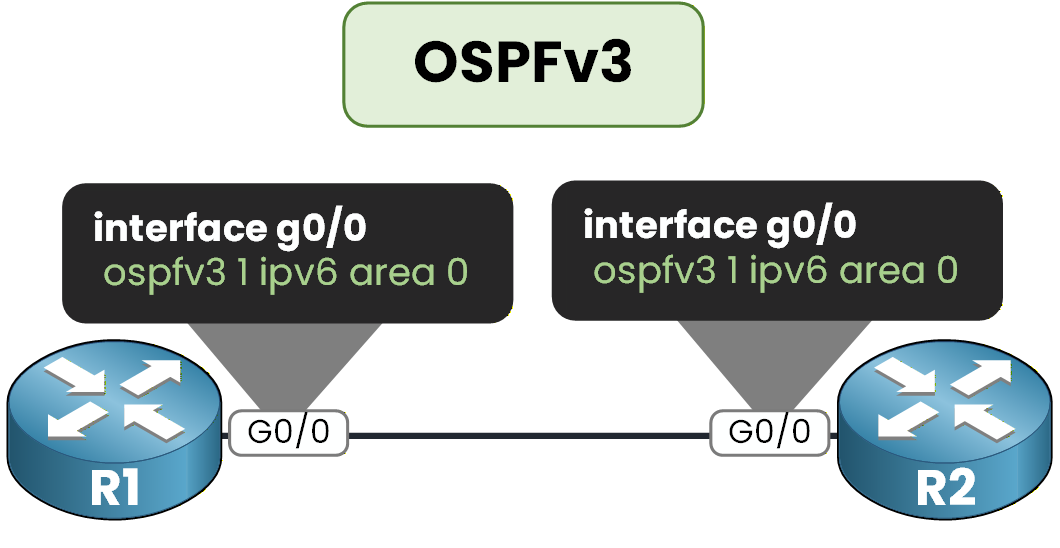
Figure 6 - OSPFv3 interface-based activation
Interface-based activation provides more granular control and eliminates wildcard mask errors.
You must be comfortable recognizing this difference in configuration questions.Answer the question below
What configuration model does OSPFv3 use to enable routing on interfaces?
A major architectural change in OSPFv3 is how LSAs are structured.
Separation of Topology and Prefixes
In OSPFv2:
The Router LSA (Type 1) contains both topology and prefixes.
In OSPFv3:
The Router LSA (Type 1) contains topology only
Prefixes are advertised separately
OSPFv3 builds the shortest path tree based on links, not networks.
Renamed LSAs
Type 3 and Type 4 LSAs are renamed in OSPFv3 but keep the same logical purpose.
Type 3 → Inter-Area Prefix LSA
Type 4 → Inter-Area Router LSA
Answer the question below
In OSPFv3, what does the Router LSA (Type 1) contain?
New LSAs in OSPFv3
Two additional LSAs were introduced:
Type 8 — Link LSA
Type 9 — Intra-Area Prefix LSA
You do not need the deep internal details for ENCOR.
SPF Behavior in OSPFv3
What you must remember is:
OSPFv3 separates topology from prefix advertisement.SPF calculation runs only on:
Type 1 (Router LSA)
Type 2 (Network LSA)
This means prefix changes do not trigger a full SPF recalculation.
That is the core architectural improvement.Answer the question below
What kind of information does OSPFv3 advertise separately from topology information?
OSPFv3 supports multi-area design just like OSPFv2.
You still have:
Area 0 as the backbone
ABRs connecting multiple areas
Type 3 LSAs for inter-area routes
Type 5 LSAs for external routes
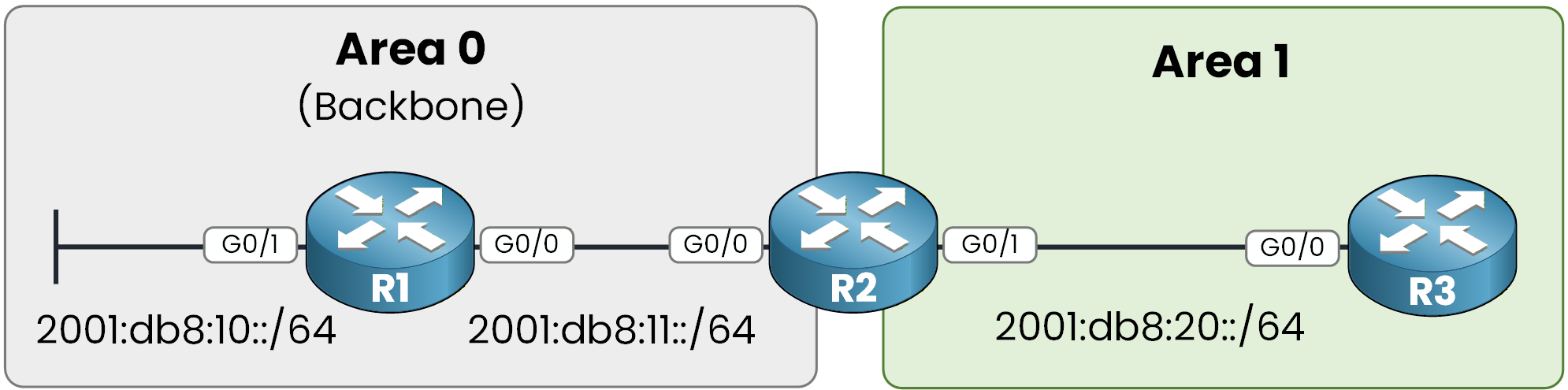
Figure 7 - OSPFv3 Multi Area Topology
The ABR behavior remains identical to OSPFv2.
From a design perspective, nothing changes.
The difference is internal behavior (prefix handling), not area logic.
In the next lesson, you will configure and verify OSPFv3 step by step and see these concepts in action.Answer the question below
What area remains the backbone in OSPFv3?