You have already met OSPF and EIGRP on their own.
Before we compare them in detail, let's refresh the essentials.What OSPF Brings
OSPF is the open, standards-based link-state protocol.
Every router in an area builds the same view of the topology, then works out its own shortest paths from that shared map.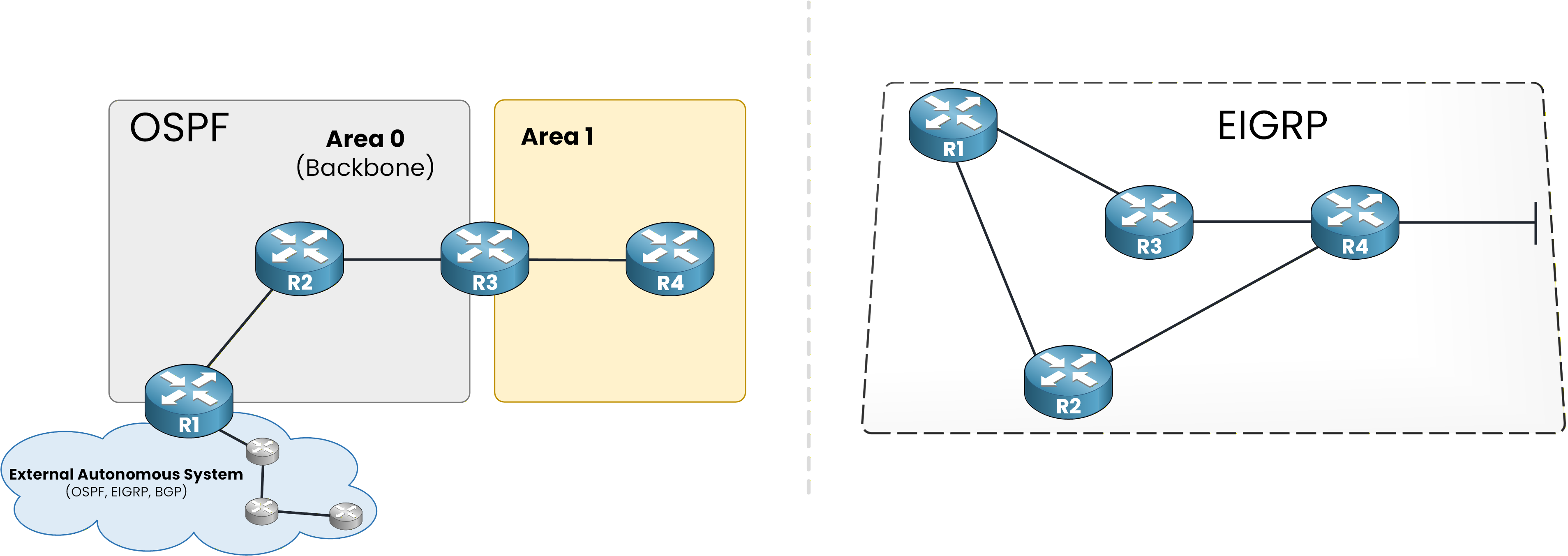
Figure 1 - OSPF and EIGRP at a glance
What EIGRP Brings
EIGRP is Cisco's advanced distance-vector protocol.
It skips the full map and learns the network from its direct neighbors.
DUAL then keeps every path it picks loop-free.Both are interior gateway protocols (IGPs): they fill your routing table inside one organization.
But almost everything else about them is different.
The rest of this lesson walks through those differences, one at a time.Answer the question below
OSPF and EIGRP both run inside a single organization. What class of routing protocol does that make them?
Almost every difference in this lesson traces back to one decision: how each protocol learns the network in the first place.
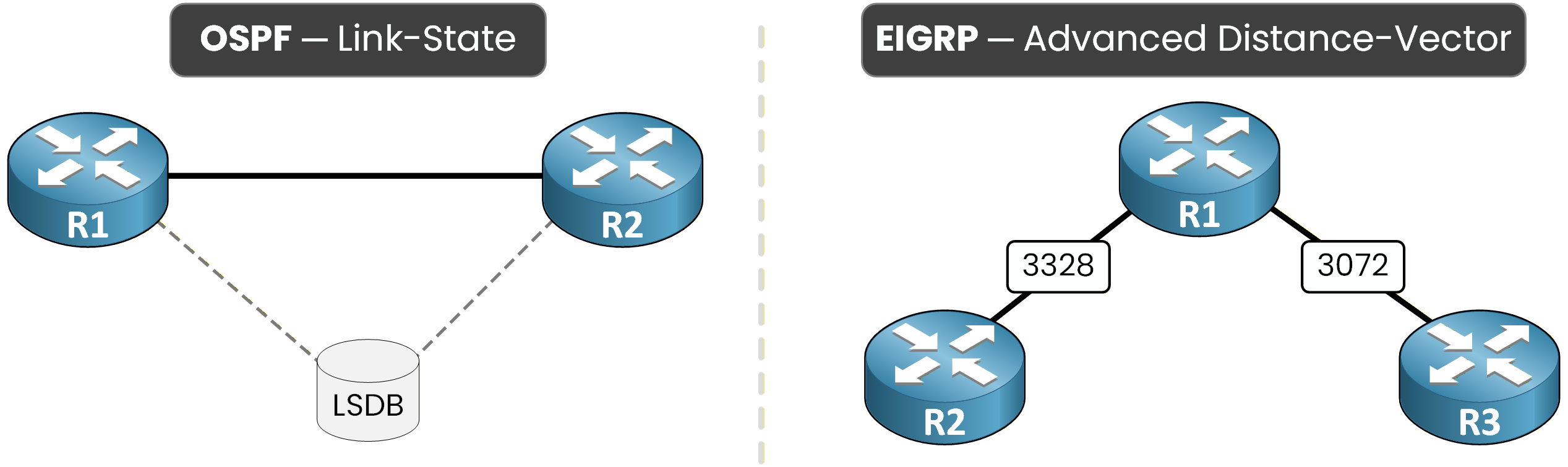
Figure 2 - OSPF builds a full map (LSDB), EIGRP learns from neighbors
OSPF: Link-State
OSPF is a link-state protocol.
Every router in an area advertises its own links.
They all end up with an identical LSDB, and each one runs SPF on that shared map.EIGRP: Advanced Distance-Vector
EIGRP is an advanced distance-vector protocol.
It never builds that map.
Each router only knows the distances its neighbors advertise.
DUAL then keeps each chosen path loop-free.Answer the question below
Which protocol builds a complete topology map of the area?
OSPF and EIGRP differ first on the hardware you can run them on.
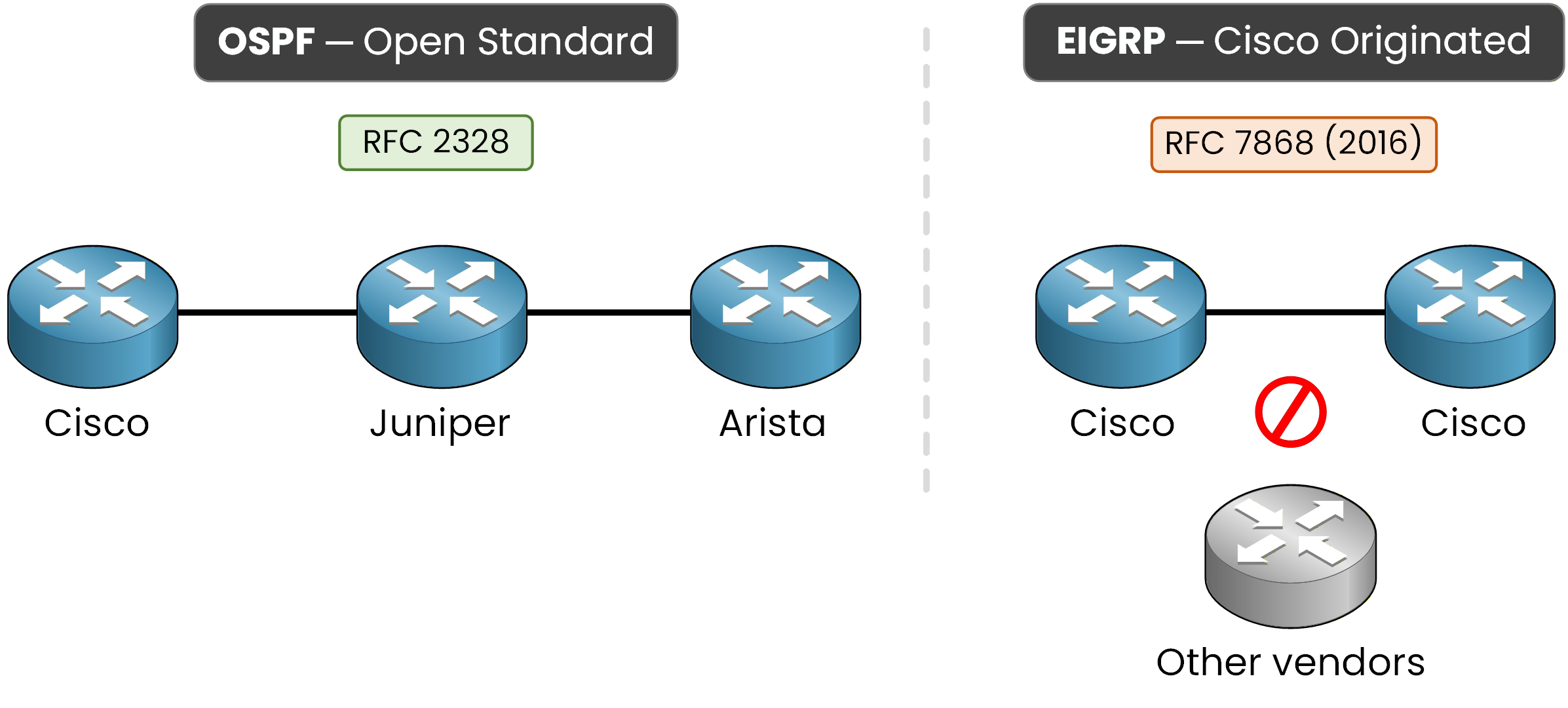
Figure 3 - OSPF open standard (RFC 2328) vs EIGRP Cisco origin (RFC 7868)
OSPF: Open Standard
OSPF is an open standard defined in RFC 2328.
It runs on any vendor's hardware, which makes it the default choice in multi-vendor environments.EIGRP: Cisco, Now Open
EIGRP started as Cisco-proprietary.
Cisco released it as an open standard, RFC 7868, in 2016.
But adoption outside Cisco hardware stayed rare.
In practice you still run it on all-Cisco networks.Answer the question below
Which RFC documents EIGRP as an open standard?
OSPF and EIGRP measure the cost of a path in different ways.
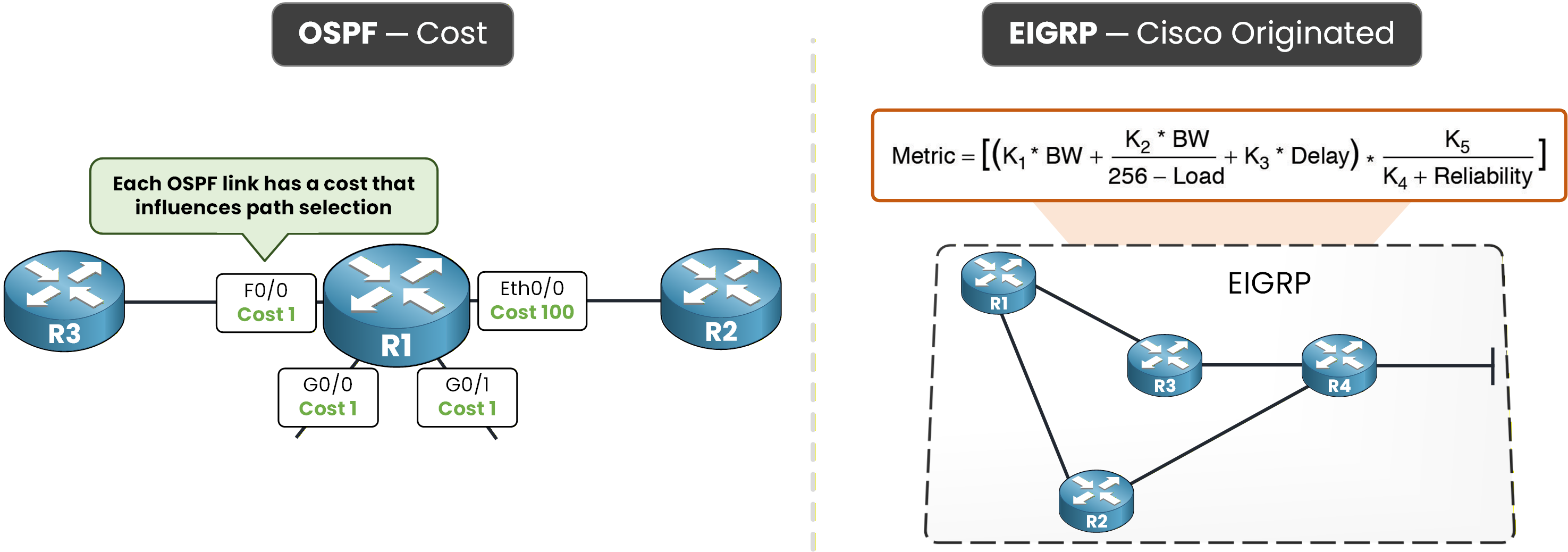
Figure 4 - OSPF cost vs EIGRP composite metric
OSPF: Cost
OSPF uses one value called cost, taken straight from interface bandwidth: the faster the link, the lower the cost.
By default OSPF uses a 100 Mbps reference bandwidth, so every link at 100 Mbps or faster gets a cost of 1.A 1 Gbps link then looks no better than a 100 Mbps one.
You fix this withauto-cost reference-bandwidthso faster links get a lower cost again.On R1, OSPF shows the cost on each interface, and a 1 Gbps link comes out at cost 1:
R1# show ip ospf interface g0/0
GigabitEthernet0/0 is up, line protocol is up
  Internet Address 10.0.11.1/24, Area 0
  Process ID 1, Router ID 1.1.1.1, Network Type BROADCAST, Cost: 1
EIGRP: Composite Metric
EIGRP uses a composite metric from K-values, with only K1 (bandwidth) and K3 (delay) active by default.
It combines the slowest bandwidth on the path with the total delay.
That gives a richer picture than a single cost.On R1, the same route shows what the metric is built from, bandwidth and delay:
R1# show ip eigrp topology 10.0.23.0/24
EIGRP-IPv4 Topology Entry for 10.0.23.0/24, FD is 3072
  Composite metric is (3072/2816)
      Vector metric:
        Minimum bandwidth is 1000000 Kbit
        Total delay is 20 microseconds
Answer the question below
OSPF derives its cost from which interface property?
OSPF and EIGRP do not choose their best route the same way.
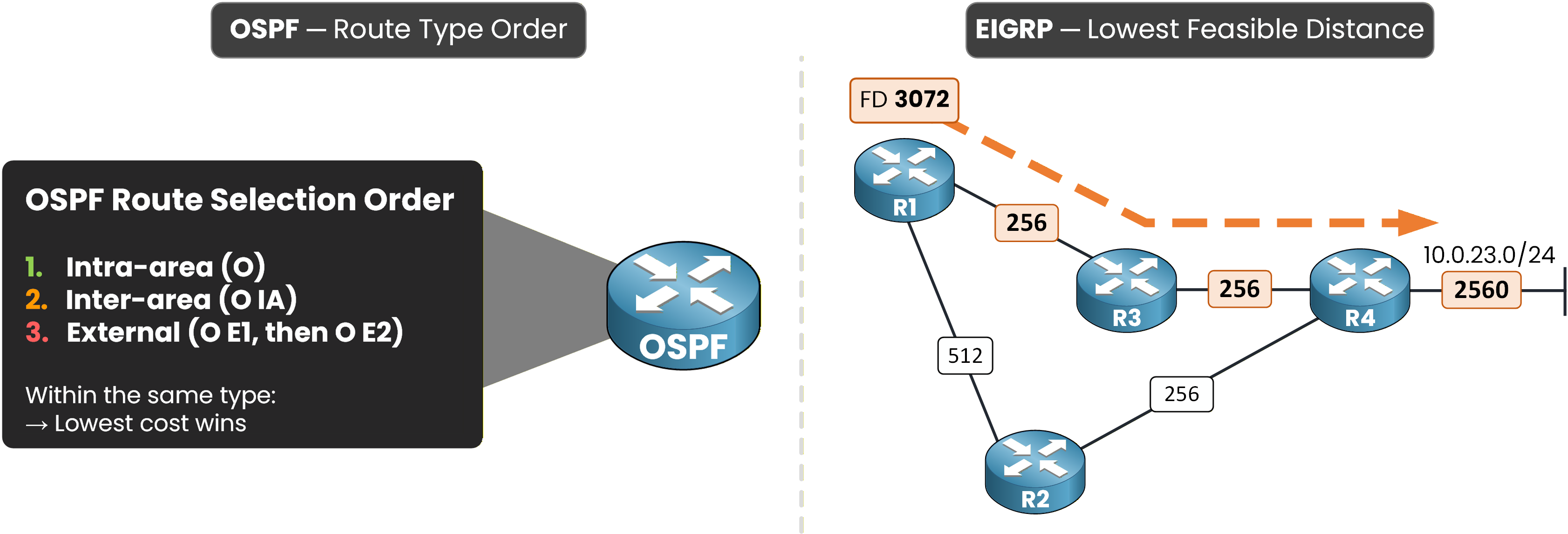
Figure 5 - OSPF route type order vs EIGRP lowest feasible distance
OSPF: Route Type First
OSPF compares route type before cost: intra-area (O), then inter-area (O IA), then external E1, then E2.
An intra-area route with a high cost still beats an inter-area route with a lower cost.
Cost decides only within the same type.EIGRP: Lowest Feasible Distance
EIGRP installs the path with the lowest Feasible Distance as the Successor.
There is no route type. The lowest total metric wins.On R1, let's look at how each protocol picks the route, starting with EIGRP.
R1# show ip eigrp topology
EIGRP-IPv4 Topology Table for AS(1)/ID(1.1.1.1)
P 10.0.23.0/24, 1 successors, FD is 3072
        via 10.13.1.3 (3072/2816), GigabitEthernet0/1
        via 10.12.1.2 (3328/2816), GigabitEthernet0/2
The path via 10.13.1.3 wins with an FD of 3072.
The second path stays as a backup.Now look at how OSPF handles the same route.
R1# show ip route 10.0.23.0
Routing entry for 10.0.23.0/24
  Known via "ospf 1", distance 110, metric 11, type intra area
  * 10.0.11.2, from 3.3.3.3, via GigabitEthernet0/0
      Route metric is 11, traffic share count is 1
Here OSPF installed an intra-area route with a metric of 11, even though a lower-metric inter-area path existed.
The route type decided first; the metric only breaks ties within the same type.Answer the question below
Which protocol evaluates route type before the metric?
OSPF and EIGRP both load-balance, but not over the same paths.
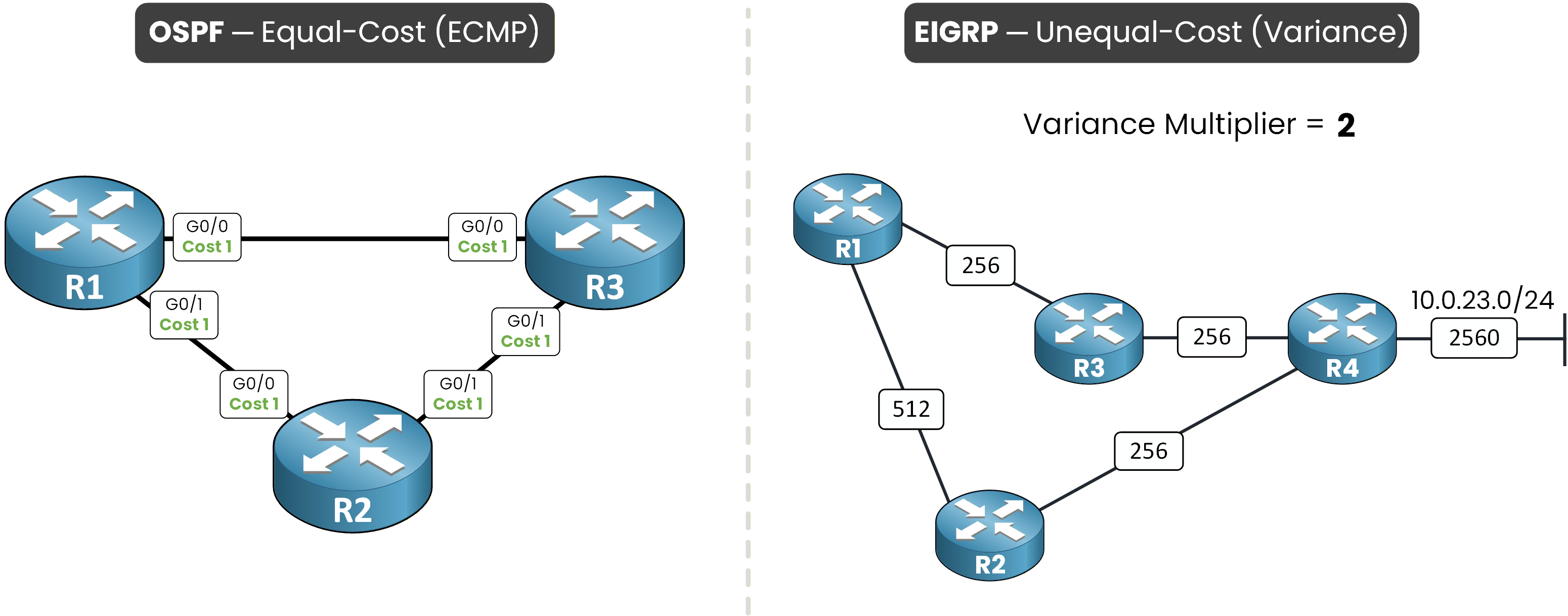
Figure 6 - OSPF equal-cost (ECMP) vs EIGRP unequal-cost (variance)
OSPF: Equal-Cost Only
OSPF load-balances only across paths that have an identical cost (ECMP).
EIGRP: Equal and Unequal-Cost
EIGRP does both equal-cost and unequal-cost load balancing through the
variancecommand.
OSPF cannot do unequal-cost natively.Here is how you turn it on at R1:
R1# configure terminal
R1(config)# router eigrp 1
R1(config-router)# variance 2
R1(config-router)# end
With variance 2, EIGRP also uses the 3328 backup path alongside the best one.
OSPF would leave that slower path unused.Answer the question below
Which EIGRP command enables unequal-cost load balancing?
When a link goes down, OSPF and EIGRP converge in different ways.
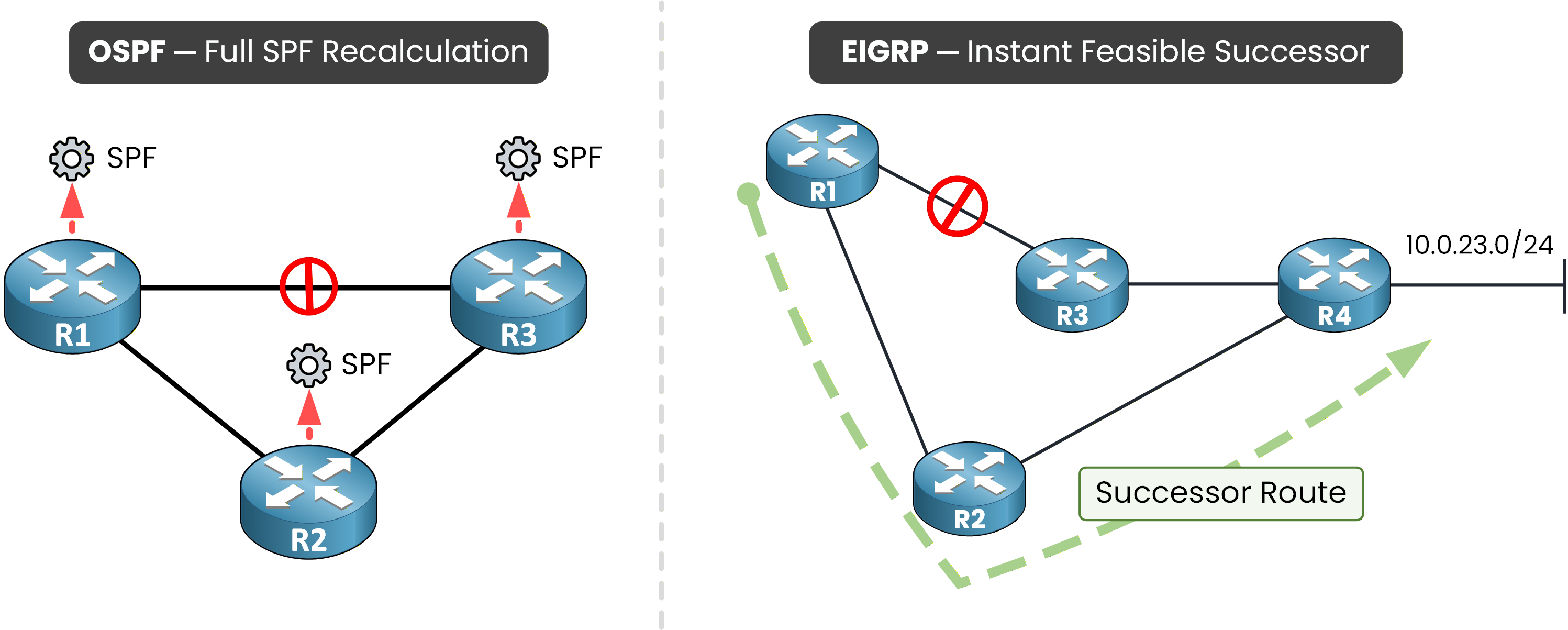
Figure 7 - OSPF SPF recalculation vs EIGRP instant feasible successor
OSPF: SPF Recalculation
A failed link floods a new LSA through the area.
Every router in that area runs SPF again, even routers whose own paths were never affected.EIGRP: DUAL and Feasible Successor
If a Feasible Successor already exists, the router switches to it instantly.
The route stays Passive, and no other router gets involved.
With no Feasible Successor, the route goes Active and DUAL sends queries to its neighbors.
Summarization limits how far those queries travel.Answer the question below
What lets EIGRP switch paths instantly without recalculating?
OSPF splits a large network into areas. EIGRP keeps it flat.
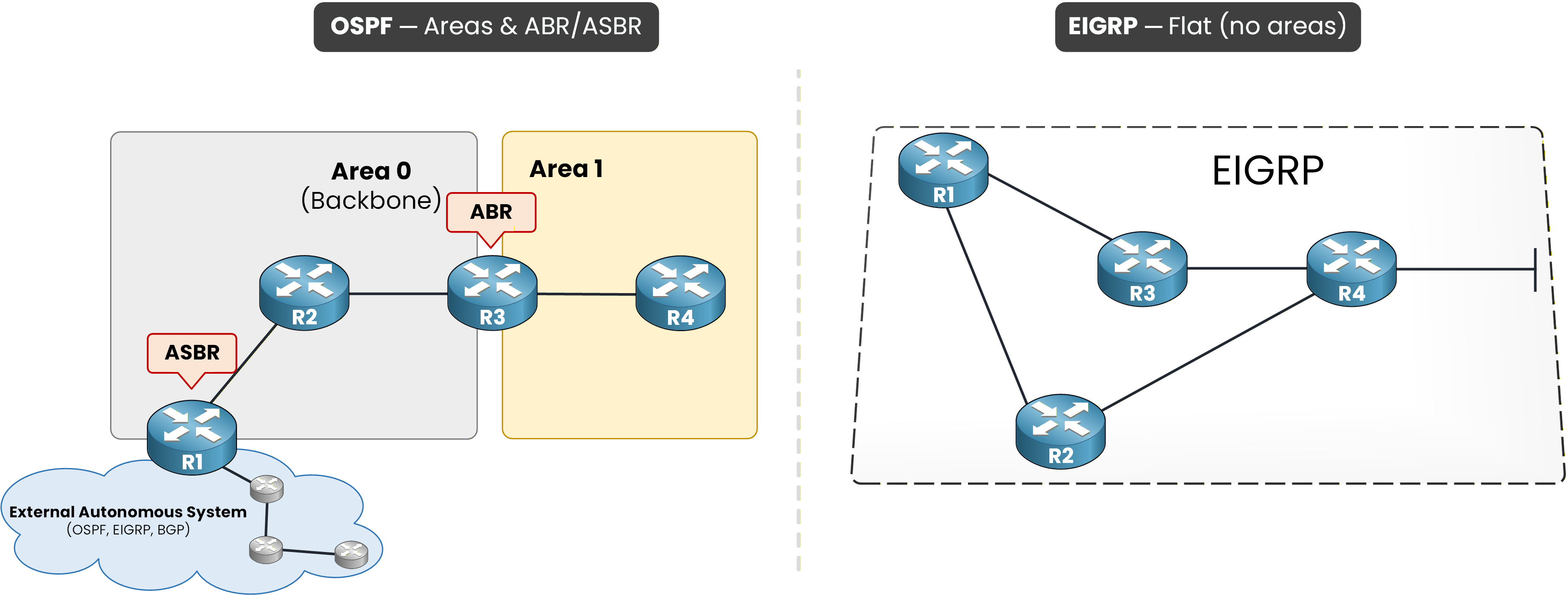
Figure 8 - OSPF areas with ABR and ASBR vs flat EIGRP
OSPF: Areas, ABR, and ASBR
OSPF organizes a large network into areas around a central backbone called Area 0.
An ABR (Area Border Router) joins another area to the backbone.
An ASBR (Autonomous System Boundary Router) connects OSPF to an external routing domain.
EIGRP: Flat, No Areas
EIGRP has no areas and no backbone. Its domain is flat.
It controls routing information with summarization and stub routers instead.Answer the question below
Which router connects an OSPF area to the backbone?
When a router learns the same route from both protocols, administrative distance decides which one wins.
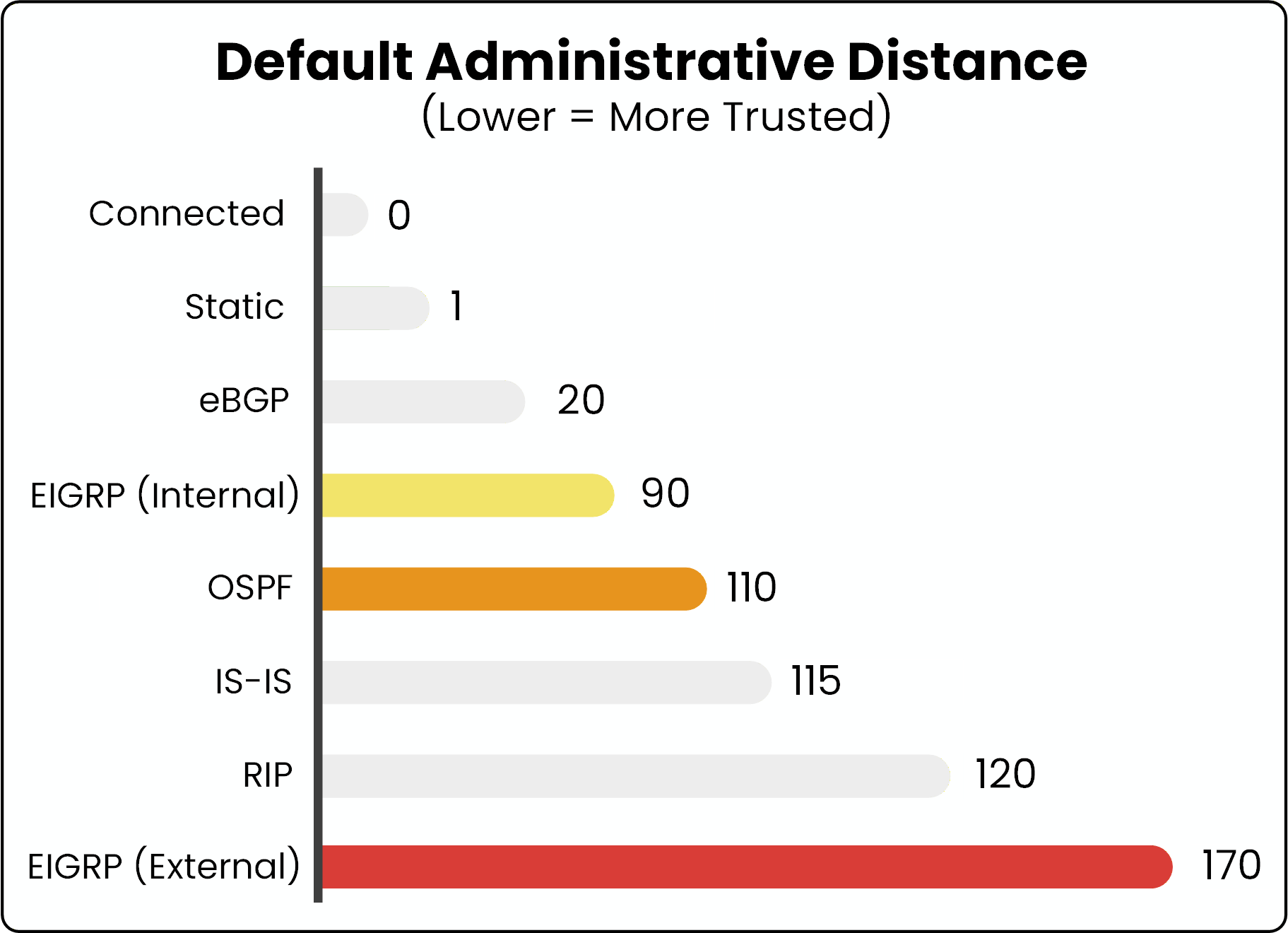
Figure 9 - Administrative distance: EIGRP 90 beats OSPF 110
OSPF: 110
OSPF uses an administrative distance of 110 for all of its routes.
EIGRP: 90 Internal / 170 External
EIGRP internal routes have an AD of 90, lower than OSPF, so EIGRP wins by default.
EIGRP external routes sit at 170 and lose to OSPF.Confirm it yourself on a router that learns the same prefix from both protocols.
R1# show ip route 192.168.50.0
Routing entry for 192.168.50.0/24
  Known via "eigrp 1", distance 90, metric 3072, type internal
  * 10.0.12.2, from 10.0.12.2, via GigabitEthernet0/0
The router chose EIGRP.
The OSPF copy of this route, at distance 110, never made it into the table.Answer the question below
With the same internal route from both protocols, which one is installed by default?