When Area 2 became a stub area, all external routes disappeared from R4.
Its routing table is shorter than before, but it is still far from empty.The Routes That Survived the Stub
Let's look at the OSPF routes on R4 again:
R4# show ip route ospf
Codes: L - local, C - connected, S - static, R - RIP, M - mobile, B - BGP
       D - EIGRP, EX - EIGRP external, O - OSPF, IA - OSPF inter area
       N1 - OSPF NSSA external type 1, N2 - OSPF NSSA external type 2
       E1 - OSPF external type 1, E2 - OSPF external type 2
       i - IS-IS, su - IS-IS summary, L1 - IS-IS level-1, L2 - IS-IS level-2
       ia - IS-IS inter area, * - candidate default, U - per-user static route
       o - ODR, P - periodic downloaded static route, H - NHRP, l - LISP
       + - replicated route, % - next hop override

Gateway of last resort is 10.2.34.1 to network 0.0.0.0

O*IA  0.0.0.0/0 [110/2] via 10.2.34.1, 00:04:12, GigabitEthernet0/0
      1.0.0.0/32 is subnetted, 1 subnets
O IA     1.1.1.1 [110/4] via 10.2.34.1, 00:04:12, GigabitEthernet0/0
      2.0.0.0/32 is subnetted, 1 subnets
O IA     2.2.2.2 [110/3] via 10.2.34.1, 00:04:12, GigabitEthernet0/0
      3.0.0.0/32 is subnetted, 1 subnets
O IA     3.3.3.3 [110/2] via 10.2.34.1, 00:04:12, GigabitEthernet0/0
      10.0.0.0/8 is variably subnetted, 4 subnets, 2 masks
O IA     10.0.23.0/30 [110/2] via 10.2.34.1, 00:04:12, GigabitEthernet0/0
O IA     10.1.12.0/30 [110/3] via 10.2.34.1, 00:04:12, GigabitEthernet0/0
Notice those five inter-area routes (
O IA). They describe the loopbacks of R1, R2, and R3, along with the transit links between them.These routes arrived as Type 3 LSAs. Standard stub areas accept Type 3 LSAs without any restriction.
Look at the next hop for every single one of those routes:10.2.34.1(R3).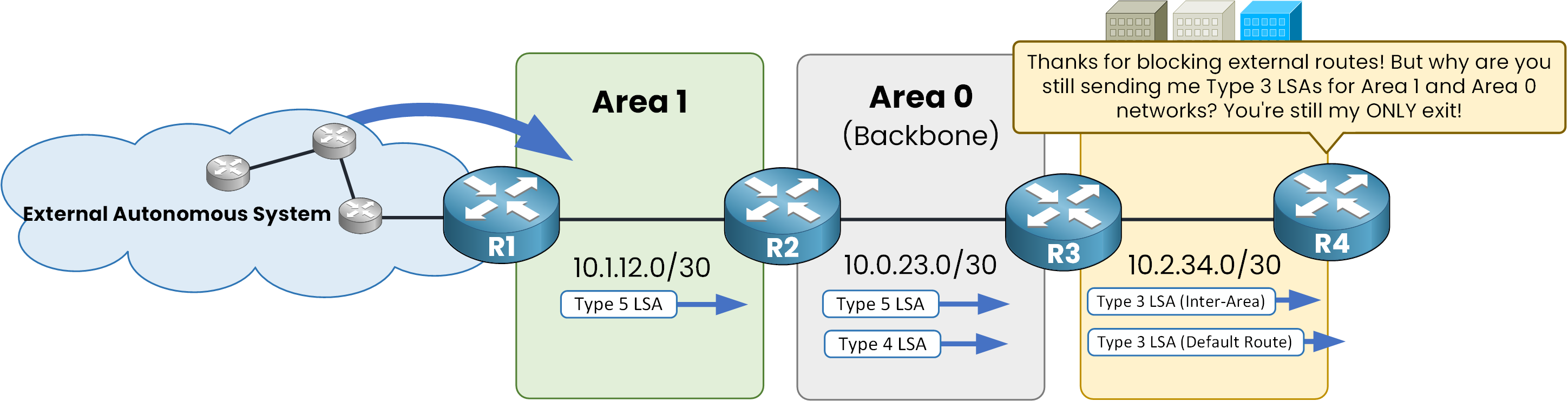
Figure 1 - External routes are gone, but the Type 3 LSAs keep coming
R4 has only one way out of Area 2. Storing individual inter-area routes is useless because all traffic must go to R3 anyway.
Answer the question below
How many inter-area routes remain in the routing table of R4?
A Totally Stubby Area takes optimization one step further by blocking Type 3 inter-area routes alongside Type 4 and Type 5 external routes. A single default route injected by the ABR handles all outgoing traffic.
Blocking Summary LSAs on the ABR
R3 already blocks external updates at the border of Area 2.
Adding a single keyword to its stub command tells it to block inter-area summary updates as well.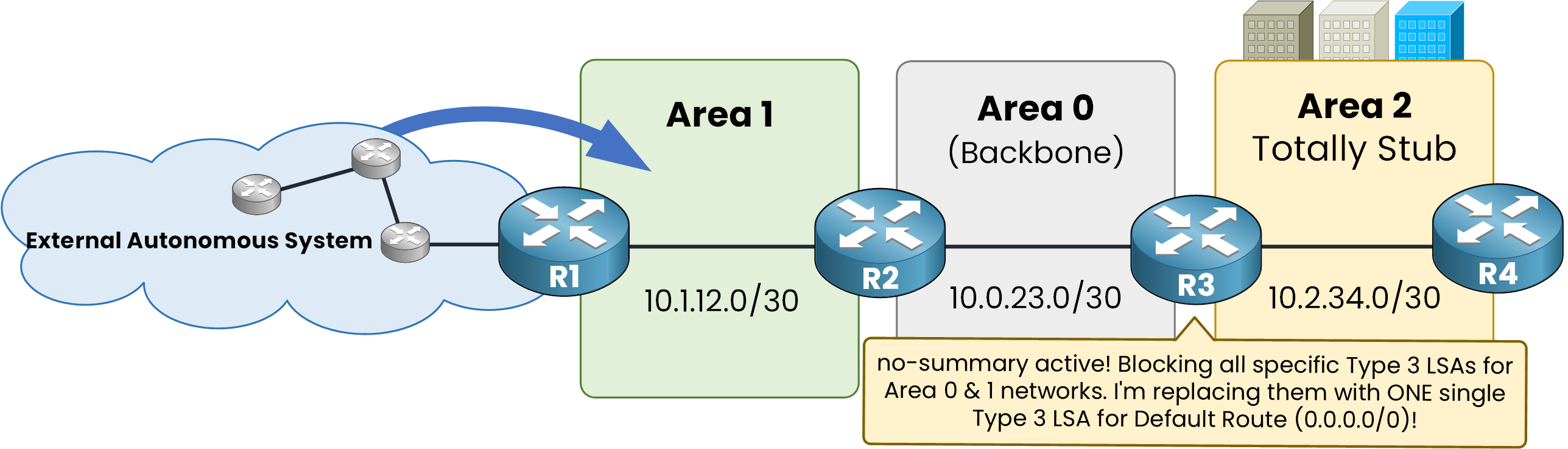
Figure 2 - R3 now blocks Type 3, Type 4, and Type 5
R3# configure terminal
R3(config)# router ospf 1
R3(config-router)# area 2 stub no-summary
R3(config-router)# end
Notice that your OSPF adjacency with R4 stays up.
Both routers already agree that Area 2 is a stub area. The
no-summaryoption only changes LSA filtering on R3; it does not alter the OSPF Hello packet flags.Nothing Changes on the Internal Router
Check the OSPF configuration on R4 to see what changed:
R4# show running-config | section router ospf

router ospf 1
 router-id 4.4.4.4
 area 2 stub
 network 10.2.34.2 0.0.0.0 area 2
 network 4.4.4.4 0.0.0.0 area 2
R4 still uses the plain
area 2 stubcommand, and that is completely fine.Internal routers do not filter LSAs, filtering happens exclusively on the ABR. If you type
no-summaryon R4, Cisco IOS accepts the command without throwing an error, but it changes nothing in your network. Always remember that only the ABR controls summary filtering.Answer the question below
On which router of Area 2 do you configure the no-summary keyword?
A single keyword on the ABR changed what the whole area knows about your network.
Let's check the routing table and OSPF database on R4 to measure the results.Only the Default Route Remains
Run the OSPF route lookup on R4:
R4# show ip route ospf
Codes: L - local, C - connected, S - static, R - RIP, M - mobile, B - BGP
       D - EIGRP, EX - EIGRP external, O - OSPF, IA - OSPF inter area
       N1 - OSPF NSSA external type 1, N2 - OSPF NSSA external type 2
       E1 - OSPF external type 1, E2 - OSPF external type 2
       i - IS-IS, su - IS-IS summary, L1 - IS-IS level-1, L2 - IS-IS level-2
       ia - IS-IS inter area, * - candidate default, U - per-user static route
       o - ODR, P - periodic downloaded static route, H - NHRP, l - LISP
       + - replicated route, % - next hop override

Gateway of last resort is 10.2.34.1 to network 0.0.0.0

O*IA  0.0.0.0/0 [110/2] via 10.2.34.1, 00:00:31, GigabitEthernet0/0
All five inter-area routes disappeared. R3 stopped forwarding Type 3 LSAs into Area 2.
Only the default route (
0.0.0.0/0) remains. TheO*IAcode confirms that R3 sends this default route as a Type 3 LSA. Addingno-summaryon the ABR forces this default route injection automatically. R4 keeps full reachability to every destination in the network while using minimal memory.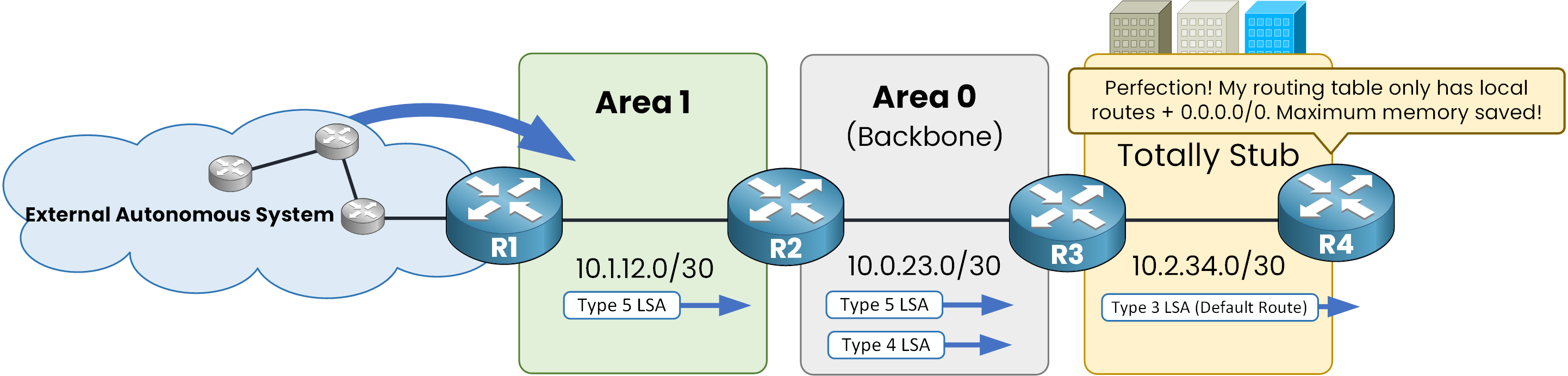
Figure 3 - A single Type 3 default route enters Area 2
R3 generates this default route automatically because it has an active interface in Area 0.
An ABR without an active connection to Area 0 cannot inject this default route.Confirming the Area Type
You can check the updated area status directly on R4:
R4# show ip ospf | begin Area 2

    Area 2
        Number of interfaces in this area is 2
        It is a stub area, no summary LSA in this area
        Area has no authentication
        SPF algorithm last executed 00:00:34.112 ago
        SPF algorithm executed 8 times
        Area ranges are
        Number of LSA 4. Checksum Sum 0x01D8F2
        Flood list length 0
The output confirms:
It is a stub area, no summary LSA in this area.The database of R4 now holds only 4 LSAs (down from 9 in the standard stub area):
2 Router LSAs (Type 1)
1 Network LSA (Type 2)
1 Summary Default Route LSA (Type 3)
A Totally Stubby Area provides the smallest possible Link-State Database for an OSPF internal router.
However, if your branch router ever needs to connect directly to an external network or redistribute routes into OSPF, stub and totally stubby rules will prevent it from acting as an ASBR. After the lab, we will explore how NSSA (Not-So-Stubby Area) resolves that limitation.
Answer the question below
How many LSAs remain in the Area 2 database of R4?