Your branch announces its own network and reaches the rest of the domain through a single default route.
The problem you solved with the totally stubby area came back the moment Area 2 became an NSSA.The Same Five Routes Are Back
Read the routing table of R4 and count what an NSSA still lets through the border:
R4# show ip route ospf
Codes: L - local, C - connected, S - static, R - RIP, M - mobile, B - BGP
       D - EIGRP, EX - EIGRP external, O - OSPF, IA - OSPF inter area
       N1 - OSPF NSSA external type 1, N2 - OSPF NSSA external type 2
       E1 - OSPF external type 1, E2 - OSPF external type 2
       i - IS-IS, su - IS-IS summary, L1 - IS-IS level-1, L2 - IS-IS level-2
       ia - IS-IS inter area, * - candidate default, U - per-user static route
       o - ODR, P - periodic downloaded static route, H - NHRP, l - LISP
       + - replicated route, % - next hop override

Gateway of last resort is 10.2.34.1 to network 0.0.0.0

O*N2  0.0.0.0/0 [110/1] via 10.2.34.1, 00:06:40, GigabitEthernet0/0
      1.0.0.0/32 is subnetted, 1 subnets
O IA     1.1.1.1 [110/4] via 10.2.34.1, 00:06:40, GigabitEthernet0/0
      2.0.0.0/32 is subnetted, 1 subnets
O IA     2.2.2.2 [110/3] via 10.2.34.1, 00:06:40, GigabitEthernet0/0
      3.0.0.0/32 is subnetted, 1 subnets
O IA     3.3.3.3 [110/2] via 10.2.34.1, 00:06:40, GigabitEthernet0/0
      10.0.0.0/8 is variably subnetted, 4 subnets, 2 masks
O IA     10.0.23.0/30 [110/2] via 10.2.34.1, 00:06:40, GigabitEthernet0/0
O IA     10.1.12.0/30 [110/3] via 10.2.34.1, 00:06:40, GigabitEthernet0/0
These are the exact same five inter-area routes the totally stubby area removed two lessons ago.
Nothing about the ASBR sitting inside your area makes those prefixes any more useful than they were before.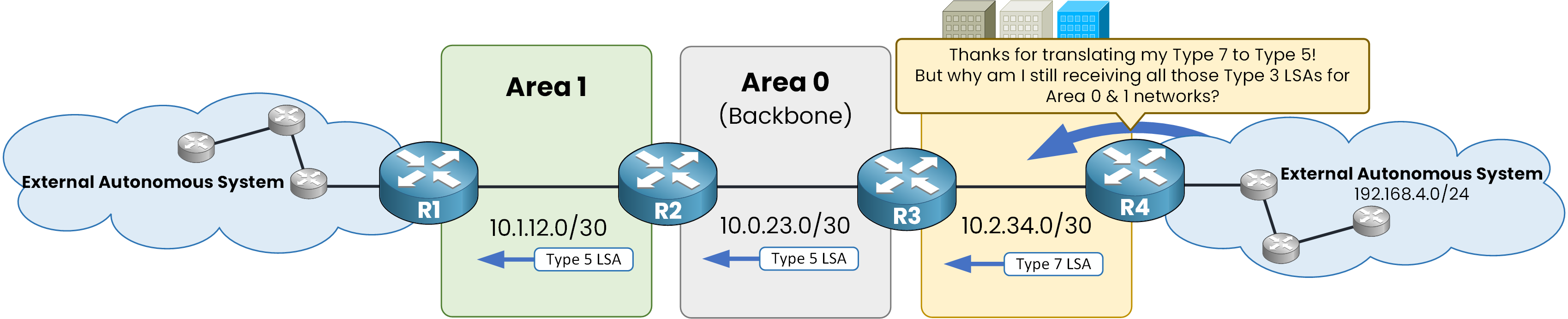
Figure 1 - The translation works, but the Type 3 LSAs keep flooding in
Answer the question below
How many inter-area routes does R4 still hold while Area 2 is a plain NSSA?
A Totally NSSA applies the summary filter of a totally stubby area to an area containing an ASBR.
R3 blocks Type 3, Type 4, and Type 5 LSAs, while R4 continues advertising its external branch network northbound.Adding the Summary Filter on the ABR
Remove the default route option added in the previous lesson before appending the new keyword:
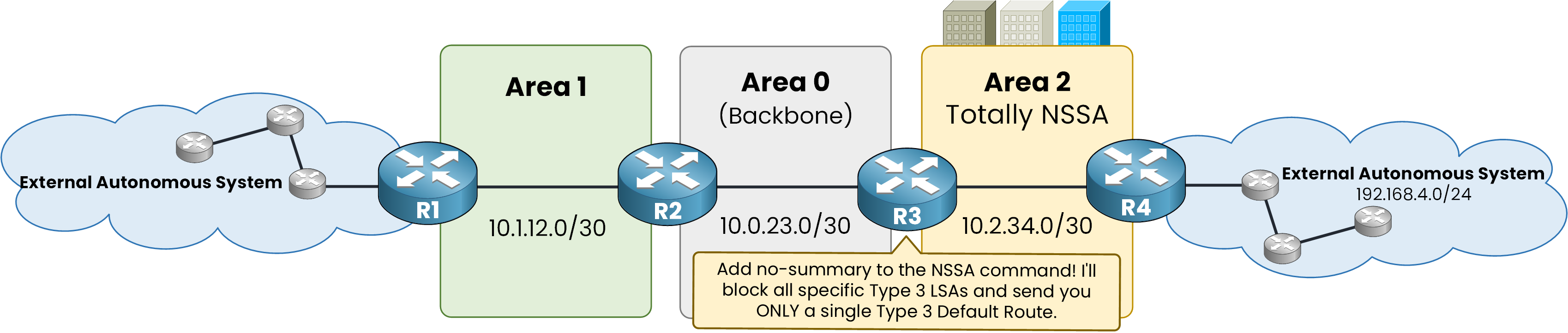
Figure 2 - R3 blocks the specific Type 3 LSAs and sends a single Type 3 default
R3# configure terminal
R3(config)# router ospf 1
R3(config-router)# no area 2 nssa default-information-originate
R3(config-router)# area 2 nssa no-summary
R3(config-router)# end
No log message appears and the OSPF adjacency never resets. R4 leaves its
area 2 nssaconfiguration untouched because summary filtering is performed exclusively at the border by the ABR.Verifying the Minimal Routing Table
Read the routing table of R4 and compare it with the one from the start of this lesson:
R4# show ip route ospf
Codes: L - local, C - connected, S - static, R - RIP, M - mobile, B - BGP
       D - EIGRP, EX - EIGRP external, O - OSPF, IA - OSPF inter area
       N1 - OSPF NSSA external type 1, N2 - OSPF NSSA external type 2
       E1 - OSPF external type 1, E2 - OSPF external type 2
       i - IS-IS, su - IS-IS summary, L1 - IS-IS level-1, L2 - IS-IS level-2
       ia - IS-IS inter area, * - candidate default, U - per-user static route
       o - ODR, P - periodic downloaded static route, H - NHRP, l - LISP
       + - replicated route, % - next hop override

Gateway of last resort is 10.2.34.1 to network 0.0.0.0

O*IA  0.0.0.0/0 [110/2] via 10.2.34.1, 00:00:19, GigabitEthernet0/0
The five inter-area routes disappeared, and the default route changed its code from
N2back toIA.
Addingno-summaryforces the ABR to inject a Type 3 default route (O*IA) automatically, so you no longer need thedefault-information-originatecommand.Key Rule: A standard NSSA requires
default-information-originateto inject a default route.
A Totally NSSA injects it automatically as soon as you applyno-summaryon the ABR.Confirm on R2 that the branch network still travels in the opposite direction:
R2# show ip route ospf
Codes: L - local, C - connected, S - static, R - RIP, M - mobile, B - BGP
       D - EIGRP, EX - EIGRP external, O - OSPF, IA - OSPF inter area
       N1 - OSPF NSSA external type 1, N2 - OSPF NSSA external type 2
       E1 - OSPF external type 1, E2 - OSPF external type 2
       i - IS-IS, su - IS-IS summary, L1 - IS-IS level-1, L2 - IS-IS level-2
       ia - IS-IS inter area, * - candidate default, U - per-user static route
       o - ODR, P - periodic downloaded static route, H - NHRP, l - LISP
       + - replicated route, % - next hop override

Gateway of last resort is not set

      1.0.0.0/32 is subnetted, 1 subnets
O        1.1.1.1 [110/2] via 10.1.12.1, 00:20:11, GigabitEthernet0/0
      3.0.0.0/32 is subnetted, 1 subnets
O        3.3.3.3 [110/2] via 10.0.23.2, 00:20:11, GigabitEthernet0/1
      4.0.0.0/32 is subnetted, 1 subnets
O IA     4.4.4.4 [110/3] via 10.0.23.2, 00:08:52, GigabitEthernet0/1
      10.0.0.0/8 is variably subnetted, 5 subnets, 2 masks
O IA     10.2.34.0/30 [110/2] via 10.0.23.2, 00:20:11, GigabitEthernet0/1
      172.16.0.0/24 is subnetted, 204 subnets
O E2     172.16.1.0 [110/20] via 10.1.12.1, 00:19:37, GigabitEthernet0/0
O E2     172.16.2.0 [110/20] via 10.1.12.1, 00:19:37, GigabitEthernet0/0
O E2     172.16.5.0 [110/20] via 10.1.12.1, 00:19:37, GigabitEthernet0/0
O E2     172.16.8.0 [110/20] via 10.1.12.1, 00:19:37, GigabitEthernet0/0
 --More--
O E2     192.168.4.0/24 [110/20] via 10.0.23.2, 00:08:52, GigabitEthernet0/1
The summary filter works inbound only. Type 7 LSAs still leave Area 2 and undergo translation at the border.
Your branch router now maintains the smallest possible Link-State Database while continuing to advertise its local network to the rest of the OSPF domain.
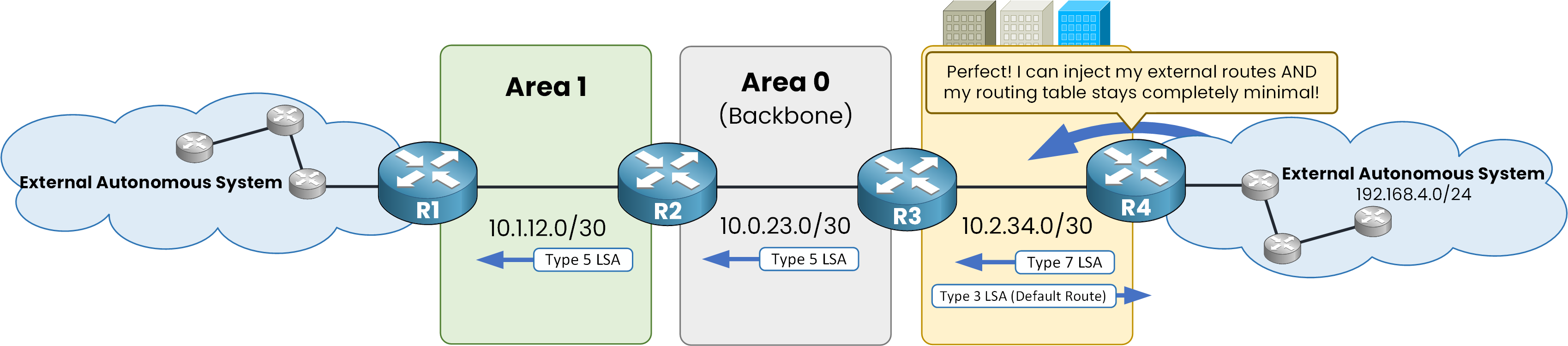
Figure 3 - Type 7 out, one Type 3 default in, minimal table everywhere
Answer the question below
Which routing code does the default route carry once Area 2 becomes a totally NSSA?
You configured all four special area types on the exact same topology, one keyword at a time.
Two decision questions separate them, giving you the correct configuration without any memorization.The Two Decision Questions
Does a router inside the area redistribute an external network?
Yes ---> NSSA family
No ---> Stub family
Do the internal routers need specific inter-area routes?
Yes ---> Keep default summary LSAs (Standard Stub or Standard NSSA)
No ---> Add
no-summaryon the ABR (Totally Stubby or Totally NSSA)
Area Types and LSA Handling Side by Side
Area Type
Type 1 & 2
Type 3
Type 4
Type 5
Type 7
Normal
✅
✅
✅
✅
❌
Stub
✅
✅
❌
❌
❌
Totally stubby
✅
❌ *
❌
❌
❌
NSSA
✅
✅
❌
❌
✅
Totally NSSA
✅
❌ *
❌
❌
✅
* The ABR blocks specific Type 3 summary LSAs and injects a single default route (
0.0.0.0/0) as a Type 3 Summary LSA instead.Key Takeaway on Default Routes:
The standard NSSA is the only special area type that leaves internal routers without a default route unless explicitly requested (
default-information-originate). Every other special area type automatically injects a default route through the ABR.Three Golden Rules for Special Areas
Flag Matching: Every router inside the area must declare the same area type in its OSPF configuration, or neighbor adjacencies will fail to reach FULL.
ABR Placement: The
no-summaryfilter keyword strictly belongs on the ABR. Adding it to an internal router changes nothing.Backbone Restrictions: Area 0 can never be configured as a special area.
Answer the question below
Which area type blocks Type 3, Type 4 and Type 5 while still letting a Type 7 leave the area?