Start from your working iBGP full mesh: three sessions on loopbacks, next-hop-self on edges, ping working.
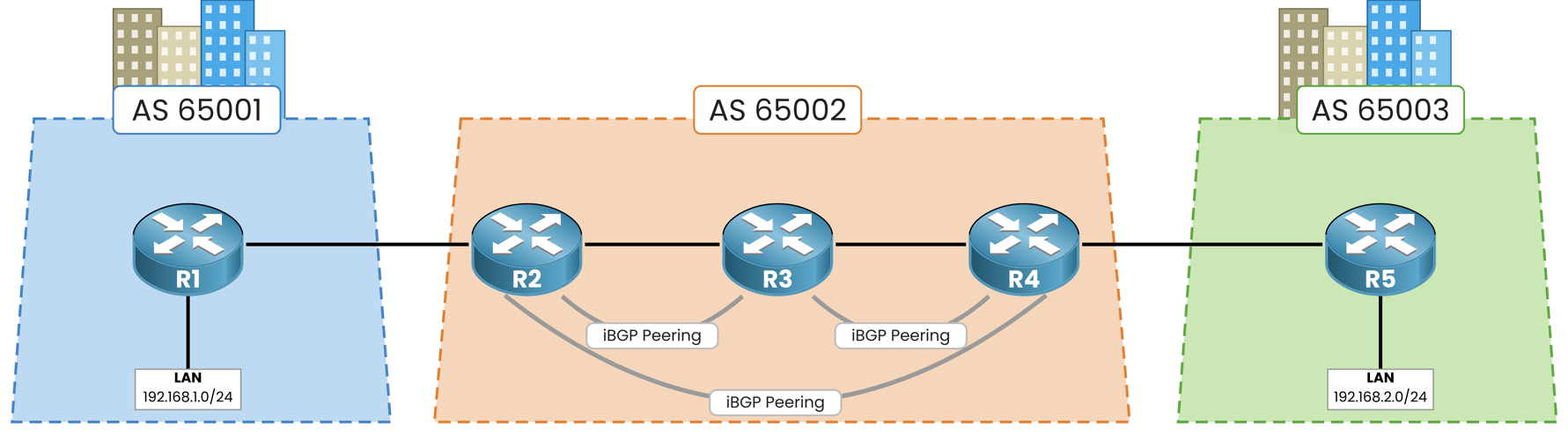
Figure 1 – Starting point, the iBGP full mesh
Remove the R2–R4 Session
Tear down the direct session between edges on R2:
R2# configure terminal
R2(config)# router bgp 65002
R2(config-router)# no neighbor 4.4.4.4
%BGP-5-ADJCHANGE: neighbor 4.4.4.4 Down Neighbor deleted
R2(config-router)# end
Do the same on R4:
R4# configure terminal
R4(config)# router bgp 65002
R4(config-router)# no neighbor 2.2.2.2
R4(config-router)# end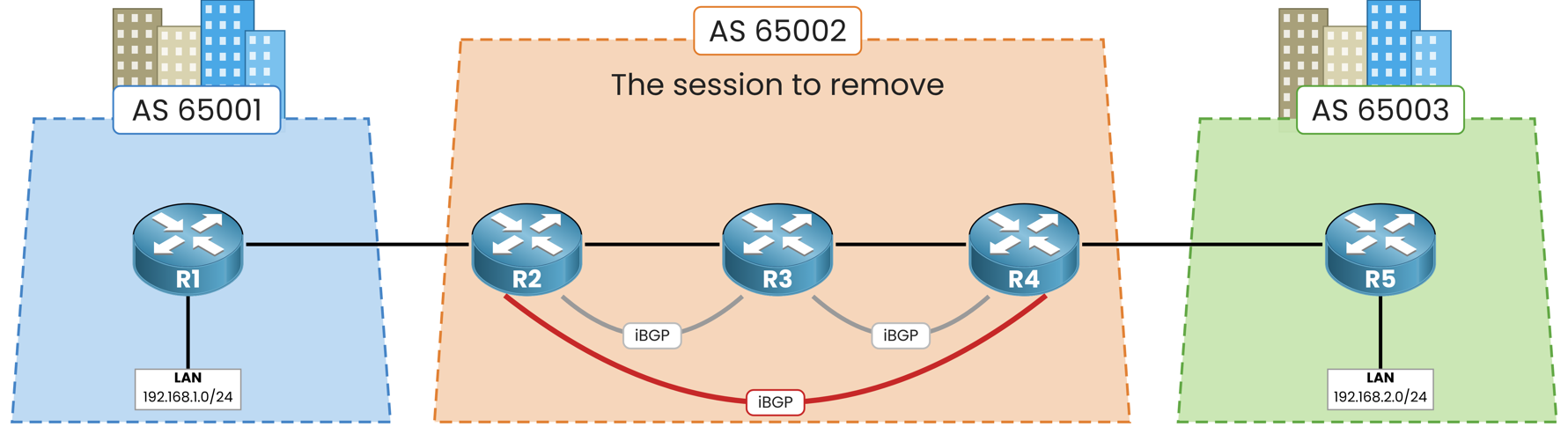
Figure 2 – The R2–R4 session you just removed
What R2 Sees Now
Check the BGP table on R2:
R2# show ip bgp
BGP table version is 6, local router ID is 2.2.2.2
Status codes: s suppressed, d damped, h history, * valid, > best, i - internal,
              r RIB-failure, S Stale, m multipath, b backup-path, f RT-Filter,
              x best-external, a additional-path, c RIB-compressed,
              t secondary path,
Origin codes: i - IGP, e - EGP, ? - incomplete
RPKI validation codes: V valid, I invalid, N Not found

     Network          Next Hop            Metric LocPrf Weight Path
 *>   192.168.1.0      10.0.12.1                0             0 65001 i
The network 192.168.2.0/24 disappeared from R2.
R3 still holds the route, but split horizon prevents R3 from forwarding it to R2.
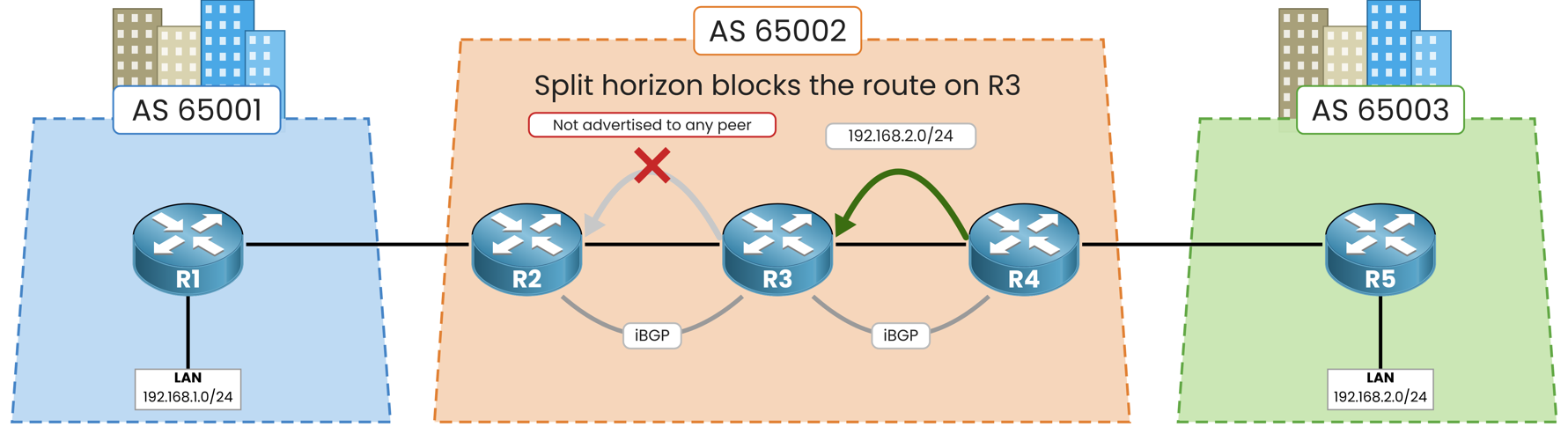
Figure 3 – R3 holds the route but cannot pass it on
Answer the question below
After removing the R2–R4 session, how many BGP prefixes does R2 hold?
Everything happens on R3.
Your clients keep their current configuration.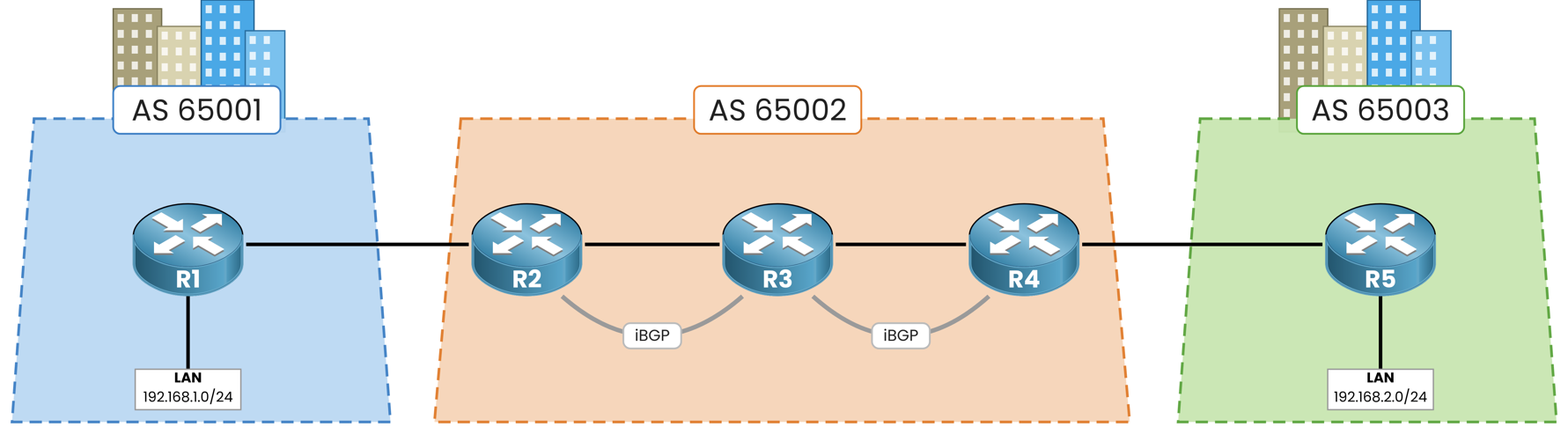
Figure 4 – Two sessions left, R3 is not a reflector yet
Declare the Clients
Configure R3 with one line per client:
R3# configure terminal
R3(config)# router bgp 65002
R3(config-router)# neighbor 2.2.2.2 route-reflector-client
%BGP-5-ADJCHANGE: neighbor 2.2.2.2 Down RR client config change
%BGP-5-ADJCHANGE: neighbor 2.2.2.2 Up
R3(config-router)# neighbor 4.4.4.4 route-reflector-client
%BGP-5-ADJCHANGE: neighbor 4.4.4.4 Down RR client config change
%BGP-5-ADJCHANGE: neighbor 4.4.4.4 Up
R3(config-router)# end
Each command resets the session.
Neighbors go down and come back up immediately.Verify on R3
Check how R3 processes the customer prefix:
R3# show ip bgp 192.168.2.0
BGP routing table entry for 192.168.2.0/24, version 7
Paths: (1 available, best #1, table default)
  Advertised to update-groups:
     2
  65003, (Received from a RR-client)
    4.4.4.4 (metric 2) from 4.4.4.4 (4.4.4.4)
      Origin IGP, metric 0, localpref 100, valid, internal, best
Notice the key line:
(Received from a RR-client).
R3 tags the route and advertises it.Rule 2 from the BGP Route Reflector lesson, in action.
Confirm the route sent to R2:
R3# show ip bgp neighbors 2.2.2.2 advertised-routes
BGP table version is 7, local router ID is 3.3.3.3
Status codes: s suppressed, d damped, h history, * valid, > best, i - internal,
              r RIB-failure, S Stale, m multipath, b backup-path, f RT-Filter,
              x best-external, a additional-path, c RIB-compressed,
              t secondary path,
Origin codes: i - IGP, e - EGP, ? - incomplete
RPKI validation codes: V valid, I invalid, N Not found

     Network          Next Hop            Metric LocPrf Weight Path
 *>i  192.168.2.0      4.4.4.4                  0    100      0 65003 i

Total number of prefixes 1
The reflector relays the route without rewriting the next hop.
Answer the question below
Which command declares an iBGP neighbor as a client on the reflector?
Check the prefix details on R2 to see what R3 added:
R2# show ip bgp 192.168.2.0
BGP routing table entry for 192.168.2.0/24, version 8
Paths: (1 available, best #1, table default)
  Advertised to update-groups:
     1
  65003
    4.4.4.4 (metric 3) from 3.3.3.3 (3.3.3.3)
      Origin IGP, metric 0, localpref 100, valid, internal, best
      Originator: 4.4.4.4, Cluster list: 3.3.3.3
The route comes from 3.3.3.3 while the next hop stays 4.4.4.4.
OSPF resolves 4.4.4.4, and the CLI now displays both attributes:Originator (
4.4.4.4): The router ID of the node that injected the prefix.Cluster list (
3.3.3.3): The router ID of the reflector forwarding the route.
Count the Sessions
Verify active sessions on R2:
R2# show bgp ipv4 unicast summary
BGP router identifier 2.2.2.2, local AS number 65002
BGP table version is 8, main routing table version 8
2 network entries using 496 bytes of memory
2 path entries using 272 bytes of memory
2/2 BGP path/bestpath attribute entries using 592 bytes of memory
2 BGP AS-PATH entries using 48 bytes of memory
0 BGP route-map cache entries using 0 bytes of memory
0 BGP filter-list cache entries using 0 bytes of memory
BGP using 1408 total bytes of memory
BGP activity 2/0 prefixes, 4/2 paths, scan interval 60 secs

Neighbor        V           AS MsgRcvd MsgSent   TblVer  InQ OutQ Up/Down  State/PfxRcd
3.3.3.3         4        65002      14      13        8    0    0 00:02:31        1
10.0.12.1       4        65001      52      51        8    0    0 00:41:07        1
You have one eBGP session and one iBGP session.
Answer the question below
Which router does R2 receive 192.168.2.0/24 from now?
You reduced your core from three iBGP sessions down to two.
Now verify that end-to-end reachability remains intact.Ping Test
Run a ping test from PC1 to PC2:
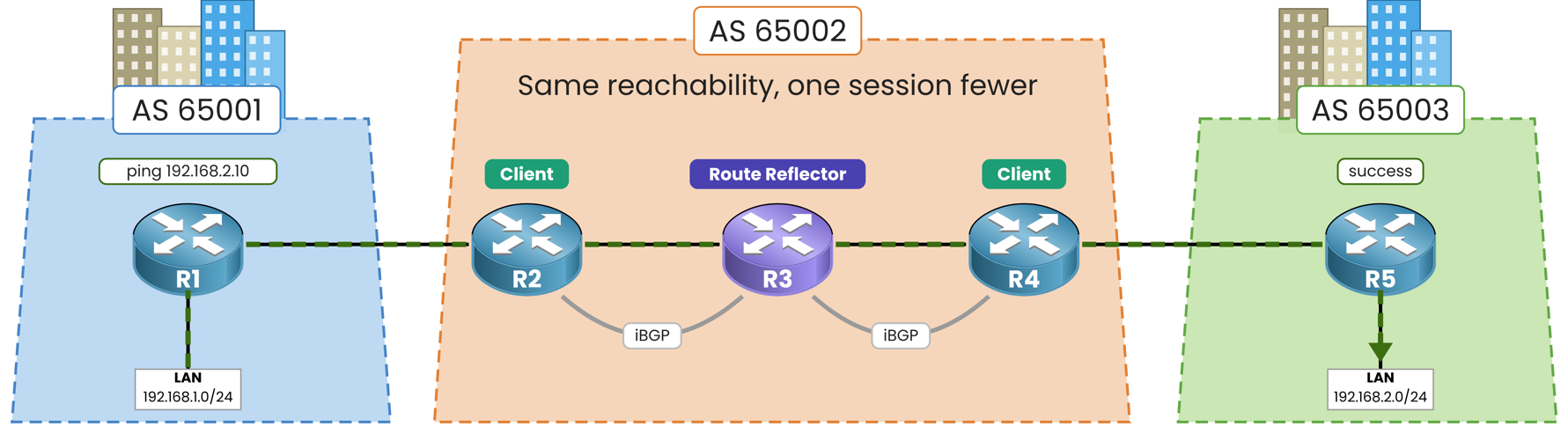
Figure 5 – Same reachability, one session fewer
C:\>ping 192.168.2.10
Pinging 192.168.2.10 with 32 bytes of data:

Reply from 192.168.2.10: bytes=32 time=12ms TTL=123
Reply from 192.168.2.10: bytes=32 time=10ms TTL=123
Reply from 192.168.2.10: bytes=32 time=11ms TTL=123
Reply from 192.168.2.10: bytes=32 time=10ms TTL=123

Ping statistics for 192.168.2.10:
    Packets: Sent = 4, Received = 4, Lost = 0 (0% loss),
Approximate round trip times in milli-seconds:
    Minimum = 10ms, Maximum = 12ms, Average = 10ms
The ping succeeds.
Adding a fourth core router now requires a single neighbor statement on R3 and a standard iBGP block on the new node.
Single Point of Failure
Replacing a full mesh with a hub-and-spoke model simplifies scaling.
But one router now carries every internal BGP session in the Autonomous System.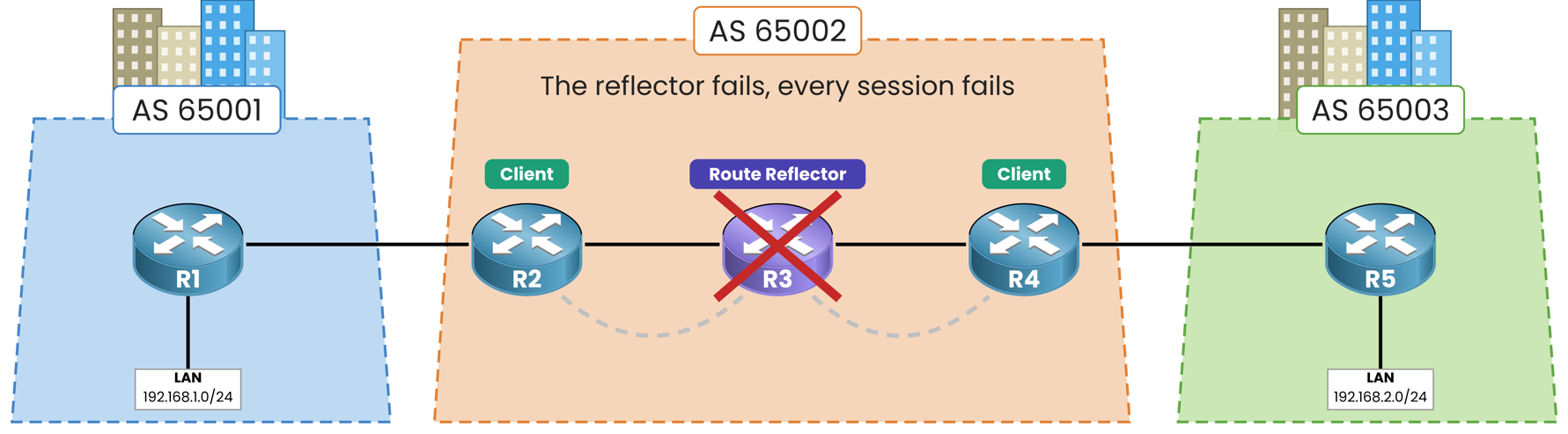
Figure 6 – The reflector fails, every session fails
If R3 crashes, R2 and R4 lose their only route reflection path, and customer traffic drops.
Production networks cannot tolerate a single point of failure.Redundant Route Reflectors
Production designs deploy two or more reflectors for high availability.
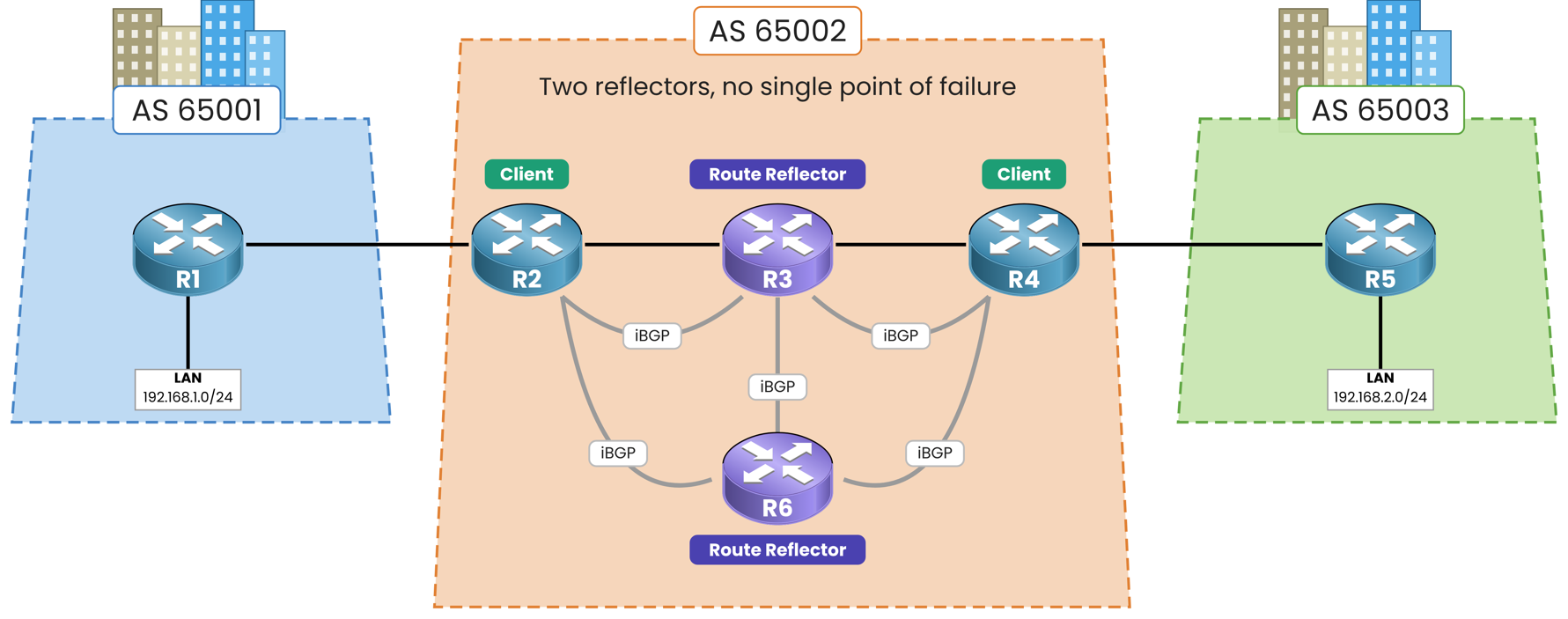
Figure 7 – Two reflectors, no single point of failure
Every client peers directly with all reflectors.
Here, R6 acts as a second reflector while R2 and R4 peer with both R3 and R6.
If R3 goes down, R6 keeps reflecting routes.Answer the question below
How many reflectors does a production core deploy, at minimum?