How Hard Is the CCNA?
· 10 min read
The CCNA is hard. That's true.
It's one of the certifications with the most material. But it's also the one that will do the most for your skills and your career.
So, do I have a miracle method to pass it in 14 days, with 10 minutes a day?
No.
But anyone can learn it, even if you don't know what an IP address is yet. I'm proof. When I started studying for the CCNA, I didn't know what a router was. I didn't even know there were IP addresses other than 192.168.X.X.
To show you what is really hard, we looked at 92,128 answers from our CCNA practice exam.
Why is the CCNA so hard?
There are four main reasons. First, there's a lot to learn. The CCNA covers six domains and 53 exam topics in Cisco's official blueprint. Our CCNA course is about 100 hours of material.
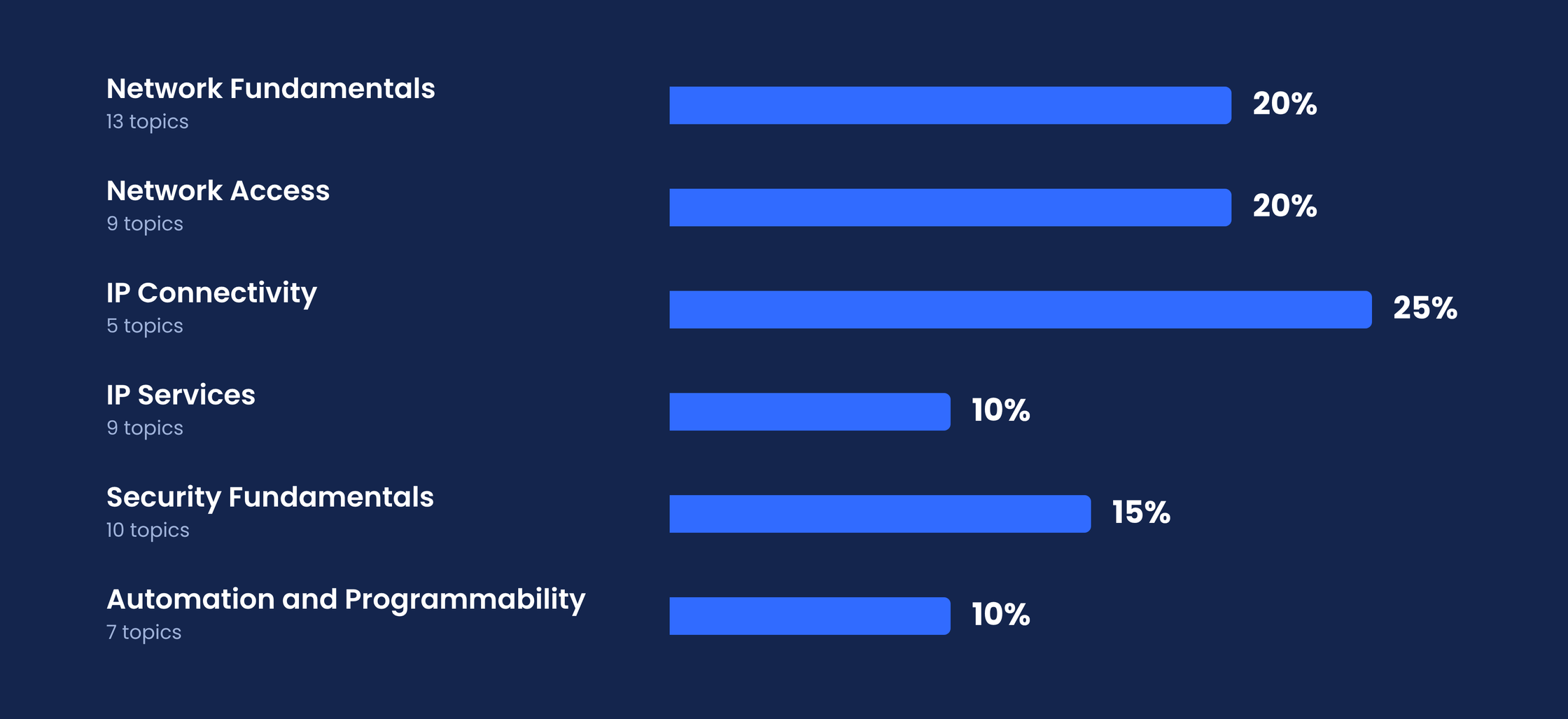
Figure 1 – The 6 domains of the CCNA exam, with their weight and number of topics.
Second, some topics are much harder than others. On some concepts, 8 learners out of 10 get the answer wrong. And routing, the topic everyone thinks of first, is where they make the fewest mistakes.
Third, most people start with the wrong method. Watching videos feels like progress, but often it isn't.
Fourth, the internet doesn't help. On Reddit, many posts say the CCNA is impossible and that everybody fails. That's not true. People who pass just don't post about it.
What are the hardest CCNA topics?
Here is what learners get wrong on our CCNA practice exam, by domain and by concept.
Learners make the most mistakes on IP Services and the fewest on routing
IP Connectivity is the biggest part of the exam. It's also where learners make the fewest mistakes. Most people understand routing tables, OSPF and static routes well.
IP Services is the opposite. It's only 10% of the exam, but it's where learners make the most mistakes. Topics like SNMP, QoS and NTP look small, so they are easy to skip when you study.
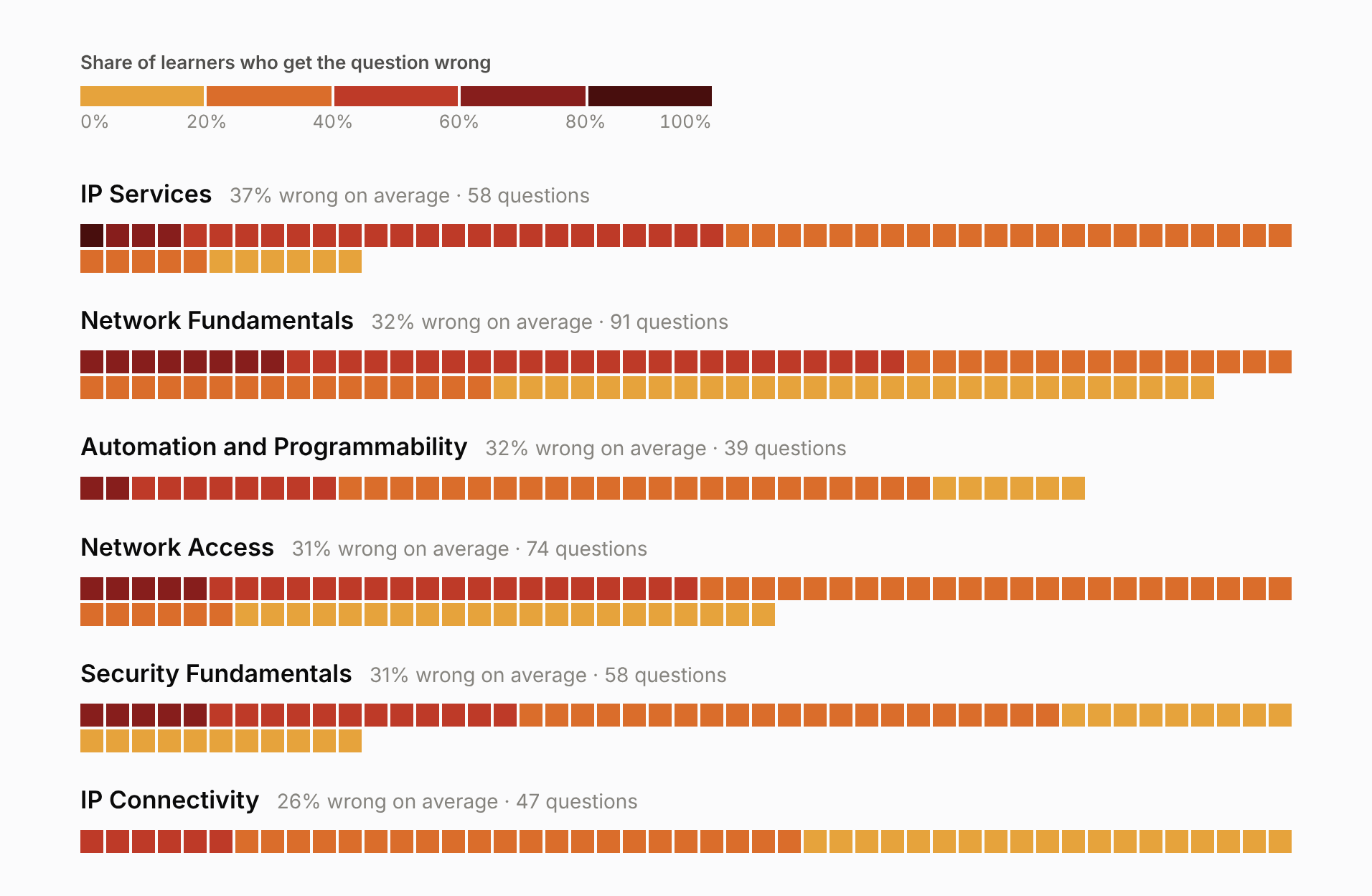
Figure 2 – How often learners get each practice exam question wrong, by domain.
The 10 CCNA concepts learners get wrong the most
Most of these are details: a default behavior, a command that does more than you think, or two names for the same thing.
Concept | Wrong answers | The trap |
|---|---|---|
SNMP show commands | 82% | Knowing what each |
DTP modes | 78% |
|
QoS queuing | 78% | WFQ sorts traffic into flows and shares the bandwidth automatically. CBWFQ and LLQ need classes that you define, and FIFO doesn't sort traffic at all. |
VLSM | 75% | Splitting one block into subnets of different sizes, then finding the first usable address of each. |
IPv6 unique local addresses | 72% | Recognizing a unique local address, which starts with fd (fd00::/8, inside the fc00::/7 block). |
What CDP is for | 68% | CDP shows you the Cisco devices plugged into yours. It doesn't share VLANs, stop loops or route traffic: VTP, STP and routing protocols do that. |
Wi-Fi vocabulary | 68% | Matching the terms DS, ESS, IBSS, infrastructure mode and ad hoc mode. IBSS is just the 802.11 name for ad hoc mode. |
Layer 3 EtherChannel | 66% | The |
ACL implicit deny | 66% | Every ACL ends with a hidden "deny everything". So without a |
WPA3-Personal | 65% | WPA3-Personal uses CCMP-128. GCMP-256 is used by WPA3-Enterprise in 192-bit mode. |
That's what makes the CCNA hard: it checks small details, not just big ideas.
Do you want to know which of these traps would catch you? Test yourself on our free CCNA practice exam.
The problem isn't subnetting, it's VLSM
A lot of people are scared of subnetting. But only about 15% of learners get the basics wrong, like turning a mask into CIDR notation. It gets hard when you have to split one block into subnets of different sizes. After a VLSM split, 75% of learners get the first usable address wrong.
STP scares people, but it's not where they make the most mistakes
Many learners say Spanning Tree is their hardest topic. But in our data, learners get STP questions wrong 28% of the time. That's below the average of 31%.
My guess is that people fear STP, so they study it more. Few people worry about SNMP, so they spend less time on it.
What learners get wrong the least
At the other end, fewer than 1 learner in 10 gets these wrong:
TCP vs UDP (3%)
What
switchport trunk allowed vlan 40does to an existing VLAN list (3%): it replaces the list. It's a famous trap, but almost nobody falls for it.What a firewall does (4%)
The switch configuration for router-on-a-stick (5%)
How HSRP works (8%)
How long does it take to study for the CCNA?
These numbers come from learners on our CCNA 200-301 course, from January to July 2026.
Half of those who finish the course do it in less than 62 days
This is the time between signing up and finishing the whole course. For 3 learners out of 4, it's less than 79 days.
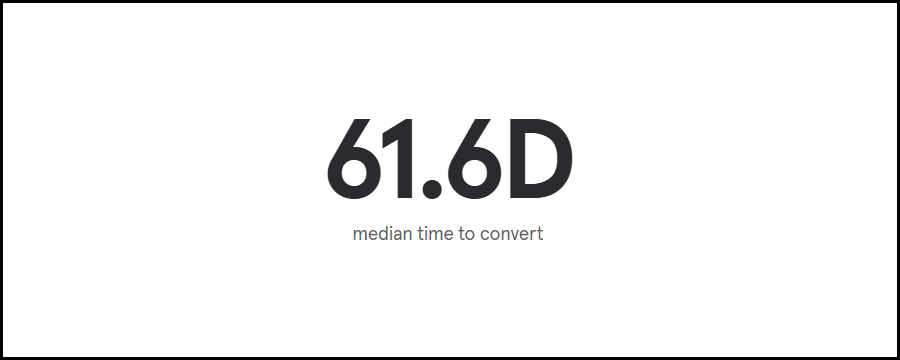
Figure 3 – Half of the learners finish the course in less than 62 days.
Then, about 6 days to pass the practice exam
This is the time between finishing the course and passing our practice exam. For 3 learners out of 4, it's 25 days or less.
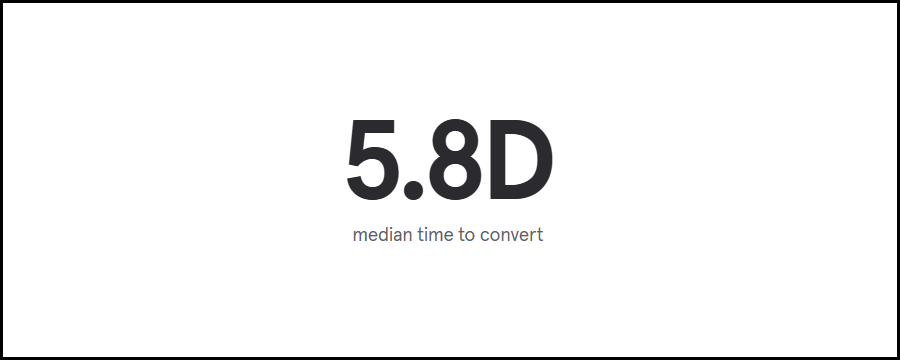
Figure 4 – After the course, half of them pass the practice exam in less than 6 days.
So once the course is done, half of the learners only need a few days of practice exams to fix their last mistakes.
What do people who passed the CCNA say?
The three learners below started from very different places, but they have one thing in common: videos alone were not enough, and practice made the difference.
Charles: 12 years in IT, and he still needed a routine
Charles had worked in IT for 12 years as an assistant network admin. If anyone could pass the CCNA easily, it was him. But after months of YouTube videos, he still wasn't moving forward fast enough. Once he started PingMyNetwork, he passed after about 8 weeks of serious study. His advice:
"Build yourself a routine. You need to do as much hands on work as possible and understand why something breaks and how to fix it."
Arun: 435 out of 1000, then 905
Arun watched videos on the whole CCNA in one month. He was ready to book the exam. Then he took Boson ExSim, a mock exam close to the real one. He scored 435 out of 1000.
His conclusion: "The issue wasn't my motivation. It was my approach." So he changed his approach and started practicing on PingMyNetwork instead of watching videos. When he retook the mock exam, he scored 905. He passed the CCNA about four months after he started.
"If you're preparing today, don't underestimate the gap between watching videos and actually mastering the material. Strategy matters more than motivation."
Marcus: a full-time job outside IT
Marcus works full-time outside IT. He started with long video lectures, but the content didn't stay in his head. STP was his weak point too, and it finally made sense on PingMyNetwork. He passed, even though he didn't feel ready on exam day. His advice on practice exams is the most useful I've read:
"Figure out whether you missed a question because you didn't know the concept, misread it, or simply forgot a detail. Those are three different problems with three different fixes."
Is the CCNA hard for beginners?
The real question behind "how hard is the CCNA" is this: what is your level today, and what level do you need to reach? The level you need to reach is the same for everyone. On exam day, you need to understand how a network works. And you need to know how to set up and fix Cisco devices.
Your starting level changes how long the road is:
You've never worked with networks. It takes longer, because you have to learn the words first.
You work in IT, but not in networking, for example in helpdesk. You start with an advantage, but the CCNA goes much deeper than your daily job.
You already work in networking, like Charles. For you, the CCNA is about filling gaps and learning the level of detail the exam expects.
I started from zero, and today I'm CCNA certified.
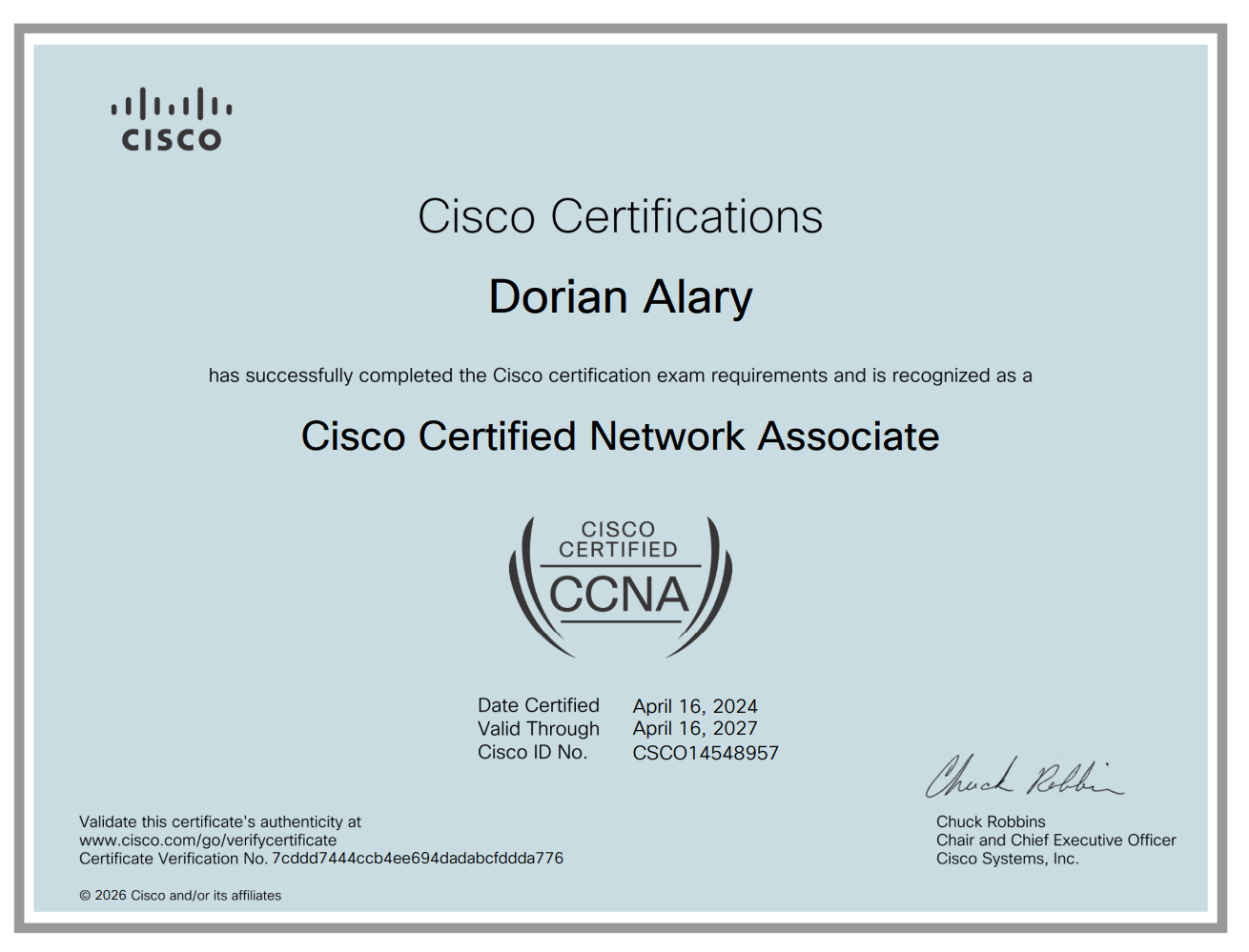
Figure 5 – My CCNA certificate.
How to make the CCNA easier: the method I recommend
Your method matters more than your starting level.
Practice instead of just watching. You remember what you practice. Answer questions, type the commands, break the configuration and fix it.
Study a little every day. A fixed time each day works better than one long session per week. That's the routine Charles recommends.
Don't skip the small topics. SNMP, NTP and QoS cause more mistakes than routing, so spend real time on them.
Use practice exams to find your mistakes. Take our practice exam and sort each mistake the way Marcus does.
Don't use exam dumps, which are leaked exam questions. You want the skills, not just the certificate.
Other questions about CCNA difficulty
What is the CCNA pass rate?
Cisco doesn't publish it. The numbers you see online, like 85%, 60 to 70%, or even "95% fail", don't come from Cisco, so be careful with them. Cisco doesn't publish the passing score either. You'll often see 825 out of 1000, but that number isn't official.
Can you pass the CCNA with no experience?
Yes. You don't need any other certification first. Marcus passed while working full-time outside IT, and I started without knowing what a router was. It just takes longer.
Is the CCNA harder than Network+?
For most people, yes. Network+ is not about one brand, and it stays more general. The CCNA goes deeper. You have to set up and fix Cisco devices.
How many hours does it take to study for the CCNA?
Our CCNA course is about 100 hours of material, plus the practice exams. Half of the learners who finish it do it in less than 62 days.
What happens if you fail the CCNA?
You can retake it. You have to wait 5 days, starting the day after your exam. And you pay the $300 exam fee again. Use your score report: it shows your result in each section, so you know where to focus.
So, how hard is the CCNA?
It's hard, and I won't pretend otherwise. But now you know where the difficulty is: not in routing, but in the small topics and the details the exam checks. You also know how long it takes: about 2 months for the course, then a few days of practice exams.
And the people who pass aren't geniuses. They found a good method and followed it.
If you want to start today, here's what I recommend. Start at the beginning of our CCNA course, with the very first lesson. Follow the whole roadmap in order, without skipping lessons. Then take the practice exam. Review every mistake, practice your weak points, and take it again until you pass.
Figure 6 – The CCNA 200-301 course on PingMyNetwork.
 Written by Dorian AlaryPingMyNetwork co-founderCCNA 200-301Developper


