CCNA vs CCNP: Which One Should You Take First?
· 7 min read
CCNA or CCNP? A lot of people ask me if they can skip the CCNA and go straight to the CCNP. It looks faster. And the CCNP pays more. So, is it a good idea?
I have the CCNA. My two co-founders, Elwin and Thomas, have the CCNP. And we built a platform that teaches both. So here's what really changes between the two, with real numbers from our learners and from 140 job ads.
First, I'll show you how the two certifications fit together. Then we'll compare them on the six things that actually matter: what you learn, how hard it is, how long it takes, what it costs, what it pays, and what employers ask for.
How the CCNA and the CCNP fit together
Cisco has three levels of certification. The CCNA is the first one. The CCNP is the second. The CCIE is the top.
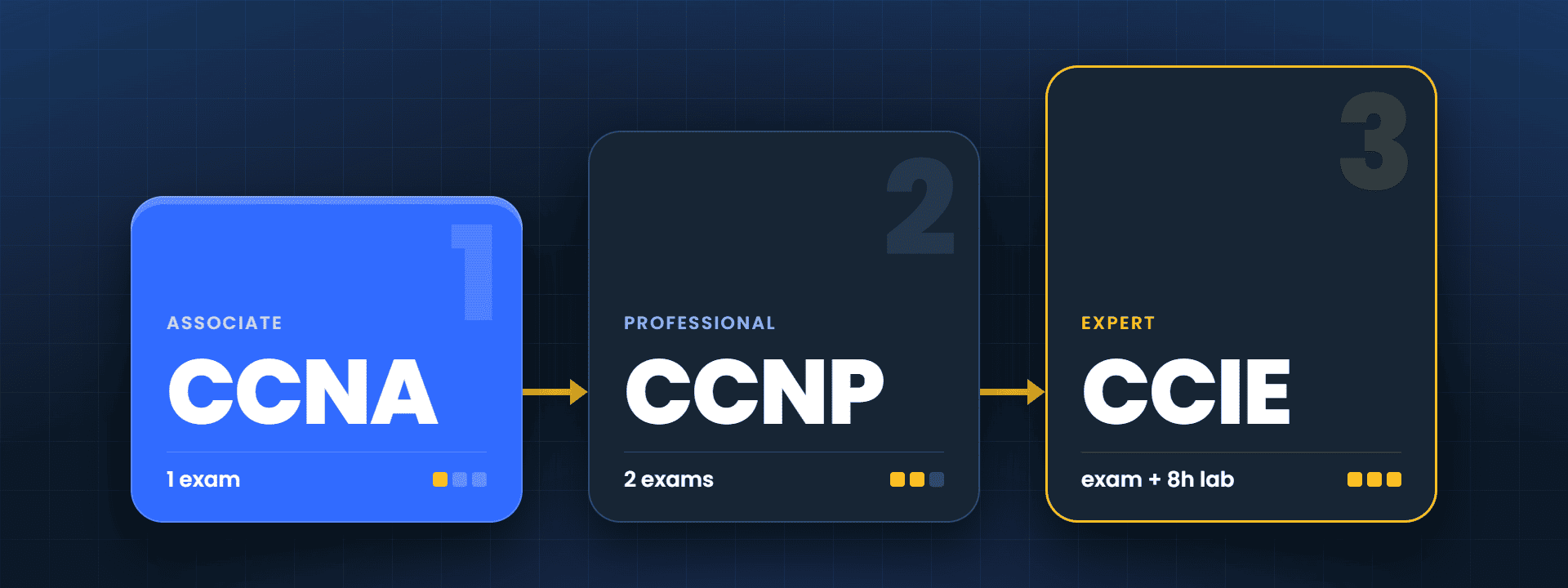
Figure 1 – The three levels of Cisco certification: CCNA, CCNP and CCIE.
The CCNA covers the basics of every network. The CCNP comes in several tracks, one per type of job: Enterprise, Security, Data Center, Wireless and a few more.
The CCNP Enterprise is the direct next step after the CCNA: the same routing and switching, taken much further. That's the one I compare here. The CCNA is one exam. The CCNP Enterprise is two: ENCOR 350-401, the core exam everyone takes, and one concentration exam that you pick.
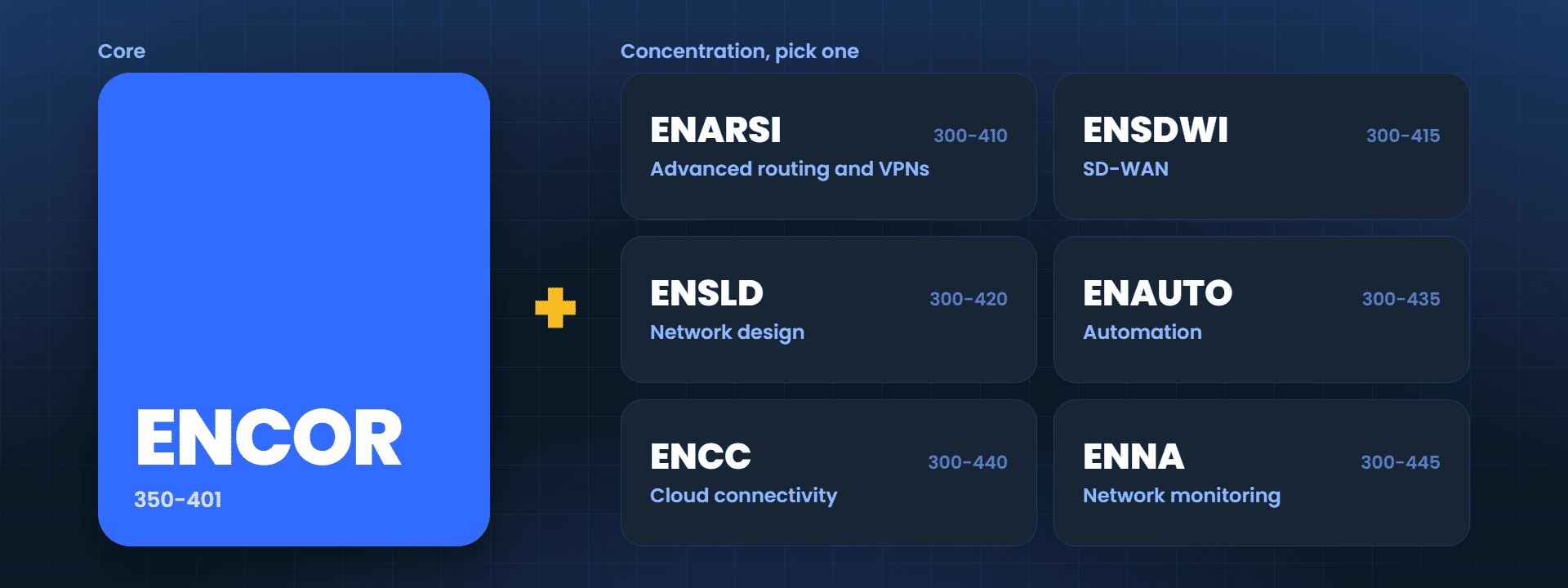
Figure 2 – The CCNP Enterprise: the ENCOR core exam plus one concentration exam of your choice.
Two things most people don't know. First, you don't have to take both exams at once. Pass ENCOR, then take the second one when you're ready. Second, each exam gives you a certification on its own. Pass ENCOR, and you're already a Cisco Certified Specialist - Enterprise Core.
What you learn
The CCNA teaches you how a network works, and the CCNP teaches you how a big company network works. A lot of it is the same technology. The CCNP takes what you learned in the CCNA and goes much deeper. Then it adds topics the CCNA barely touches.
Topic | On the CCNA | On the CCNP |
|---|---|---|
OSPF | One area | Many areas, LSA types, summarization, filtering |
Routing protocols | Static routes and OSPF | EIGRP and BGP too |
Spanning tree | STP and Rapid PVST+ | MST |
VPNs | The basics | GRE, IPsec, VXLAN, LISP |
SD-WAN and SD-Access | What a controller does | How they are built |
Automation | REST APIs and JSON | Python, NETCONF, RESTCONF, YANG |
Security | ACLs and port security | CoPP, MACsec, TrustSec |
Take OSPF. On the CCNA, you set up OSPF in one area and check that the routers talk to each other. On ENCOR, you have to explain why a type 5 LSA is missing from an area.
How hard it is
The CCNP is harder, for three reasons. First, it assumes you know the whole CCNA. ENCOR never explains subnetting, VLANs or OSPF again. It builds on them from the first question.
Second, it asks "why", not just "how". On the CCNA, you set things up. On the CCNP, you explain why something breaks, and you fix it. Third, it's two exams, not one, and each one goes deep on its own.
Here are the topics learners got wrong the most on our ENCOR practice exam, up to October 2026:
Topic | Wrong answers |
|---|---|
MACsec components | 84% |
Cisco TrustSec functions | 74% |
SD-Access shared services | 74% |
YANG model types | 69% |
ERSPAN configuration | 66% |
VXLAN | 65% |
Spanning tree port priority | 65% |
IOS password types | 64% |
Securing NTP | 64% |
GRE over IPsec profiles | 63% |
EtherChannel in err-disabled state | 63% |
Some are new topics, like MACsec, TrustSec and SD-Access. But four of them are CCNA topics: spanning tree, passwords, NTP and EtherChannel. ENCOR just asks harder questions about them. So part of what makes the CCNP hard is CCNA material you never fully mastered.
Want to know where you stand? Try our free ENCOR practice exam.
How long it takes
In our courses, the CCNA takes about 100 hours. The CCNP Enterprise takes about 180 hours: 100 for ENCOR and 80 for ENARSI. At 1 hour a day, that's about 3 months for the CCNA, and about 6 months for the CCNP Enterprise.
Plan almost twice as much time for the CCNP as for the CCNA.
What it costs
The CCNA exam costs $300. The CCNP Enterprise costs $700: $400 for ENCOR and $300 for the concentration exam.
The exam fee is only part of it. If you fail, you wait 5 days and pay the full price again. So a failed ENCOR costs you another $400.
What it pays
The CCNP pays more. On Payscale, CCNP holders in the US report about $113,000 a year on average, and CCNA holders about $95,000 (updated July 2026). That's about $18,000 more. But part of that gap is experience.
CCNP holders usually have more years of work behind them. On Payscale, 6 in 10 CCNP holders have 10 years of experience or more. For CCNA holders, it's about 5 in 10. Compare people with the same years of experience, and the gap drops to between $10,700 and $12,300 a year.
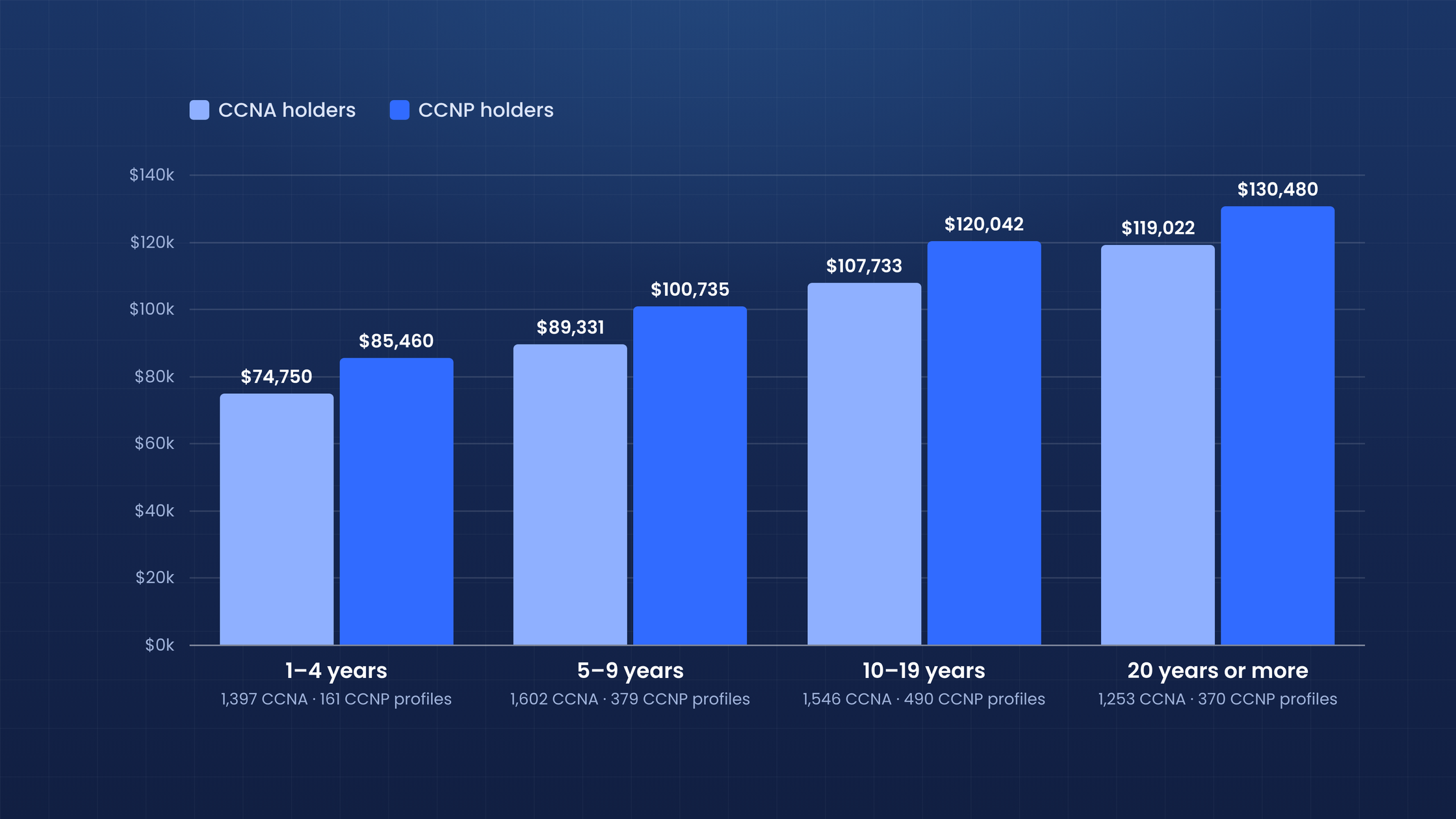
Figure 3 – What CCNA and CCNP holders earn in the US, by years of experience.
CCNP holders also hold bigger jobs, like senior network engineer or network architect. The job pays the salary, not the certificate. You can see it in the US government's own numbers, from the Bureau of Labor Statistics:
Job | Median pay (May 2025) | Jobs by 2035 |
|---|---|---|
Network and computer systems administrator | $99,130 | -4% |
Computer network architect | $134,050 | +8% |
Look at the last column. Admin jobs are shrinking a little. Architect jobs are growing. That's where the CCNP takes you over time.
What employers ask for
We read 140 real US job ads in October 2026: 40 help desk ads and 100 network ads (NOC, network admin and network engineer). None of the help desk ads name the CCNA or the CCNP. In the network ads, the CCNA shows up in 49 and the CCNP in 30. And in 25 of those 30, the CCNP comes in the same list as the CCNA, like "CCNA or CCNP" or "CCNA/CCNP".
Like this network engineer job, where one of the two is required:
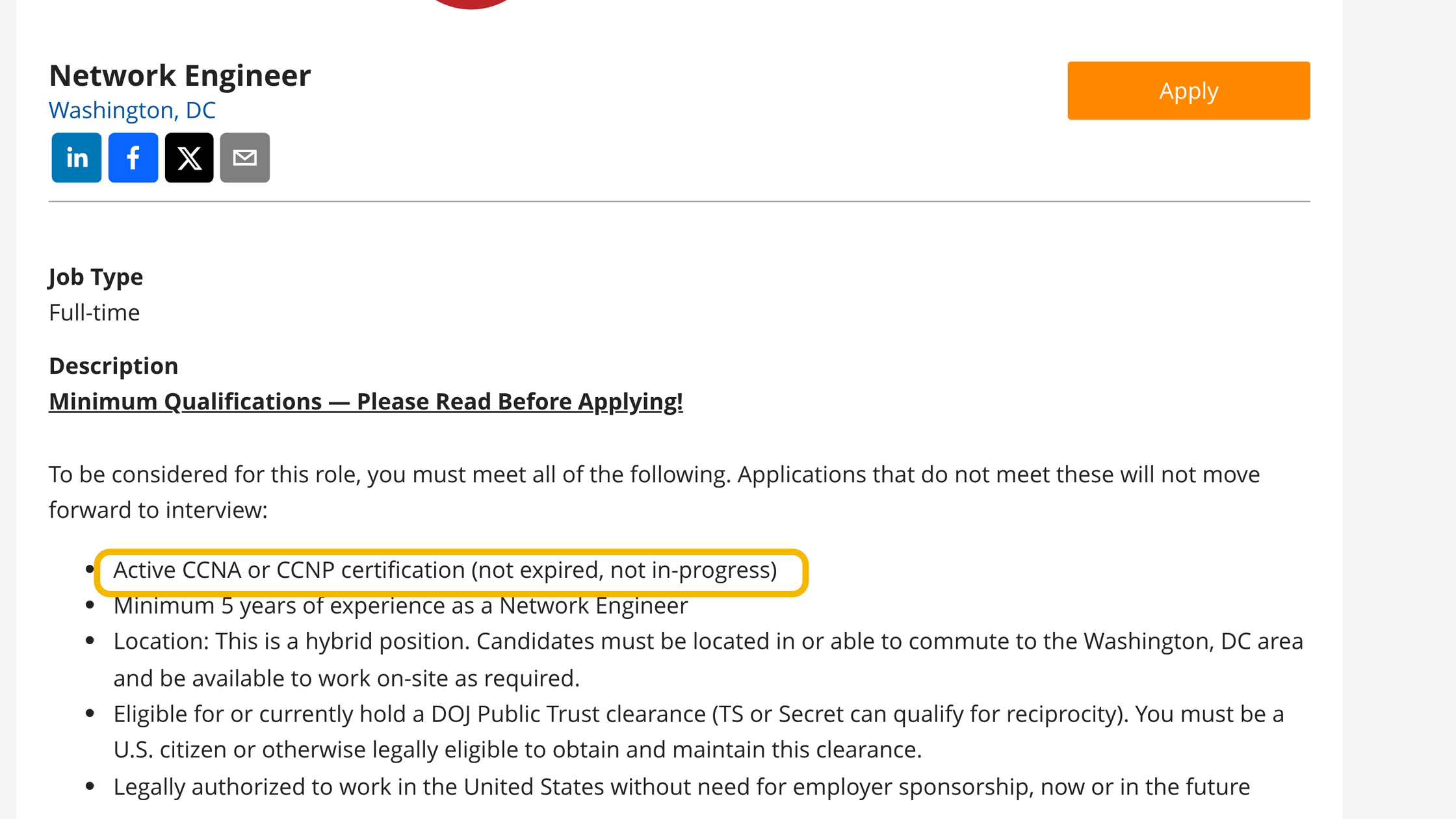
Figure 4 – A network engineer ad that requires an active CCNA or CCNP.
Or this one, where they are "highly desirable":
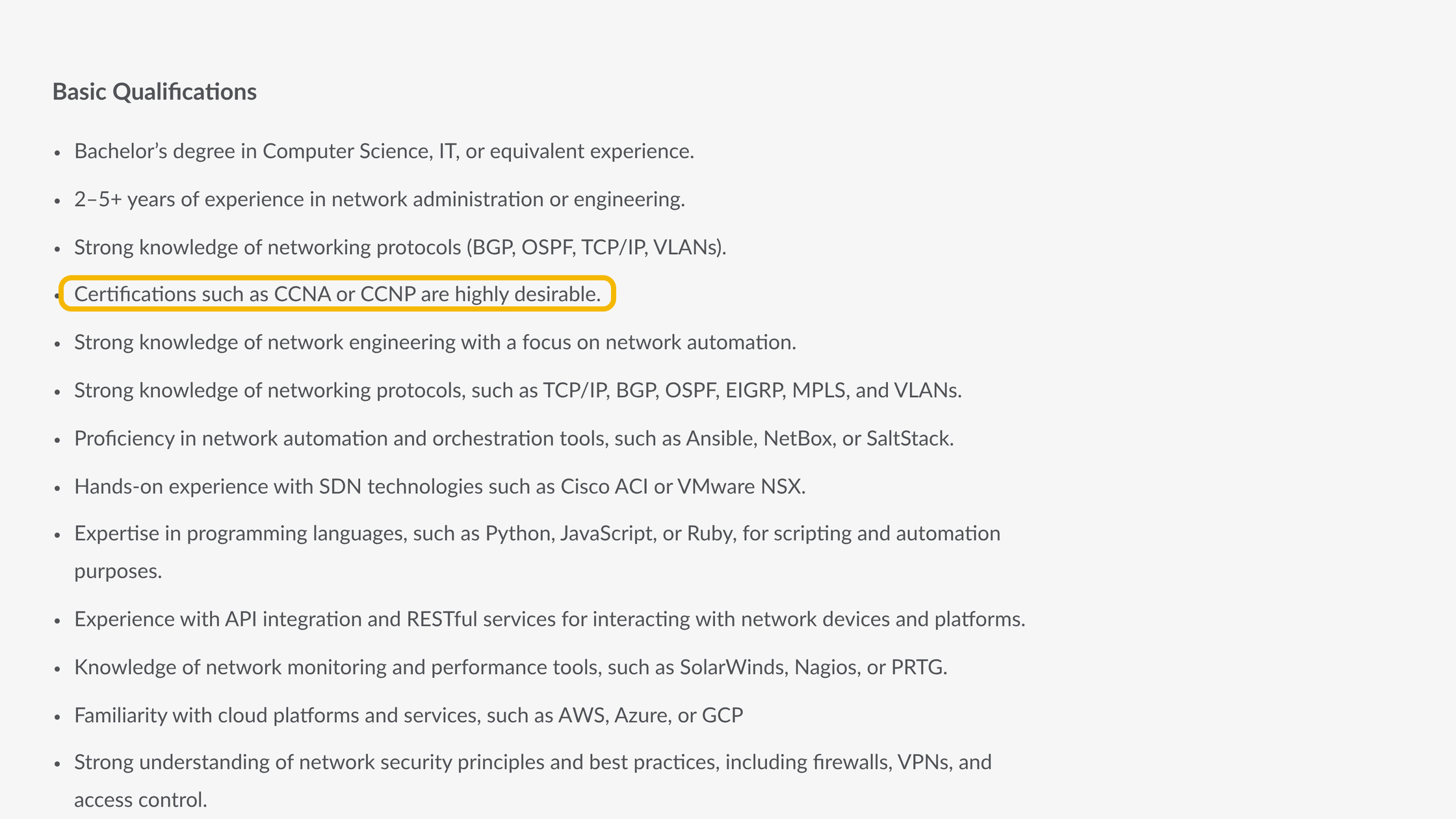
Figure 5 – A network engineer ad where the CCNA or the CCNP is "highly desirable".
Only 5 ads name the CCNP without the CCNA. None of them makes it a must: it's "preferred", a bonus, or one cert in a list.
In job ads, the CCNP rarely replaces the CCNA. Most ads that name it take either one.
Do you need the CCNA before the CCNP?
No. You used to, but Cisco removed that rule in 2020. Today, you can book ENCOR without any other certification.
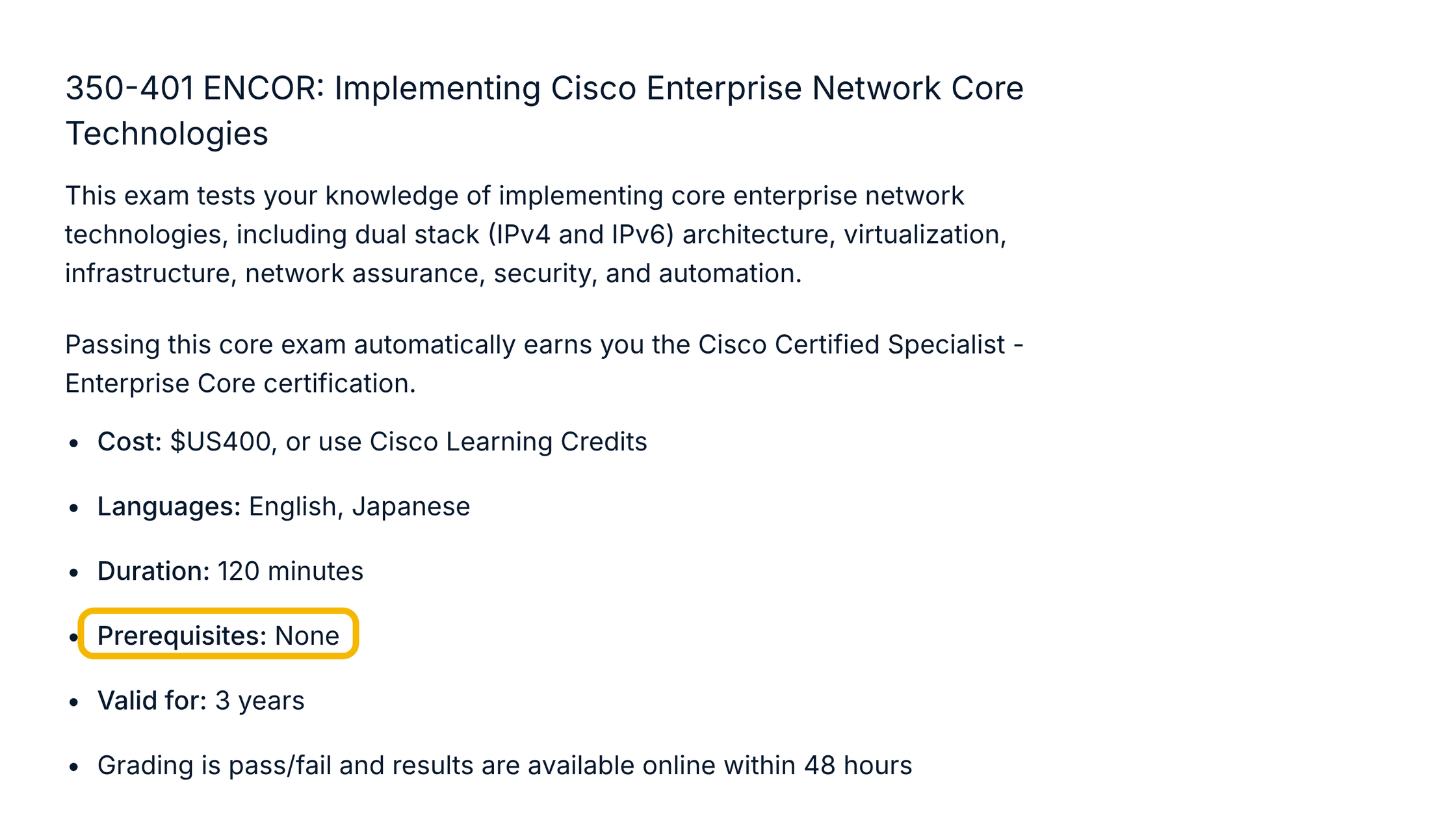
Figure 6 – Cisco's ENCOR exam page: no prerequisite.
But ENCOR doesn't teach the basics again. Our own ENCOR course starts with OSPF across several areas, in its very first module. If OSPF is still new to you, you'll be lost.
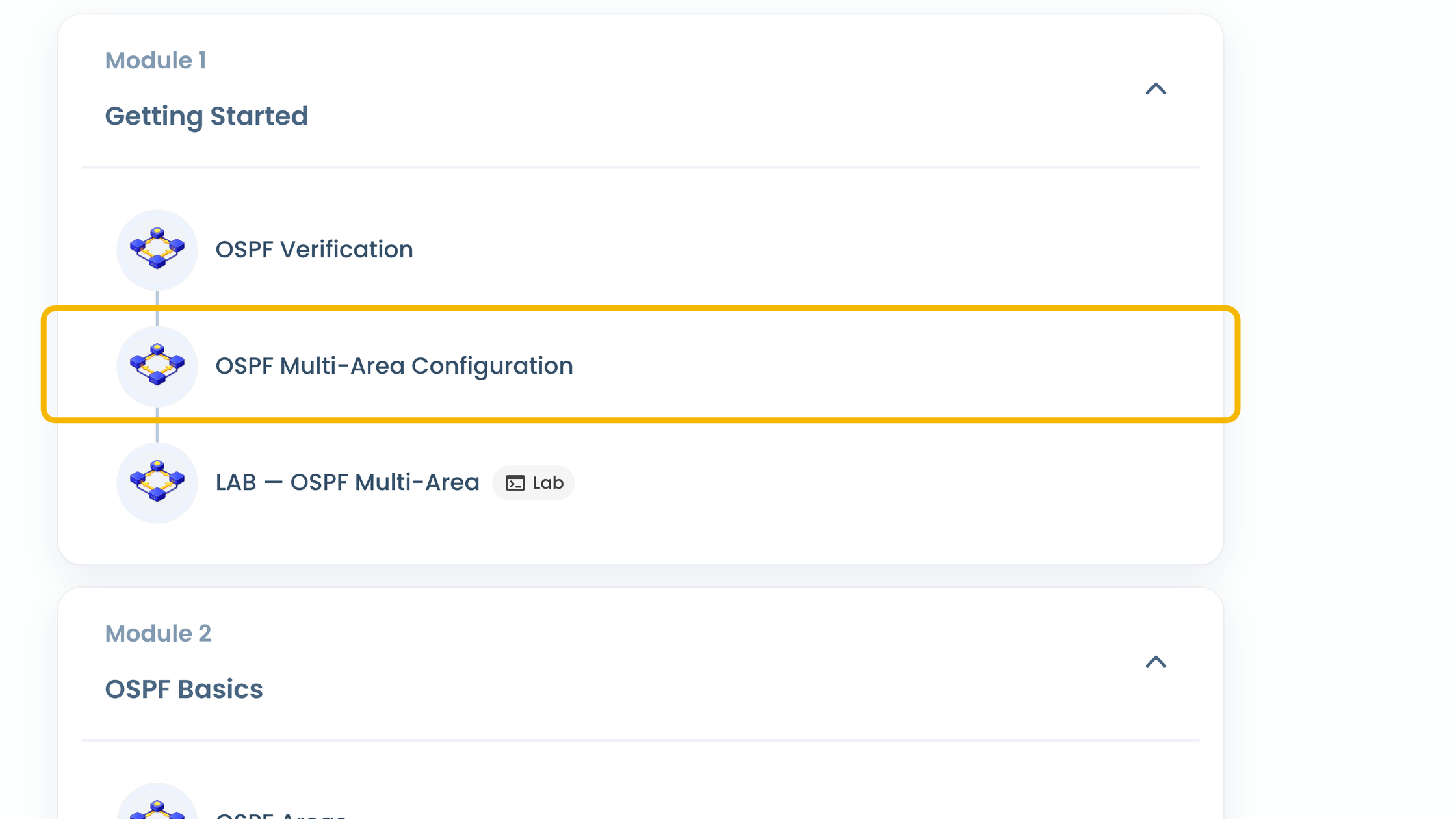
Figure 7 – The first module of our ENCOR course is OSPF.
So is there a good reason to skip the CCNA? Only one: your job needs you to get the CCNP fast. In every other case, start with the CCNA. It's the fastest way to the CCNP.
So, CCNA or CCNP?
It depends on where you are today:
You have no certification yet. Start with the CCNA.
You passed the CCNA, but you don't work in networking yet. Get a job first. ENCOR is much easier when you use the topics every day.
You passed the CCNA and you work in networking. Start ENCOR.
Your job needs you to get the CCNP fast. Go straight to ENCOR, and review the CCNA topics as you go.
 Written by Dorian AlaryPingMyNetwork co-founderCCNA 200-301Developper


